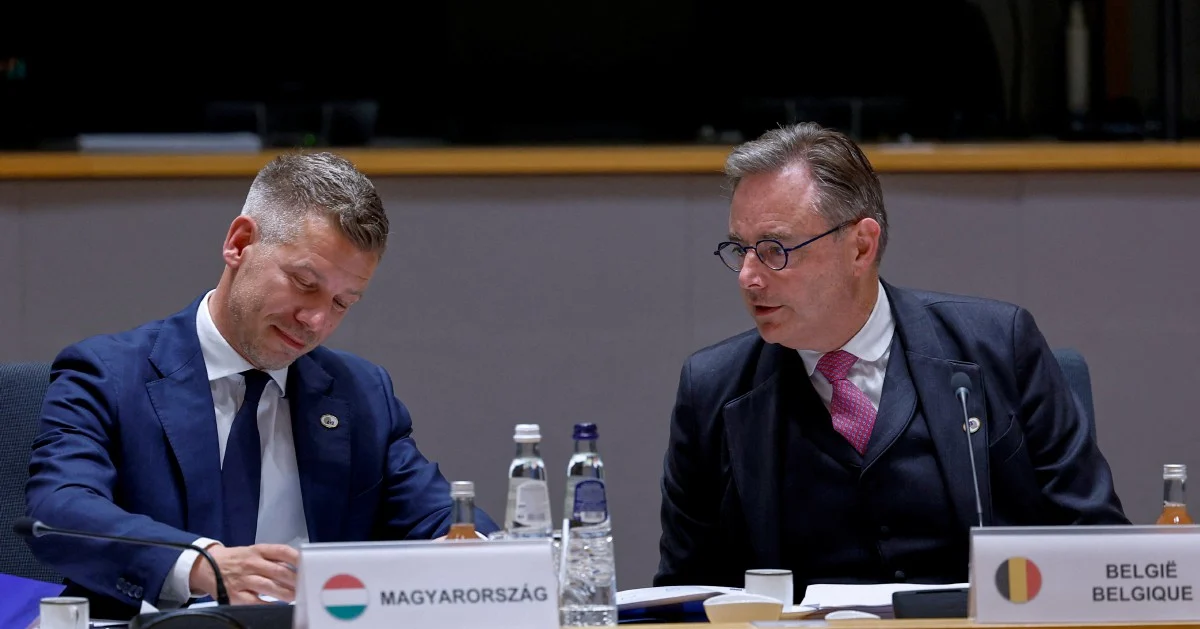
Hungary is poised to take significant steps toward restoring its relationship with the European Union through a legislative package designed to tackle institutional corruption and governance shortcomings. Parliament scheduled approval of the anti-graft measures for Tuesday, marking a pivotal moment in Prime Minister Peter Magyar's broader reform agenda aimed at addressing long-standing concerns from Brussels about democratic standards and the rule of law in the country.
The initiative carries substantial financial implications. Hungary stands to recover billions of euros in EU funds that Brussels has withheld, largely in response to documented concerns about corruption, judicial independence, and transparency in public procurement. The frozen allocations represent a significant portion of development resources that Budapest had expected to access, making the passage of robust anti-corruption legislation a practical necessity rather than merely a policy preference for the new government.
Magyar's reform programme signals a departure from the governance trajectory of recent years, reflecting shifting political dynamics within the country. The comprehensive nature of the proposed measures suggests an attempt to address not isolated instances of misconduct but systemic weaknesses in how public institutions operate and account for their actions. This approach aligns with EU expectations that require demonstrable institutional change rather than superficial compliance.
The timing of these measures carries significance for the broader Southeast European context. Hungary's relationship with Brussels influences the region's engagement with EU funding mechanisms and sets expectations for governance standards across Central Europe. The country's willingness to undertake substantial reforms signals that even under challenging circumstances, pathways exist for reconciliation between national governments and supranational institutions over matters of accountability.
For Hungarian citizens, the anti-corruption framework addresses quality-of-life issues that extend beyond abstract governance principles. Transparency in public spending directly affects the distribution of resources for healthcare, education, and infrastructure development. When institutional corruption diverts funds or distorts allocation decisions, ordinary people experience diminished public services and reduced purchasing power as tax revenues are misappropriated rather than deployed for intended purposes.
The business community has substantial stakes in the outcome as well. International investors and multinational corporations increasingly factor governance quality into location decisions, and persistent corruption concerns make Hungary less attractive for large-scale investment. By demonstrating commitment to institutional reform, Magyar's government aims to restore confidence among both domestic and foreign capital providers who have grown cautious about the investment environment.
EU member states and institutions have grown increasingly assertive about conditioning financial support on observable progress toward rule-of-law standards. Hungary's experience with frozen funds illustrates how this leverage functions in practice. The mechanism creates incentives for reform while also serving as a warning to other member states tempted to weaken democratic institutions or judicial independence. The country's response therefore carries implications for how the EU enforces its standards across the bloc more broadly.
The anti-corruption package likely addresses several specific institutional weaknesses that Brussels has highlighted. These typically include strengthening the independence of the judiciary, implementing transparency requirements for government contracting, establishing oversight mechanisms for executive power, and creating consequences for officials who abuse public office. Each element requires not merely passing legislation but building administrative capacity to enforce new requirements effectively.
Previous reform attempts in Hungary have faced implementation challenges, where laws existed on paper but lacked the institutional muscle to produce meaningful change. The current initiative will face similar tests. Success requires not only parliamentary approval but sustained political commitment, adequate funding for enforcement bodies, and resistance to subsequent backsliding as administrations change or political pressures mount.
Regional observers view Hungary's anti-corruption reform as potentially influential for other Central European nations navigating similar tensions with Brussels. The outcomes will demonstrate whether external financial pressure can drive meaningful institutional change or whether reforms tend toward cosmetic adjustments that fail to address underlying governance structures. This distinction matters considerably for the EU's broader capacity to enforce standards across its membership.
The pathway to recovering EU funds remains contingent on sustained implementation rather than legislation alone. Hungarian officials will face scrutiny regarding whether the anti-corruption measures translate into actual improvements in institutional practice and public administration. Both EU monitors and domestic civil society organisations will likely track implementation progress closely, creating ongoing pressure for follow-through beyond the initial parliamentary vote.
Magyar's government faces the difficult challenge of implementing reforms while managing domestic political opposition from interests benefiting from less stringent governance standards. Corruption often involves not isolated bad actors but networks of officials, business people, and political operatives who profit from weak institutions. Genuine reform threatens established arrangements, potentially generating resistance from powerful constituencies.
The international context reinforces the importance of Hungary's anti-corruption efforts. As geopolitical competition intensifies and democratic institutions face challenges globally, the EU's commitment to enforcing governance standards carries symbolic weight beyond financial mechanisms. Hungary's willingness to undertake substantial reforms, despite political costs, suggests that even fraught relationships can be repaired through demonstrated commitment to shared institutional values.