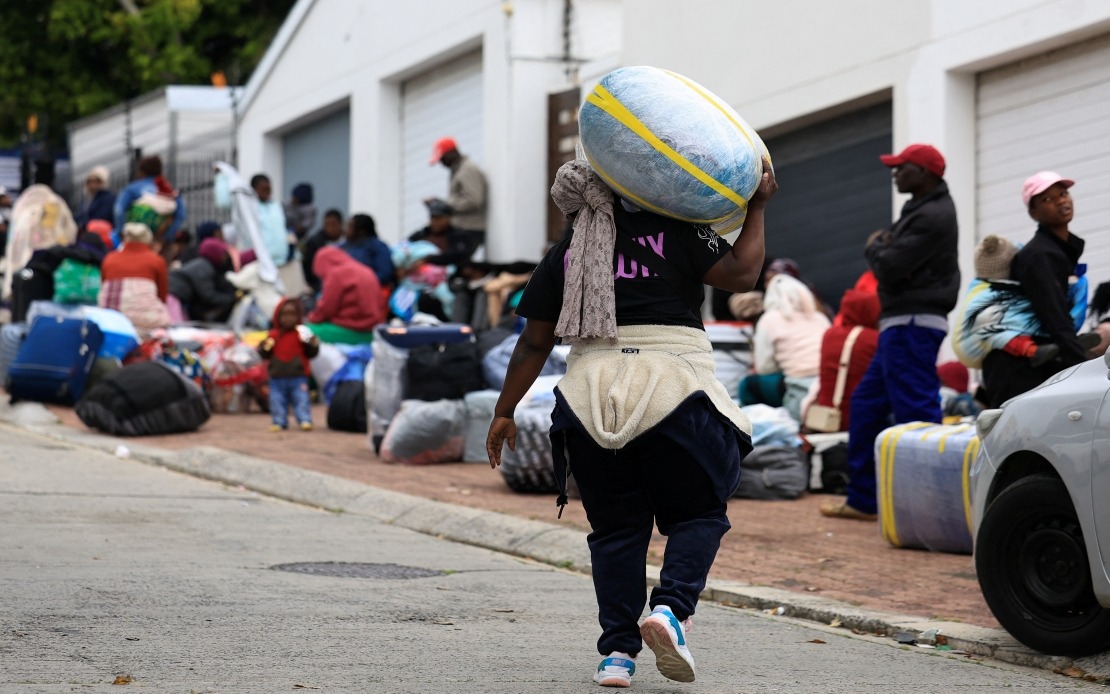
South African immigration authorities initiated the mass transfer of hundreds of Zimbabwean nationals and some citizens from Malawi out of Cape Town on Saturday, relocating them from a temporary processing facility in the Epping suburb. The movement marks a significant development in South Africa's handling of undocumented foreign nationals seeking repatriation, following weeks of escalating xenophobic tensions in the Western Cape that prompted thousands to congregate at government processing points seeking safe passage home.
The buses departing the Epping centre are heading to Musina, a town in Limpopo Province bordering Zimbabwe, where a larger Department of Home Affairs facility is managing the intake and processing of thousands of additional foreign nationals awaiting repatriation arrangements. South African government officials have simultaneously encouraged remaining applicants to bypass the Cape Town location entirely and proceed directly to Musina, effectively accelerating the closure of the temporary processing operation.
The situation on the ground has presented considerable humanitarian challenges. Organisations providing aid at the Epping site report that they have been supplying food, shelter, and basic sanitation facilities to the displaced populations. Health concerns have emerged among those crowded at the facility, with aid workers documenting cases of diarrhoea and flu-like symptoms spreading among residents, conditions typical of overcrowded informal settlements with inadequate sanitation infrastructure.
The processing operation has struggled to keep pace with demand. Approximately 400 additional arrivals overnight were unable to gain entry as the facility prepared for closure, forcing them to remain in the immediate vicinity awaiting further direction. The scene reflects the chaotic nature of migration management under pressure, with individuals and families clustered outside the gates hoping for reassignment elsewhere.
The human toll of displacement is evident in personal accounts. Yekuai Mokoena, a Zimbabwean national who had been sheltering at the site with her two young children after sleeping rough outside the Zimbabwean consulate for several nights, could only offer a spare assessment of conditions: "The situation is bad." Such testimonies underscore the desperation many migrants face when fleeing xenophobic violence without formal shelter or support systems.
The flow of arrivals to Epping has remained continuous throughout the weekend, with people journeying from across the Western Cape Province in pursuit of government assistance to facilitate their return to Zimbabwe and other home countries. Even as transport buses were being loaded with passengers and their belongings on Saturday afternoon, fresh cohorts continued materialising at the gates seeking admission to the relocation programme.
The broader context for this migration surge traces back to the preceding fortnight. Approximately 3,000 people had been relocated to the Epping facility after camping outside the Zimbabwean consulate in Cape Town for roughly two weeks. Their congregation there stemmed from fears of violence connected to anti-immigrant campaigns and an arbitrary June 30 deadline that had been publicised by xenophobic activists demanding that undocumented foreign nationals vacate South Africa. The deadline, lacking any official government backing, nonetheless created sufficient alarm among vulnerable migrant communities to trigger a panic exodus to consulates and government processing centres.
This episode reflects deeper structural tensions within South Africa's migration management and broader social attitudes towards foreign nationals. The anti-immigrant sentiment that catalysed the current crisis represents a recurring pattern in South Africa, where competition for scarce resources, housing, and employment opportunities has periodically sparked violent campaigns against migrant communities. Zimbabweans and other Southern African nationals have historically borne the brunt of such hostility, despite significant contributions many make to local economies.
The Zimbabwean government's ability to facilitate rapid repatriation remains a critical variable in resolving the crisis. With thousands converging on processing facilities, coordination between South African and Zimbabwean authorities will determine how efficiently people can be returned home. The concentration of processing at Musina centralises operations but also risks creating new bottlenecks if the facility lacks adequate capacity and services.
For Southeast Asian nations monitoring regional migration patterns, South Africa's experience offers cautionary insights. The rapid mobilisation of migrant populations fleeing real or perceived violence, the humanitarian challenges posed by emergency processing centres, and the political vulnerabilities of migrant communities during periods of xenophobic agitation represent phenomena that resonate across various regional contexts. Malaysia, with its own substantial migrant populations from Myanmar, Bangladesh, and Indonesia, contends with comparable pressures around documentation, processing infrastructure, and social integration.
The situation also illustrates how informal deadline campaigns, even when lacking official sanction, can trigger mass panic among vulnerable populations lacking secure legal status. The psychological impact of threatened violence can prove as consequential as violence itself in driving migration decisions, overwhelming formal processing systems and creating humanitarian crises.
Looking ahead, the success of the Musina-centred operation will likely determine whether similar emergency displacements recur. If processing and repatriation proceed smoothly, the safety valve effect may reduce future crises. However, if bottlenecks develop or returnees face continued challenges, destabilisation could intensify pressure at South African borders and potentially trigger secondary migrations within the region.

