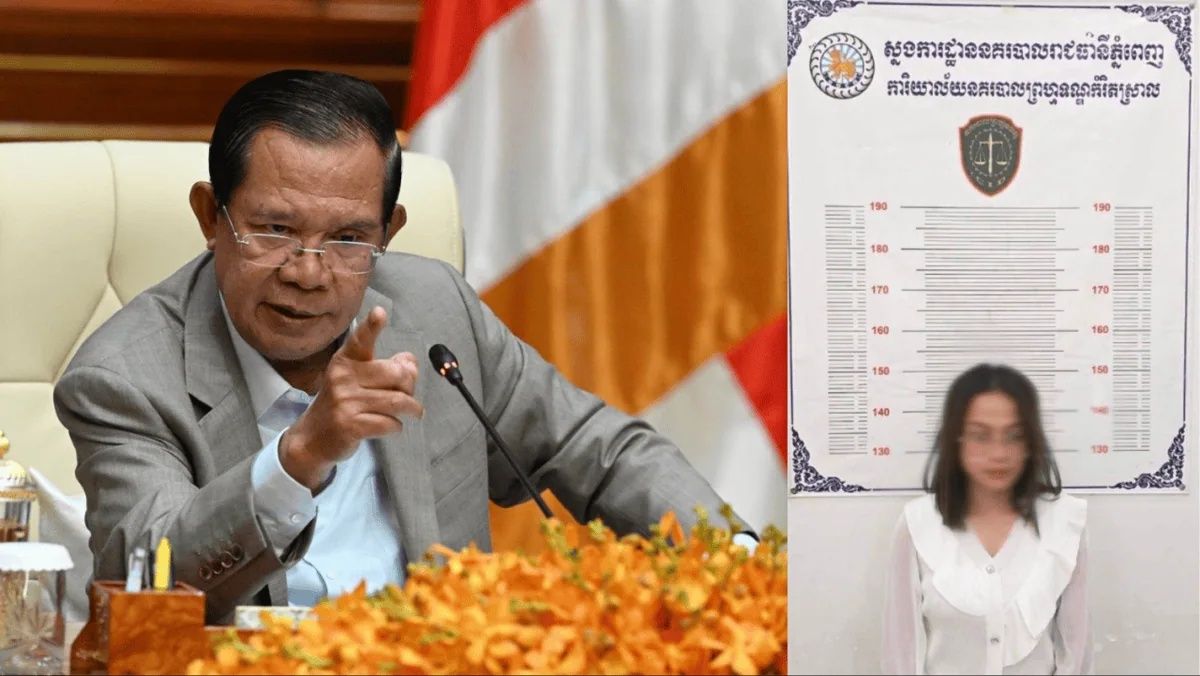
Cambodia's Senate president Hun Sen has moved to intensify state oversight of public discourse by directing the Ministry of Women's Affairs and the National Council for Women to initiate legal proceedings against individuals accused of using inflammatory language that denigrates women and undermines Khmer social standards. The directive, communicated during an official meeting on Friday, August 14, represents a significant expansion of Cambodia's approach to regulating speech in the digital age, particularly targeting women whose public statements are deemed to breach acceptable conduct.
The initiative stems from what Hun Sen characterized as concerning incidents of women engaging in abusive speech directed at state institutions and public servants. He referenced an anonymous case in which a woman allegedly used profanity whilst insulting government bodies and officials, leading authorities to compel both her and her spouse to issue formal written apologies. This approach suggests a systematic effort to regulate personal conduct through administrative pressure before judicial intervention becomes necessary, establishing what effectively amounts to a hierarchy of speech enforcement.
A particularly telling example involves Chenda Sovannary, identified in Hun Sen's remarks as a woman who reportedly verbally attacked a soldier during a commercial disagreement concerning a mobile phone transaction. Hun Sen's rhetorical question—questioning why a woman would insult someone over such a mundane matter—frames the incident as emblematic of broader social deterioration rather than a localized interpersonal dispute. His insistence that even construction workers deserve protection from verbal abuse establishes a principle that encompasses all segments of society, though the focus on women's conduct suggests a gendered application of these norms.
The framing of these legal measures as safeguards for social dignity rather than authoritarian restriction reveals the linguistic strategy underpinning Cambodia's governance approach. Hun Sen drew explicit parallels to content moderation policies maintained by major technology platforms, suggesting that private sector ethical standards legitimize state-sponsored speech regulation. This comparison is instructive for understanding how governments across Southeast Asia increasingly justify intervention in public discourse by referencing existing corporate governance structures, thereby normalizing external constraints on expression.
The National Council for Women has been tasked with establishing an enforcement mechanism that extends beyond traditional courtroom proceedings. Hun Sen called for the creation of a dedicated monitoring team specifically charged with tracking cases involving cursing and insulting speech on Facebook, highlighting social media as a primary arena of concern. This emphasis on digital platforms reflects a regional trend wherein governments expand surveillance capabilities under the guise of protecting traditional values or social harmony, effectively privatizing enforcement by enlisting state institutions to monitor online activity.
Coordination across multiple government ministries—including Interior, Information, Culture and Fine Arts, and Post and Telecommunications—indicates a comprehensive institutional mobilization designed to create overlapping jurisdictional authority over speech and conduct. Such fragmentation of enforcement responsibility across agencies typically complicates accountability whilst simultaneously ensuring broader coverage of potential violations. The involvement of the telecommunications ministry particularly suggests interest in monitoring digital communications at infrastructure levels, potentially enabling content interception beyond traditional law enforcement channels.
The characterization of these measures as protections for Khmer women's dignity warrants careful scrutiny, particularly given that the primary subjects of prosecution appear to be women themselves. Rather than shielding women from harm, the initiative instrumentalizes women's values as legal justifications for restricting female speech and conduct. This inversion transforms gender into both the stated protected category and the actual target demographic, creating a framework wherein women's own expression becomes the threat requiring state intervention and judicial remedy.
For Malaysian observers, Hun Sen's initiative offers instructive parallels with domestic debates surrounding sedition laws, religious speech regulations, and digital content governance. Southeast Asian governments increasingly converge on using broadly defined cultural or moral protections as justification for speech restrictions that lack precise definitional boundaries. The ambiguity surrounding what constitutes insults to social dignity or violations of women's values creates space for inconsistent and potentially politically motivated enforcement, establishing precedent for expanded state discretion over public discourse.
The regional implications extend beyond Cambodia's borders, as such enforcement mechanisms often become templates adopted by neighboring governments facing similar anxieties about digital connectivity and changing social norms. The integration of social media monitoring into official state functions represents a qualitative shift in governance capacity, moving beyond traditional censorship toward continuous algorithmic oversight of public expression. This technological dimension of speech regulation poses particular challenges for civil society organizations and media outlets operating across multiple Southeast Asian jurisdictions simultaneously.
Hun Sen's explicit denial that these measures constitute authoritarianism reflects an important rhetorical shift wherein governments increasingly define authoritarian restriction narrowly as outright prohibition, thereby recharacterizing graduated enforcement, self-censorship incentives, and administrative pressure as neutral regulatory functions. This definitional maneuver creates space for expanding state power whilst maintaining formal commitments to democratic governance principles. The effectiveness of this rhetorical strategy depends substantially on international actors and domestic publics accepting the distinction between formal restrictions and de facto limitations on expression.
The emphasis on protecting Khmer social ethics and women's values also invokes cultural nationalism as justification for governance interventions that might otherwise appear unjustified to international observers. By framing legal action as protection of indigenous values against corrosive external influences—often implicitly associated with digital platforms and globalization—governments position themselves as cultural custodians rather than speech regulators. This nationalist framing proves particularly potent in Southeast Asia, where postcolonial sensitivities regarding external interference remain significant political resources.
Moving forward, the mechanisms established through Hun Sen's directive will likely influence how regional governments conceptualize the relationship between traditional values, digital governance, and state authority. Malaysian policymakers and civil society organizations monitoring Cambodian developments should pay particular attention to how the National Council for Women's monitoring teams operate in practice, whether enforcement patterns reveal political motivations, and whether the mechanism expands beyond initial stated objectives. Such vigilance remains essential for understanding emerging governance trends that may ultimately reshape how speech, dignity, and state power interact across Southeast Asia.

