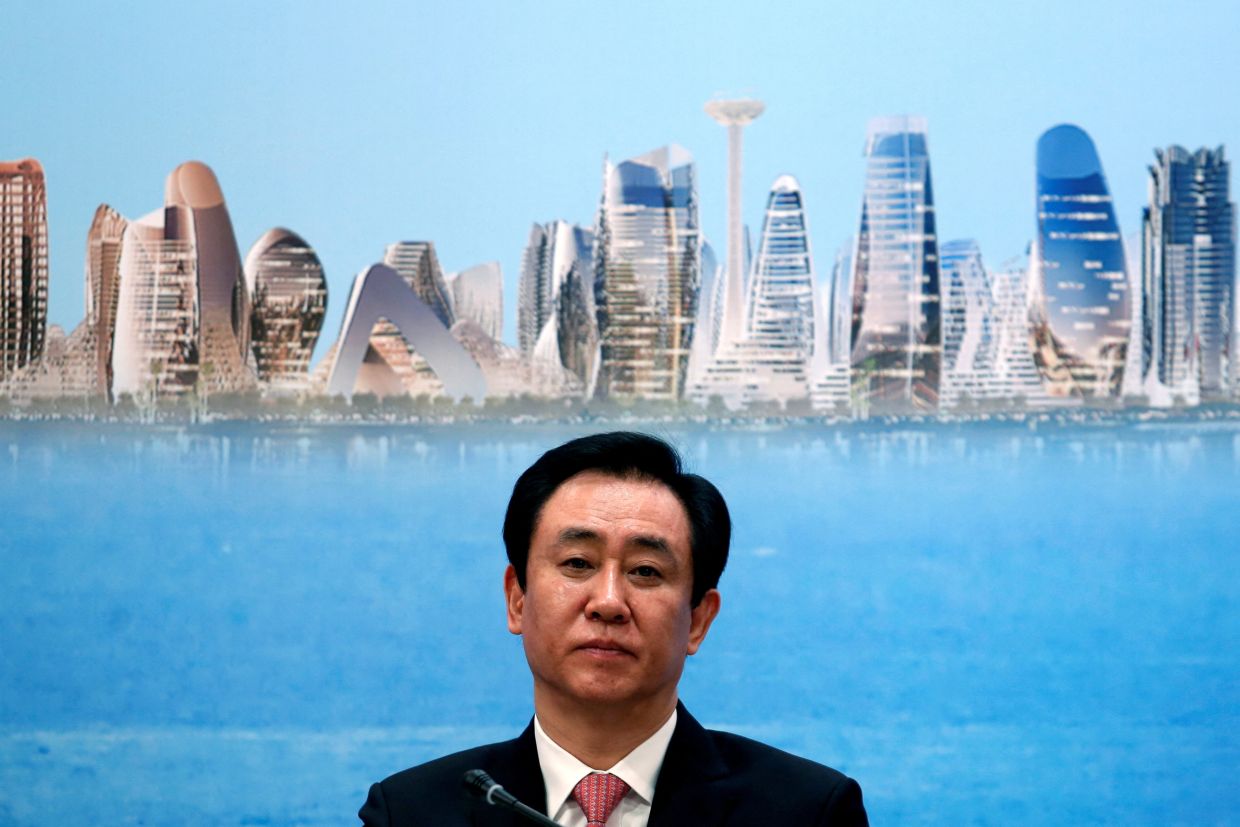
A Shenzhen court on Thursday handed down a life sentence to Hui Ka Yan, the Malaysian-educated entrepreneur who once towered as Asia's wealthiest individual before his real estate empire imploded into what is widely regarded as one of the most significant financial failures in modern Chinese history. The 67-year-old founder of China Evergrande Group, the world's most heavily indebted property developer, pleaded guilty in April to eight criminal charges encompassing misuse of funds, fraudulent fundraising, illegal deposit collection, unlawful lending, forged securities issuance, and corruption. The verdict represents the formal conclusion of a dramatic trajectory from countryside poverty to billionaire status and back again—a reversal that has sent shockwaves through regional financial markets and left hundreds of thousands of ordinary Chinese investors nursing devastating losses.
Hui's conviction unfolds against the backdrop of what remains unresolved: Evergrande's mountain of approximately $300 billion in outstanding liabilities, the vast majority of which remain unpaid as the company staggers through liquidation proceedings. The developer's default, which crystallised after years of warning signs and regulatory missteps, exposed structural fragility within China's property sector that continues to constrain economic growth across the nation and reverberate throughout Southeast Asia's interconnected financial networks. The company's troubles have become emblematic of broader challenges facing the world's second-largest economy, where speculative real estate development long propped up growth figures and created asset bubbles that ultimately proved unsustainable. Malaysian investors and businesses with exposure to Chinese property markets have watched this saga with particular concern, given the significant crossover in regional financial flows and the precedent it sets for accountability.
The sentencing judgment articulated a damning assessment of Hui's criminal conduct, with the court emphasising that the scale of financial harm was particularly severe and the circumstances unusually egregious. In its formal statement, the bench noted that Evergrande Group, its principal operating subsidiary Hengda Real Estate, and Hui himself had together inflicted economic devastation of exceptional magnitude while simultaneously damaging the social fabric and public confidence in financial institutions. Beyond the life sentence, authorities have ordered the complete confiscation of Hui's personal assets and imposed corporate fines totalling 15.82 billion yuan (approximately $2.36 billion USD) against the company and its subsidiary. These penalties, while substantial in nominal terms, appear almost symbolic given the scale of money that has evaporated from the financial system.
The judicial proceedings extended well beyond the founder himself. State media confirmed that 56 individuals connected to Evergrande faced sentencing on Thursday, alongside Hui. Among these, five senior company executives received prison terms ranging from six to eighteen years alongside substantial financial penalties. This broader sweep of prosecutions signals Beijing's determination to establish personal accountability throughout the corporate hierarchy, though critics argue such measures offer scant comfort to ordinary citizens and retail investors whose life savings have been obliterated. The concentration of consequences on a single corporate entity and its leadership, some observers contend, may oversimplify the systemic factors that permitted such malfeasance to flourish across China's property sector for nearly two decades.
The human cost of Evergrande's collapse remains visceral and immediate. Hui's detention in 2023, which preceded formal charges by months, came after the company defaulted on its obligations. During that interim period, the founder became something of a phantom figure in Chinese public discourse—visible only through occasional court photographs and regulatory pronouncements. The sentence, announced while Hui appeared grey-haired and subdued beside court officers, has not assuaged the anger of defrauded investors. Comments circulating through social media groups among aggrieved homeowners and wealth-product holders oscillate between bitter sarcasm and expressions of hopelessness, with many suggesting that incarceration may paradoxically offer Hui protection from vigilante justice that might await his release. Others have cynically observed that the criminal justice system appears more responsive than the civil recovery mechanisms available to ordinary creditors seeking recompense.
The liquidation process initiated by Hong Kong courts in 2024 has proceeded at a pace best described as glacial, adding insult to the injury already sustained by investors. As of August of last year, liquidators had managed to convert only approximately $255 million worth of Evergrande's sprawling asset portfolio into cash, set against creditor claims totalling an estimated $45 billion. This disparity underscores the fundamental problem confronting any resolution strategy: the company's liabilities dwarf its realisable assets by orders of magnitude. The sluggish pace of liquidation has left thousands of purchasers in a legal limbo, having paid deposits for apartments and commercial spaces that may never be completed, their funds effectively locked into a company-controlled receivership with no clear timeline for disbursement.
Even more vexing for international stakeholders is the fate of Evergrande's offshore assets, which remain contested across multiple jurisdictions. Outside mainland China, liquidators have initiated parallel legal proceedings aimed at freezing the foreign holdings of Hui and his former spouse, attempting to recover approximately $6 billion in dividends, director's fees, and other remuneration disbursed to the founder and other senior executives during the company's profitable years. These cross-border civil recovery efforts will likely consume years of litigation, adding further delay and expense to a process already characterised by lethargy and opacity. For foreign creditors, particularly institutional investors and bondholders across Southeast Asia and elsewhere, the prospect of meaningful recovery remains dim.
Hui's remarkable ascent from humble beginnings—a former steel technician raised by his grandmother in a rural Henan village—had become a cornerstone of the Chinese success narrative. He founded Evergrande in 1996 and methodically transformed it into China's dominant property developer by contracted sales volume, though this growth was fuelled almost entirely by aggressive debt accumulation. At his peak in 2017, Forbes valued Hui's net worth at $45.3 billion, positioning him as the wealthiest individual in Asia. That spectacular valuation, now revealed as built on fraud and accounting manipulation, exemplifies the premium that international wealth indices placed on Chinese real estate holdings during years when underlying risks were systematically underestimated or ignored by analysts and regulators alike.
The regulatory reckoning has continued even after criminal sentencing. In 2024, China's securities regulator imposed a personal fine of $6.6 million on Hui and permanently barred him from engaging in securities market activities. These penalties, imposed after investigators discovered that Evergrande's flagship publicly listed subsidiary had systematically inflated financial earnings and engaged in securities fraud of considerable scope, represent an additional layer of accountability. Yet the practical significance of barring someone serving a life sentence from securities markets is necessarily limited, raising questions about whether such measures represent meaningful enforcement or merely bureaucratic theatre.
The Evergrande implosion has reverberated throughout the Malaysian business community and among government officials grappling with China's slowing economic trajectory. The property sector's centrality to Chinese GDP growth has meant that the sector's crisis has broader macroeconomic implications for trade partners and regional investors. Malaysian exporters, whose businesses depend on Chinese construction activity and consumer demand, have felt indirect effects as the property downturn suppressed domestic consumption and investment spending. Furthermore, several Malaysian financial institutions and pension funds held Evergrande debt or had exposure through intermediaries, necessitating revaluations and provision increases that have weighed on profitability.
The Hong Kong Stock Exchange's delisting of Evergrande concluded a tumultuous saga that saw the company's shares oscillate wildly as rumours of default, government intervention, and restructuring possibilities cycled through markets. The delisting formality brought to an end any remaining pretence that equity holders might recover meaningful value from their investments. For retail shareholders concentrated in Hong Kong and mainland China who had believed in the narrative of a company whose sheer scale and market dominance would ensure survival, the delisting amounted to total loss confirmation.
Looking forward, the Evergrande sentencing establishes important precedent regarding how Chinese authorities prosecute white-collar crime at the highest corporate levels. The willingness to impose life sentences on billionaire founders signals that no individual, however wealthy or influential, enjoys immunity from criminal accountability. However, sceptics note that such prosecutorial vigour emerges only after systemic failure becomes undeniable and public anger reaches levels threatening social stability. The challenge for Malaysian policymakers and regional regulators involves extracting lessons from Evergrande's collapse that might strengthen oversight of property developers and financial institutions within their own jurisdictions, without impeding legitimate business activity or capital formation.
The verdict, while formally concluding Hui's criminal case, leaves unresolved the far more complicated question of how creditors—ranging from multinational financial institutions to migrant workers who invested savings in wealth-management products—will ultimately be compensated. For observers across Southeast Asia watching this unprecedented corporate collapse play out through its legal endgame, the message seems clear: even the most powerful and innovative entrepreneurs can face ruin when corporate malfeasance reaches sufficient scale, and the consequences for ordinary investors can be utterly devastating.

