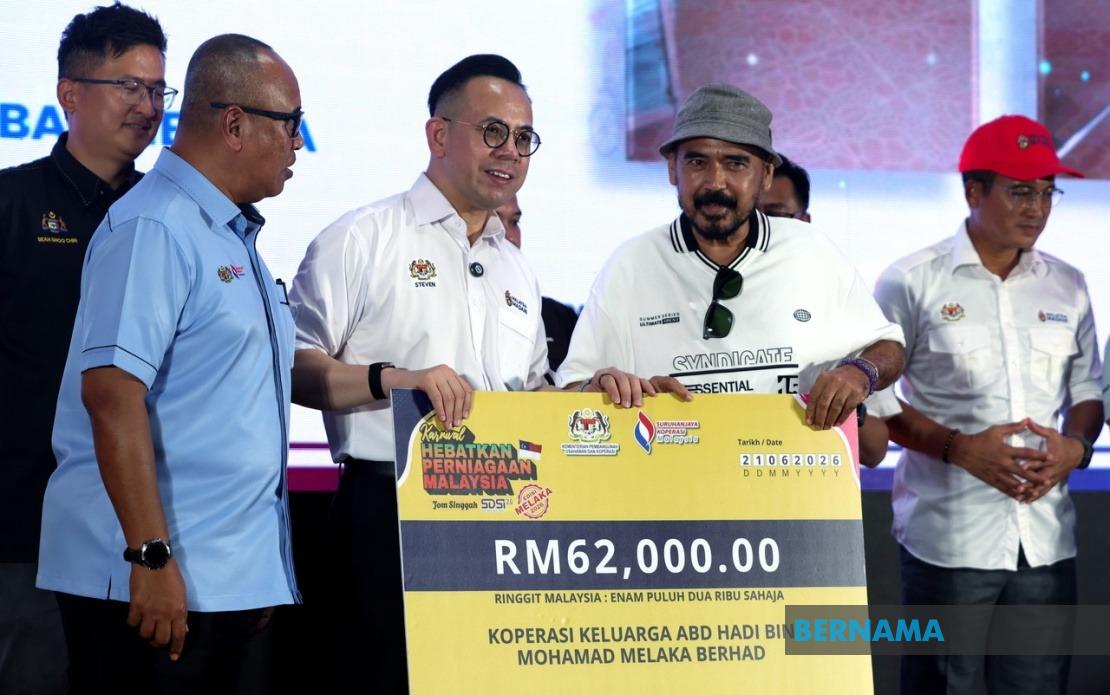
Malaysia's push to strengthen its entrepreneurial ecosystem gained fresh momentum last month when the Empowering Malaysian Businesses Carnival wrapped up a three-day run in Melaka with robust results. The HPM 2026 event, held from June 19 to 21, demonstrated the sustained appetite among the nation's small and medium-sized enterprises for networking opportunities and capital access. By the carnival's close, organisers had tallied RM8.45 million in combined business matching value and financing potential—a figure that underscores both the scale of the event and the hunger within Malaysia's business community for structured platforms that connect entrepreneurs with resources and partners.
The Ministry of Entrepreneur Development and Cooperatives (KUSKOP) reported that the carnival drew 70,000 visitors across its three-day duration, reflecting strong community engagement with initiatives designed to bolster local business development. Beyond the headline figure, the event generated RM532,802.77 in direct sales of entrepreneur products, providing immediate revenue benefits to participating vendors and demonstrating the real economic activity such carnivals can catalyse. This layered impact—combining long-term business relationships with immediate commercial transactions—illustrates why such events have become integral to Malaysia's entrepreneurship strategy.
At the heart of the Melaka carnival's success was an intensive business matching programme that facilitated 72 separate sessions between potential entrepreneurs and established partners or investors. These interactions produced RM6.4 million in identified business matching value, suggesting substantial commercial opportunities identified for follow-up beyond the carnival itself. The involvement of 25 potential entrepreneurs in this matching process indicates that organisers deliberately targeted high-potential ventures capable of scaling beyond their current operations. Such structured engagement differs from general networking events, offering vetted opportunities more likely to translate into actual business expansion and job creation.
The financing dimension proved equally significant. A total of 55 micro, small and medium enterprises participated in dedicated financial interaction sessions that yielded RM2.05 million in potential financing commitments. This component addresses one of the persistent pain points for Malaysian SMEs: accessing adequate capital on reasonable terms. By bringing financial institutions and service providers directly into contact with vetted enterprises, the carnival removed friction from the capital-seeking process and created pathways that might not otherwise materialise through conventional banking channels. For many participating MSMEs, securing even preliminary commitments at such events can validate their growth plans and provide momentum for formal funding applications.
The Melaka carnival represents the third instalment in the HPM 2026 series, indicating that KUSKOP has invested in establishing this as a recurring platform rather than a one-off initiative. This consistency matters for building entrepreneur confidence and creating anticipatory momentum among business communities across different states. The forthcoming event scheduled for Penang from July 17 to 19 at the Penang Waterfront Convention Centre signals that KUSKOP intends to carry this momentum northward, potentially adapting the model to suit regional economic characteristics while maintaining the core objective of facilitating business growth.
These carnivals sit within the broader Hebatkan Perniagaan Malaysia agenda, a KUSKOP initiative launched by Minister Steven Sim Chee Keong to advance Malaysia's entrepreneurial capacity systematically. The underlying framework—ABCD—encapsulates four strategic pillars: Accelerating Productivity, Bureaucracy Reduction, Capital Accessibility, and Developing Market Access. Each HPM carnival serves as a practical manifestation of these principles, directly addressing capital accessibility while creating networking opportunities that enhance market access and productivity. By bundling these objectives into a single event architecture, KUSKOP has designed a mechanism that efficiently targets multiple pain points simultaneously.
For Malaysian entrepreneurs and the broader business ecosystem, the Melaka results carry important implications. The volume of business matching value and financing potential identified suggests that significant unmet demand exists within the SME sector for facilitated connections and structured growth opportunities. Rather than viewing such figures as one-time achievements, they should be understood as indicators of latent entrepreneurial capacity waiting for activation through appropriate platforms. The RM8.45 million figure, while impressive, likely represents only the formally documented interactions—informal networking and relationship seeds planted during the carnival may generate additional economic activity over coming months.
The direct sales component deserves particular attention for small vendors and emerging entrepreneurs. The RM532,802.77 in immediate product sales demonstrates that even entrepreneurs not actively seeking capital expansion benefit from carnival participation through direct revenue generation. This creates incentive structures that draw a broader cross-section of the business community to such events, enriching the networking environment and expanding the potential for unexpected synergies between participants. A microentrepreneur selling at the carnival might encounter both a customer with repeated orders and a supplier offering better terms—outcomes valuable regardless of formal business matching activities.
Regionally, Malaysia's structured approach to entrepreneurial development through coordinated carnival platforms distinguishes its approach within Southeast Asia. While other regional economies support SME development through various mechanisms, the HPM model's emphasis on integrated platforms combining matching, financing, and direct sales under a single roof offers lessons for regional peers. For Malaysian business observers, the migration of this model across different states—from Melaka to Penang and presumably beyond—suggests KUSKOP views geographic expansion as key to its mandate. Ensuring consistent quality and relevant outcomes across different regional contexts will prove important for sustaining confidence in future instalments.
Looking forward, the success metrics from Melaka will likely influence how KUSKOP structures subsequent carnivals and whether the model expands to additional states or becomes more frequent. The combination of visitor numbers, business matching value, direct sales, and financing potential provides a comprehensive performance framework that transcends simple attendance figures. This multi-dimensional assessment suggests that organisers are measuring what genuinely matters for entrepreneurial development rather than vanity metrics. As Malaysia continues refining its approach to SME support in an increasingly competitive regional environment, platforms like HPM 2026 will warrant close attention from policymakers and business leaders assessing the efficacy of government-backed entrepreneurship initiatives.