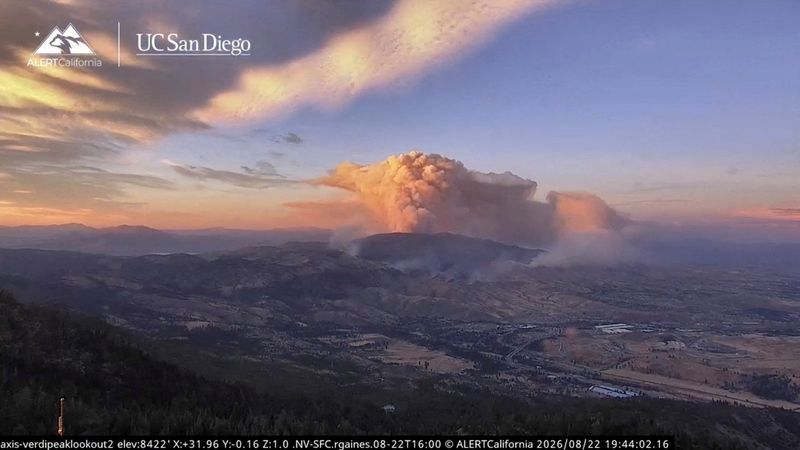
The digital age has fundamentally reshaped how news breaks and spreads globally. Social media platforms and smartphones now serve as the frontline of journalism, generating an endless stream of images and videos capturing everything from natural disasters to political upheaval. For news organizations operating across the world, this real-time documentation from ordinary people at the scene has become invaluable. Yet this same technological revolution that democratized eyewitness reporting now presents a critical vulnerability: artificial intelligence can now produce images and videos so convincing that distinguishing them from authentic documentation has become extraordinarily difficult.
The challenge has become acute enough that major news agencies like Reuters have established dedicated teams to confront it head-on. These visual verification specialists form a critical filter between the torrent of user-generated content flooding social media and what ultimately reaches readers. With roughly 2,600 journalists stationed across approximately 200 locations worldwide, Reuters maintains one of the most extensive news gathering operations globally. Yet even this sprawling network cannot be present at every breaking news event occurring across the planet. The agency has therefore come to depend heavily on photographs and videos submitted by members of the public who witness events firsthand, making the authentication of such material a fundamental operational necessity.
The rise of artificial intelligence has fundamentally altered the information landscape in ways that demand constant vigilance. Modern AI systems can now generate photographs and video footage that appear entirely authentic to the human eye, a dramatic evolution from earlier generations of synthetic media that were riddled with obvious flaws—hands with too many fingers, gibberish text in backgrounds, or other visual anomalies that made detection straightforward. Today's AI-generated imagery is far more sophisticated, particularly when operators feed the systems real photographs and data about actual people, places, and events. The technology can then manipulate this information to create convincing false depictions of real situations. In January, for instance, following reports that Venezuelan President Nicolás Maduro had been captured by U.S. forces, social media users circulated AI-generated images appearing to show Maduro in handcuffs, creating fictional visual "evidence" of an event that never occurred.
Beyond synthetic fabrications, deliberate misrepresentation of authentic footage remains equally prevalent. Social media users frequently extract videos of genuine protests or demonstrations that occurred at specific locations and times, then repost them with false captions claiming they depict current events elsewhere. This mixing of real content with false context can spread false narratives rapidly through networks, making the work of verification teams increasingly demanding. Reuters journalists tasked with this responsibility must now sort through hundreds of photographs and videos daily, ultimately validating and publishing perhaps a dozen from that entire volume.
The verification methodology employed by Reuters represents a systematic, multifaceted approach to authentication. The process begins with identifying the individual who captured the image or video, confirming their identity through various means, and where possible conducting interviews to understand the circumstances of what they documented. This human element remains crucial, as direct testimony from eyewitnesses provides irreplaceable context and confirmation. Simultaneously, Reuters teams examine the technical metadata embedded within digital files, which can reveal precise information about where and when an image was captured, and on what device. This data layer serves as an important corroborating tool, though sophisticated actors can sometimes manipulate metadata, necessitating additional verification steps.
Comparison with external reference data forms another critical pillar of the verification framework. Reuters journalists cross-reference photographs and videos against weather records from the relevant date and location, satellite imagery, archived street view photography, and other geospatial data sources. These reference materials help establish whether visual elements in a photograph align with what would reasonably have been present at that specific time and place. The direction and length of shadows in a photograph, for instance, can precisely indicate the time of day the image was captured, helping confirm temporal accuracy. Official reports, media coverage, and accounts from authorities regarding the event in question all feed into the verification calculus.
Corroboration through multiple independent sources of visual documentation strengthens authentication considerably. When Reuters verification teams locate other eyewitness photographs or videos of the same scene from different angles or perspectives, this convergence of independent testimony significantly increases confidence in the authenticity of all such material. The process resembles assembling a complex jigsaw puzzle, where individual pieces remain insufficient until the complete picture emerges and permits publication. Each photograph and video also undergoes screening with multiple AI detection tools specifically trained to identify evidence of artificial generation or digital manipulation. These technological filters cannot claim absolute reliability—occasionally the tools yield ambiguous signals that prevent definitive conclusions—but they serve an important function in detecting traces of AI alteration that may escape human visual inspection.
The implications of this challenge extend far beyond individual stories. The erosion of trust in visual evidence strikes at the foundation of modern journalism and public understanding of world events. When citizens cannot confidently distinguish authentic documentation from sophisticated forgeries, the very concept of photographic evidence loses its evidentiary power. This threatens not only news organizations' credibility but also the informed decision-making upon which democratic societies depend. For Southeast Asian readers and policymakers, this becomes particularly acute given the region's vulnerability to coordinated disinformation campaigns, particularly during elections and political crises. Nations including Malaysia, Indonesia, and Thailand have experienced significant disruptions from AI-generated and manipulated imagery weaponized for political purposes.
Reuters' commitment to visual verification reflects deeper institutional principles that have guided the organization since the Second World War. The agency's foundational trust principles mandate providing unbiased, reliable reporting while continuously strengthening its journalistic services and capabilities. In practice, this means investing in specialized teams and technologies to maintain evidentiary standards as the threat environment evolves. The organization has been instrumental in major investigations using verified visual evidence, including establishing that U.S. missiles were used in a strike on an Iranian girls' school that killed numerous children, and providing detailed documentation of the Minneapolis shooting that sparked international protests against policing practices.
The judgment calls demanded of Reuters' verification journalists grow increasingly nuanced and complex as technology advances. Newsrooms must balance the imperative to publish quickly with the requirement to publish accurately, knowing that false information spreads more rapidly through social networks than corrections ever do. The economic pressures facing news organizations globally mean fewer resources available for the painstaking work of authentication, even as the volume of content requiring verification continues expanding. Smaller regional outlets in Southeast Asia often lack the technical infrastructure and specialized expertise that Reuters brings to this work, making them vulnerable to inadvertently amplifying false imagery.
Looking forward, the verification landscape will likely become more challenging before it stabilizes. AI systems continue advancing at rapid pace, with new techniques emerging regularly that challenge existing detection methods. Yet the investment in visual verification teams and technology represents an essential defense against the erosion of factual understanding. For international news organizations and serious regional journalists across Southeast Asia, the Reuters model offers a template for maintaining credibility in an era when anyone with a smartphone and internet connection can claim to document reality, and when artificial intelligence can fabricate convincing false documentation of events that never occurred.

