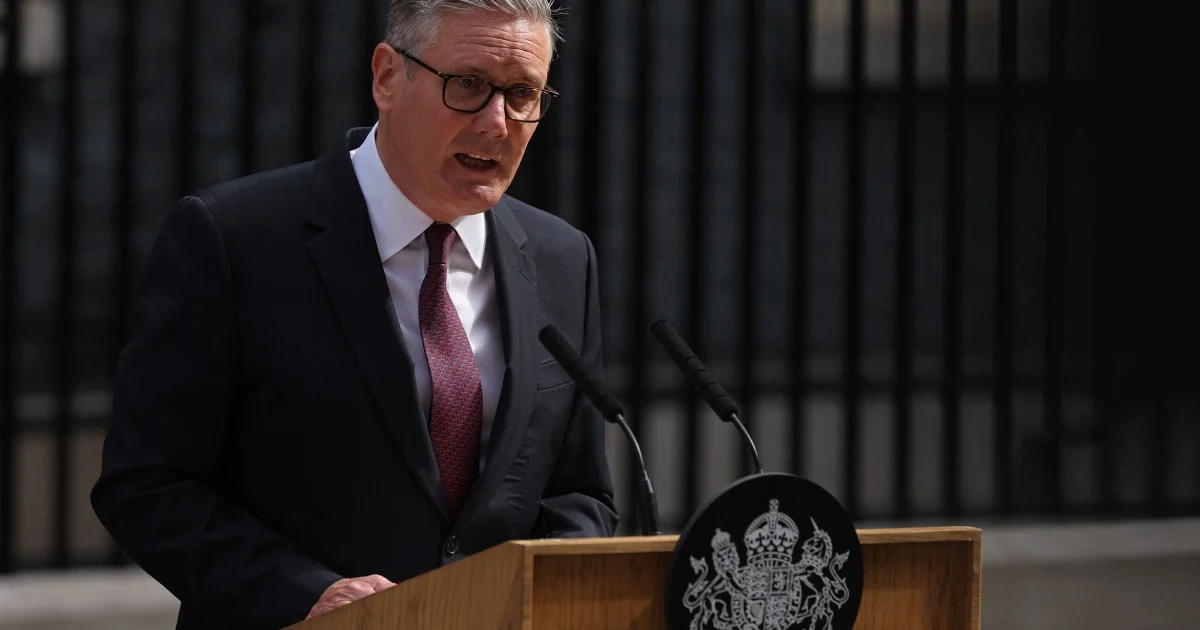
Prime Minister Keir Starmer confirmed on Monday that he intends to step down, triggering a formal process to install his replacement before Parliament reconvenes in September. The announcement propels Britain towards its seventh change of leadership in just ten years, a turnover reflecting deep fractures within the political establishment and raising questions about governance stability at a critical juncture for the nation.
Starmer's decision to depart while the Labour Party retains its parliamentary majority represents a watershed moment in recent British politics. Rather than facing an imminent electoral rout or a Commons defeat on a key measure, the Prime Minister is voluntarily vacating office, a choice that distinguishes his departure from many of his recent predecessors who were forced out by internal rebellion or electoral verdict. This decision grants Labour the opportunity to orchestrate a controlled transition, potentially minimising the damage that chaotic power contests can inflict on governing parties and public confidence.
The Labour Party's leadership election will follow a well-established constitutional framework refined through multiple transitions in recent years. Party members who pay their subscription fees become eligible to vote in the contest, alongside affiliated supporters and registered supporters, depending on the rules the party membership determines. This broader electorate, extending beyond parliamentary colleagues alone, fundamentally shapes the character of the contest and the ideological direction candidates must navigate to succeed.
Under the current electoral system, candidates require nominations from at least 34 Labour MPs to enter the race, a threshold designed to prevent frivolous candidacies and ensure serious contenders command meaningful parliamentary support. This requirement has historically filtered out candidates perceived as lacking sufficient party backing, though it has also occasionally enabled compromises whereby presumed frontrunners face unexpected challenges from rivals who mobilise unexpected coalitions of support.
The voting process itself typically employs a preferential ballot system, where party members rank candidates in order of preference. If no contender secures an outright majority on the first count, the lowest-polling candidate is eliminated and their votes redistributed according to members' second preferences, a process continuing until a winner emerges. This mechanism theoretically permits candidates without frontrunner status to prevail if they command broader appeal across the membership.
The September timeframe for announcing a winner creates meaningful but not extravagant preparation space for prospective candidates to build campaign infrastructure, articulate distinct visions for the party's future, and canvas for support among MPs and the wider membership. This compressed schedule, while allowing adequate organisation, prevents the extended campaigning cycles that characterise American presidential contests or the protracted uncertainty that engulfed previous British leadership transitions.
For Malaysian and Southeast Asian observers, the spectacle of Britain's recurrent leadership instability offers instructive lessons about democratic governance under stress. The revolving door of British prime ministers reflects the particular vulnerabilities of Westminster systems where governments derive legitimacy primarily from parliamentary majorities that can fragment unexpectedly. Without the fixed four or five-year electoral cycles that anchor many Commonwealth nations' political calendars, London faces perpetual uncertainty regarding when prime ministers will fall victim to internal party fracture or public discontent.
The economic consequences of serial leadership changes merit particular consideration for the region. Investor confidence depends substantially on policy continuity and clear strategic direction from government. The prospect of yet another transition in Downing Street compounds existing anxieties regarding Britain's post-Brexit economic trajectory and its capacity to negotiate effectively with trading partners including those in Southeast Asia. Each new prime minister must invest political capital rebuilding relationships and establishing credibility with international counterparts, time that could otherwise focus on concrete governance challenges.
The ideological composition of Labour's next leader will significantly influence Britain's foreign policy posture towards Asia more broadly. Starmer positioned his government as a pragmatic centrist committed to re-establishing Britain's standing among traditional allies after the Brexit turbulence of previous years. His successor may either continue this orientation or pivot towards alternative approaches reflecting different constituencies within the Labour membership, potentially altering engagement strategies with ASEAN nations and regional economic initiatives.
The Labour Party's internal dynamics will intensify throughout the summer as prospective candidates position themselves. The membership contains significant constituencies representing diverse policy perspectives, from those advocating robust public investment and stronger union alignment to centrists emphasising fiscal responsibility and business confidence. The victor will necessarily claim a mandate interpreted through whichever coalition of supporters elevated them to victory, a dynamic that frequently complicates governing once the campaign rhetoric must translate into concrete policy implementation.
Starmer's resignation, while orderly, underscores the accelerating pace of leadership change in major democracies. Over the past decade, Britain has witnessed the departures of David Cameron, Theresa May, Boris Johnson, Liz Truss, and now Starmer—each leaving their own mark or scar upon the nation's political fabric. This trajectory contrasts sharply with earlier eras when prime ministers typically served extended terms, providing clearer continuity for both domestic constituencies and international partners attempting to maintain stable bilateral relationships.
The September deadline means Britain's new prime minister will assume office having inherited an established Labour government midway through its parliamentary term, without the opportunity to secure a fresh electoral mandate. This circumstance limits their political capital and potentially constrains their capacity to implement transformative initiatives. Conversely, the incoming leader benefits from beginning their tenure with several years of governance remaining before facing electoral judgment, affording time to stabilise the administration and demonstrate competence before voters reach their verdict.