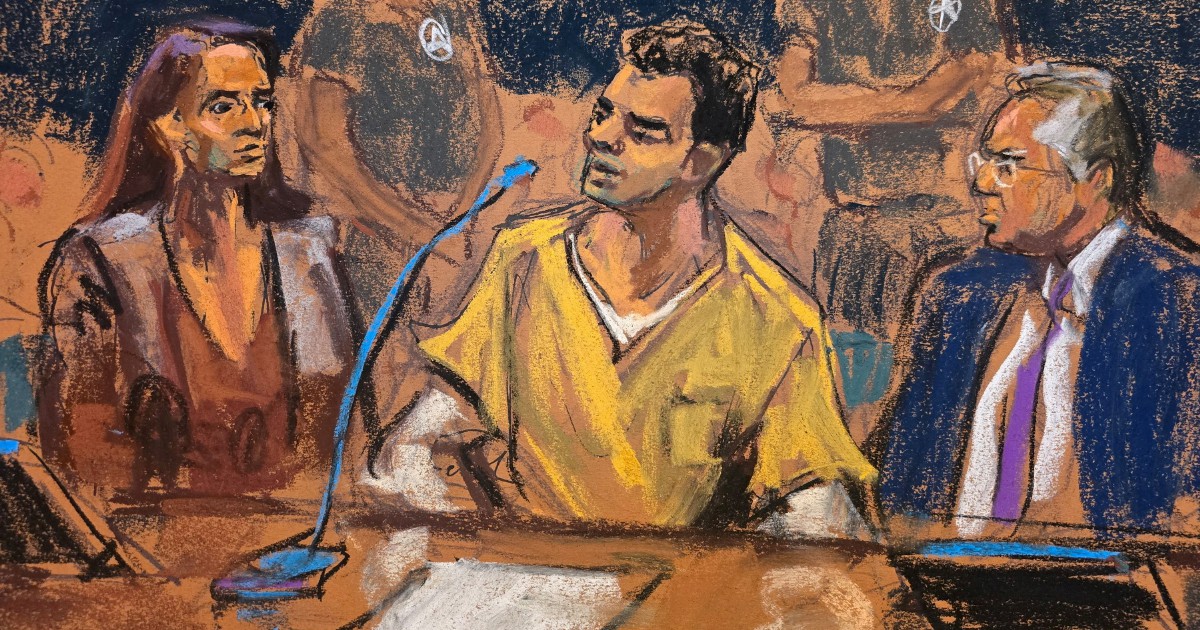
In a dramatic courtroom moment that has transfixed American observers, the man charged with killing a prominent health insurance executive has framed his actions as a response to wider dysfunction within the United States healthcare system. Luigi Mangione's appearance before the court revealed a narrative that transforms him from an ordinary individual into someone motivated by grievances against an industry many Americans view as fundamentally broken. Rather than simply defending himself against murder charges, Mangione used the legal platform to articulate a broader critique of how private insurers operate, suggesting his alleged crime carried ideological weight beyond the act itself.
Mangione's central claim centres on the chronic back injury he has endured, which he argues represents a microcosm of how America's healthcare apparatus fails its citizens. According to his account, his personal struggle with pain management and obtaining necessary medical care catalysed a deeper disillusionment with insurers who he contends prioritise profit over patient welfare. This framing matters significantly because it elevates the case beyond a simple criminal narrative into a referendum on whether healthcare system failures bear moral culpability for individual violent acts. The distinction is crucial in American legal and social discourse: Mangione appears to be arguing that his crimes were not merely personal expressions of rage but acts of protest against systemic injustice.
The target of his alleged violence, Brian Thompson, was chief executive of UnitedHealthcare, one of America's largest health insurance companies. Thompson's position made him a symbolic figure in broader debates about insurance industry gatekeeping and denial of coverage. For those already sceptical of private insurers, an executive of Thompson's prominence represents the human face of a system that routinely rejects medical claims and delays treatments. Mangione's courtroom positioning of himself as someone seeking to "make health care work better for everyone" invokes a populist language that resonates with millions of Americans frustrated by healthcare costs and access barriers.
What transforms this case from ordinary homicide into a cultural flashpoint is the unusual sympathy some segments of American society have extended toward the accused. Online spaces have witnessed expressions of support and even admiration, a phenomenon that deeply troubles law enforcement and public health officials. This response reflects genuine anxiety within American society about healthcare accessibility and affordability, anxieties that Mangione appears deliberately calibrated to channel. His courtroom statements seem designed to position himself as acting on behalf of people victimised by insurance practices, reframing murder as a form of violent activism.
For Malaysian observers, this case illuminates starkly different healthcare philosophies. Malaysia's approach through the public health system and regulatory frameworks creates a fundamentally different relationship between citizens and medical coverage. While Malaysia certainly faces healthcare challenges and pressures on public institutions, the privatised American system creates particular vulnerabilities around insurance gatekeeping that simply do not exist in the same form domestically. The case underscores how healthcare delivery structures shape not just medical outcomes but social cohesion and grievance expression.
Mangione's background as someone initially described as a "normal guy" adds troubling complexity to understanding how serious grievance becomes violent action. Court testimony and public records suggest someone who possessed education and apparent opportunity but whose personal medical struggles radicalised him against the institutional structures surrounding him. This trajectory raises uncomfortable questions about what converts frustration into lethal action and whether warning signs might have been visible to those around him.
The claimed motivation around healthcare system dysfunction also requires careful interpretation. While systemic failures demonstrably exist within American healthcare, translating policy critique into justification for individual murder represents an extreme position. Mangione's courtroom narrative appears strategically constructed to reframe premeditated homicide as activism, a rhetorical move that conflates legitimate criticism of institutional practices with criminal violence. The distinction between protesting broken systems and murdering individuals within them remains morally and legally significant, even if the underlying healthcare critique contains merit.
From a Southeast Asian perspective, this case illustrates vulnerabilities inherent in privatised healthcare systems. Where insurance companies hold gatekeeping power over medical access, both patient suffering and social resentment intensify. The American system's design around profit motives and claims denial creates pressure points that fundamentally do not exist in healthcare frameworks emphasising universal access and public provision. Malaysia's different model, with all its distinct challenges, does not generate identical social tensions around insurance gatekeeping.
The broader implications for American healthcare governance appear significant. The case has activated public debate about insurance industry practices and whether regulatory frameworks adequately protect patients. Political figures have seized on the incident to advance various healthcare reform agendas, using Mangione's alleged motivations as evidence supporting their preferred policy directions. Whether legislative consequences emerge from this highly publicised case remains uncertain, but the moment has undoubtedly sharpened healthcare as a political priority.
As the legal proceedings continue, Mangione's courtroom positioning of himself as motivated by healthcare justice rather than personal malice will likely face sustained challenge from prosecutors and the families of victims. The fundamental tension within his narrative—between legitimate critique of healthcare system failures and illegitimate resort to murder—defines not just the legal case but broader American social conversation about healthcare access, institutional accountability, and the boundaries of acceptable protest.

