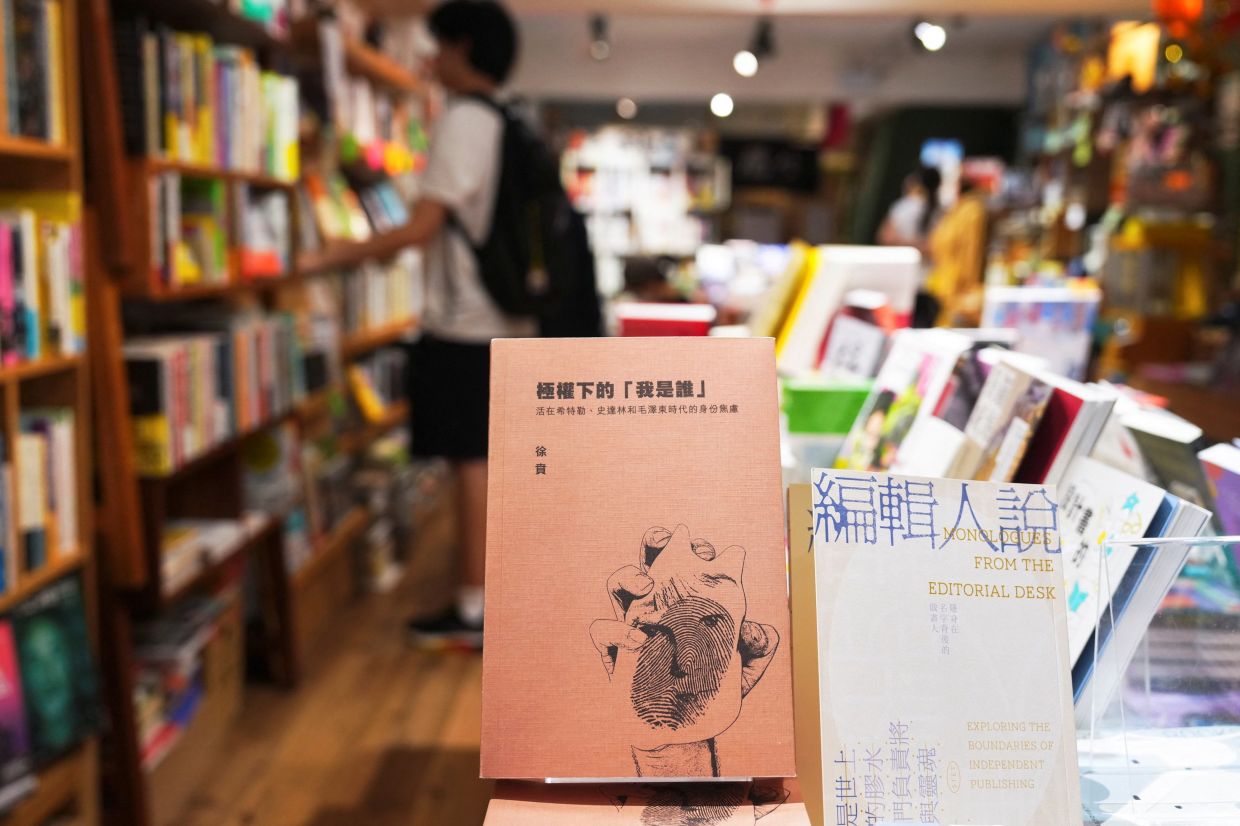
Hong Kong's Secretary for Security Chris Tang has laid down a clear expectation for the city's bookselling community: retailers must take personal responsibility for ensuring that the titles they stock do not endanger national security. Tang made the statement on Thursday at the legislative building, just hours after police conducted raids on two independent bookstores on Wednesday, resulting in the arrest of five individuals suspected of displaying and selling seditious materials. The latest enforcement action represents the third police operation targeting independent bookstores within a four-month window, intensifying concerns among civil liberties advocates about the trajectory of free expression protections in the territory.
The police raids targeted Have A Nice Stay, a bookshop founded by former journalists, and Greenfield Book Store, an established player in Hong Kong's independent publishing scene. Authorities alleged that materials found on the premises contained content intended to stir up hatred against the Hong Kong government, judiciary, and law enforcement agencies. Two of those arrested were released on bail by Friday morning, though the broader implications of the operation have sent ripples through the bookselling community. The bookstore closures and enforcement actions follow an increasingly restrictive environment for publishers and retailers operating in the territory, where the interpretation of what constitutes a threat to national security remains contested and opaque.
Tang's comments drew an explicit comparison between the responsibilities of food sellers and booksellers, suggesting that just as vendors must ensure their products are safe and legal, retailers must guarantee their inventory poses no risk to state security. When pressed on whether authorities would publish an official list of prohibited titles to provide clear guidance, Tang rejected the idea, arguing that such a catalogue would actually hinder effective law enforcement against publications that "intend to harm the country." This position creates a fundamental tension: booksellers are expected to self-police their inventories according to standards they cannot fully anticipate, as no authoritative registry exists to clarify which titles cross the invisible line.
The uncertainty surrounding these boundaries has already forced closures within the sector. Have A Nice Stay announced in advance that it would shut operations on August 30, citing two primary challenges in a social media statement: persistent financial difficulties and the impossibility of identifying what the shop characterised as an "elusive red line." The bookstore's management acknowledged their inability to conduct comprehensive content review of every single volume and expressed doubt about their capacity to determine which titles might be deemed problematic by authorities. This admission underscores the practical dilemma facing independent retailers: compliance with vague standards requires either unprecedented self-censorship or acceptance of legal risk.
The current enforcement wave is not unprecedented. In March, police arrested the owner and staff of Book Punch, another independent store, on suspicion of selling seditious publications. Among the materials cited was a biography of Jimmy Lai, the pro-democracy media magnate who was sentenced to 20 years in prison in a separate national security case. In June, further arrests occurred when two booksellers were detained on suspicion of selling seditious publications and receiving funding from foreign political organisations. The cumulative effect of these operations has created a chilling atmosphere in the independent publishing and bookselling ecosystem, with each enforcement action serving as an implicit warning about acceptable inventory boundaries.
The situation in Hong Kong has not escaped the attention of regional governments and observers. Taiwan's President Lai Ching-te, whose self-governing democracy is claimed by Beijing, commented on the eroding freedom of expression in Hong Kong through a Facebook post, emphasising that "every independent bookstore is vital in guarding free thought." This statement reflects Taiwan's understanding of bookstores as institutions essential to democratic culture. Liang Wen-chieh, Taiwan's Mainland Affairs Council deputy minister, revealed that some Taiwanese publishers have begun self-censoring their catalogues when participating in Hong Kong book fairs, indicating that the enforcement actions have broader ripple effects throughout the region's publishing industry and cross-strait cultural exchange.
For Malaysian observers and regional analysts, the Hong Kong situation presents instructive parallels and contrasts. While Malaysia has its own restrictions on publications through the Printing Presses and Publications Act and the Internal Security Act, the mechanisms of enforcement in Hong Kong appear distinctly more expansive and fluid. The absence of a defined list of prohibited materials, combined with the expectation that private retailers must independently determine compliance, creates enforcement dynamics that differ from Malaysia's more codified (though still contested) regulatory frameworks. The psychological and commercial impact on bookstores operating under such uncertainty resonates across Southeast Asia, where independent publishing sectors already navigate complex regulatory environments.
The broader implication of Hong Kong's enforcement approach concerns how national security concepts can expand to encompass political speech and historical commentary. When biographies of political figures or titles discussing governance structures can trigger sedition investigations, the definition of national security stretches far beyond traditional considerations of espionage or violent threats. This expansive interpretation raises questions about how such frameworks might be applied or adopted elsewhere, particularly in jurisdictions examining their own national security legislation. For regional publishers and booksellers, Hong Kong's experience serves as a cautionary demonstration of how regulatory ambiguity can effectively function as censorship without explicitly banning specific titles.
The enforcement actions also highlight the vulnerability of independent bookstores as cultural institutions in an era of heightened security consciousness. Unlike large commercial publishers with legal departments and compliance infrastructure, independent retailers typically operate with limited resources to assess legal risk or navigate regulatory uncertainty. The expectation that individual shop owners must serve as arbiters of national security doctrine places an impossible burden on small businesses already struggling with economic pressures. Have A Nice Stay's closure announcement reflects not merely financial strain but the breakdown of a business model when operating conditions become legally unpredictable.
Looking forward, the trajectory in Hong Kong will likely influence how other jurisdictions calibrate their own approaches to regulating publications and protecting free expression. The experiment of expecting retailers to self-police without clear standards represents a distinctive model of indirect censorship, wherein the state avoids formally banning titles while creating conditions that naturally suppress publication and distribution. For Malaysia's publishing and bookselling communities, the Hong Kong experience underscores the importance of clarity and transparency in regulatory frameworks, and the risks posed by enforcement regimes that leave critical definitions ambiguous. The international publishing industry, particularly regional operators, will be watching whether Hong Kong's approach becomes more entrenched or whether pressure for clearer standards emerges.

