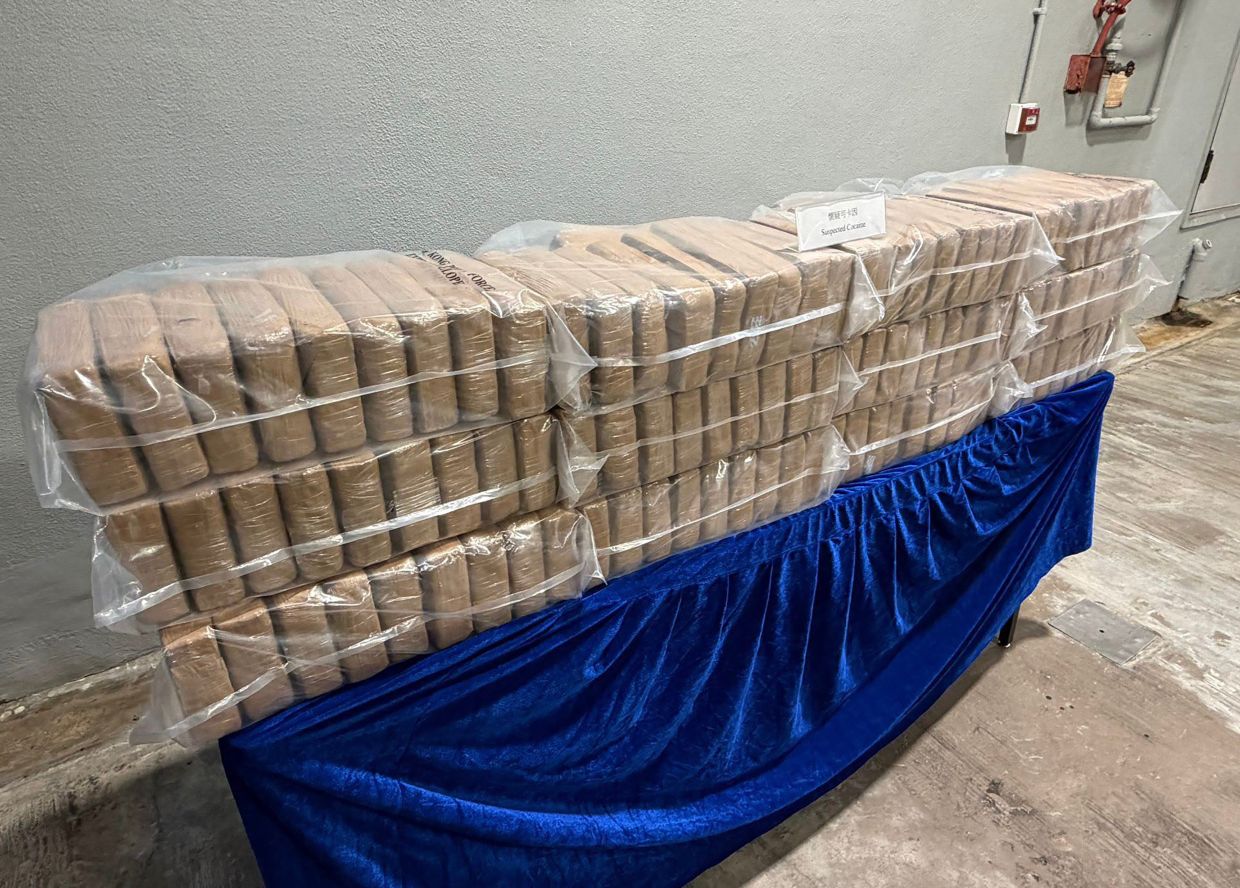
Hong Kong's narcotics police have struck a significant blow against international drug trafficking networks with the discovery of 361 kilograms of cocaine concealed aboard two yachts moored in Aberdeen Typhoon Shelter. The operation, which unfolded over a week, represents the territory's most substantial cocaine seizure in the past twelve months and underscores the ongoing vulnerability of Hong Kong's maritime zones to transnational smuggling operations.
The second phase of the investigation culminated on Sunday when officers conducted a raid on a six-metre yacht positioned near vessels that had been targeted the previous week. Hidden aboard the smaller vessel were approximately 120 kilograms of cocaine bricks, authorities confirmed. This discovery followed an initial seizure on Friday that had already yielded 241 kilograms from another yacht at the same sheltered anchorage, a popular mooring spot for both legitimate vessels and those engaged in illicit activities.
The combined haul, totalling 361 kilograms with an estimated street value of HK$270 million, represents a substantial quantity of narcotics that would have significantly impacted drug availability across Hong Kong and potentially the broader Asia-Pacific region. The monetary valuation alone underscores the lucrative nature of international cocaine trafficking, with organised crime groups willing to deploy considerable resources and take substantial risks to move the drug through regional distribution networks.
Investigators believe the two seizures are inextricably linked, pointing to compelling evidence that both consignments formed part of a unified trafficking operation. The consistency in packaging and weight across both hauls strongly suggests that a single organised syndicate was utilising multiple vessels as a distributed storage strategy. This approach—spreading inventory across several locations rather than consolidating it in one site—reflects sophisticated criminal methodology designed to mitigate loss if any single vessel is discovered by law enforcement.
The operational structure uncovered by police reveals a hierarchy typical of major trafficking organisations. A suspected syndicate kingpin and two associates classified as core members were detained following the initial Friday raid. When questioned, these individuals claimed to be unemployed or engaged in fishing, a cover story often employed by trafficking networks to explain their presence in maritime locations and their access to vessels. Such deception underscores the calculated efforts criminals invest in obscuring their illicit activities.
Police extended their investigation to the registered ownership chain of the second yacht, leading to the Monday arrest of a 45-year-old local woman identified as its registered owner. Officers disclosed that the woman is unemployed, and she remains in custody undergoing questioning. The fact that she is listed as the vessel's registered owner does not necessarily indicate direct involvement in the trafficking operation; criminal syndicates frequently utilise unwitting or coerced individuals as front owners to distance the actual operators from legal liability and trace evidence.
The Aberdeen Typhoon Shelter locale has emerged as a particular flashpoint for maritime drug trafficking in Hong Kong. The sheltered anchorage attracts numerous vessels, including fishing boats and pleasure craft, creating an environment where suspicious activity can blend into routine maritime traffic. The concentration of two major seizures within days suggests that criminal networks have identified this location as strategically advantageous for their operations, whether due to perceived vulnerabilities in surveillance, natural advantages for vessel concealment, or established corruption networks that might have previously enabled smuggling operations.
For Malaysia and the broader Southeast Asian region, the Hong Kong bust carries significant implications. The cocaine seized was destined for distribution through Asia-Pacific markets where demand among affluent consumers continues to sustain lucrative trafficking networks. Maritime routes through Southeast Asian waters—including those near Malaysia—serve as critical arteries for this international drug flow. The seizure in Hong Kong represents only a fraction of trafficking attempts passing through the region, highlighting the scale of the challenge facing law enforcement across multiple jurisdictions.
The case demonstrates how transnational drug trafficking operates with increasing sophistication, employing multi-vessel logistics, layered ownership structures, and false-cover narratives to evade detection. The fact that Hong Kong police identified and disrupted what appeared to be an active, ongoing operation suggests enhanced intelligence capabilities and coordination among regional authorities. However, the sheer quantity of cocaine recovered also indicates that substantial quantities continue to reach end markets across Asia despite enforcement efforts.
Law enforcement agencies throughout Southeast Asia will likely use the operational details revealed in this case to refine their own interdiction strategies. The emphasis on distributed storage across multiple vessels, the use of regional front operators, and the integration of legitimate maritime traffic as camouflage represent evolving tactics that require corresponding adaptations in surveillance, intelligence-sharing, and prosecution frameworks. Regional cooperation through mechanisms like ASEAN and bilateral agreements becomes increasingly vital as trafficking organisations demonstrate their ability to leverage maritime geography and weak enforcement coordination across jurisdictional boundaries.

