The Hong Kong police have intensified enforcement of the territory's national security apparatus with the arrest of two individuals suspected of distributing seditious publications and accepting financial support from overseas political organisations. The Wednesday detentions, announced through a government statement on Thursday, represent another significant enforcement action targeting independent media and dissenting voices in the Asian financial centre, where civil liberties have come under sustained pressure since 2019.
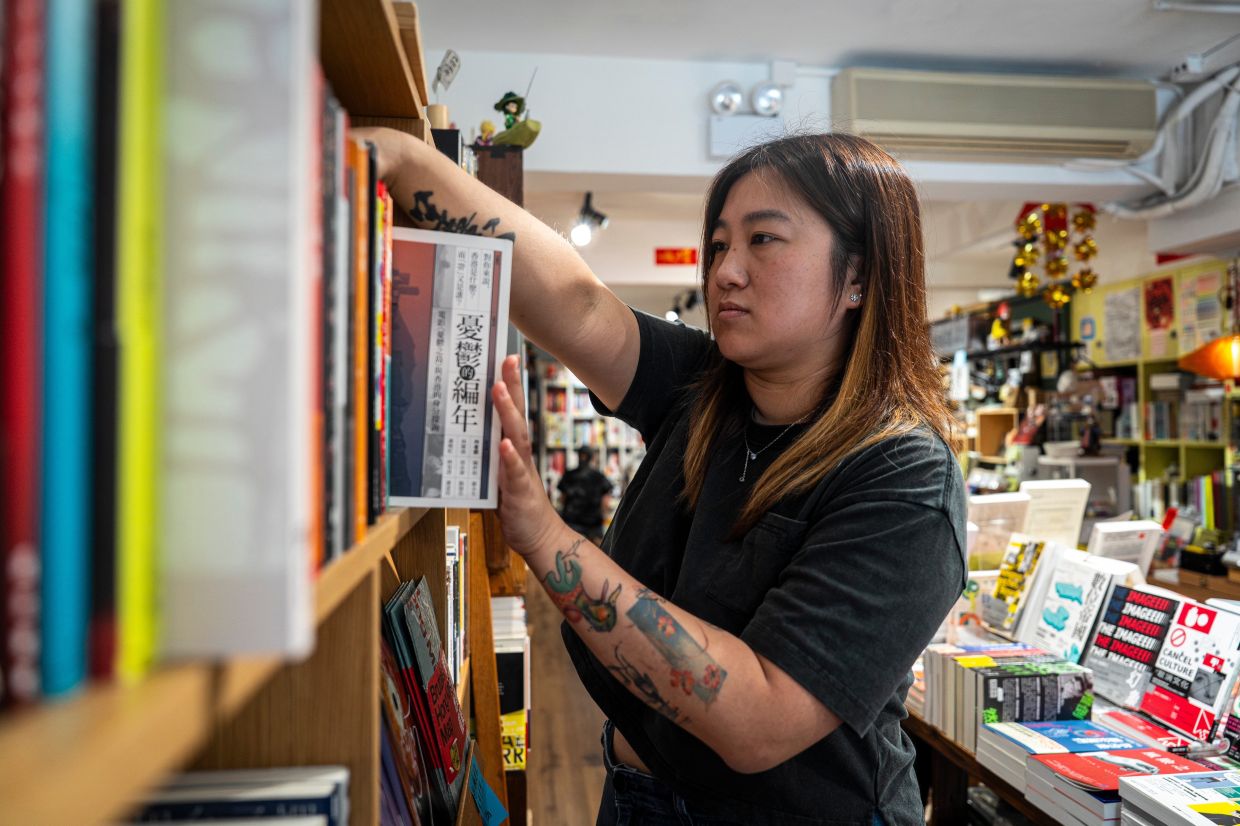
While authorities refrained from publicly naming those detained, local journalists citing unconfirmed sources identified one suspect as Leticia Wong, the proprietor of Hunter Bookstore located in the Sham Shui Po district. Wong, a former district councilor known for pro-democracy advocacy, has maintained her public criticism of the government despite the imprisonment of numerous fellow activists following the territory's turbulent protests four years ago. Her reported involvement signals the authorities' willingness to pursue even relatively modest independent commercial enterprises that harbour political expression.
The timing of these arrests carries symbolic weight for Hong Kong's political trajectory. With the anniversary of the 1997 handover approaching on July 1st, the enforcement action underscores international concerns about Beijing's interpretation of commitments made at that transition. Observers worldwide have questioned whether the "one country, two systems" framework that promised Hong Kong distinct governance arrangements continues to hold meaningful substance, or whether it has become merely ceremonial language masking increasingly uniform political control.
According to the government's official account, the detained pair operate the shop in question and face allegations of exhibiting and selling materials designed to incite opposition against the government, judiciary, and law enforcement institutions. Investigators claim the suspects received financial remittances originating from foreign political entities—though the statement provided no specifics about which publications, organisations, or sums were involved. This vagueness surrounding the alleged infractions mirrors a broader pattern in Hong Kong's recent enforcement practice, where authorities cite concerns without detailed public accounting.
Wong's bookstore has faced sustained official scrutiny that extends well beyond this week's arrests. In her own assessment shared with international media, she documented that government bodies initiated approximately 92 separate actions against her establishment within a three-year span ending June 2025, encompassing inspections, conspicuous surveillance operations, and formal warning correspondence. Beyond these direct measures, she noted that an anonymous letter circulated to organisations planning events at her venue prompted at least one partner to withdraw, suggesting an environment of intimidation extending beyond formal state action.
The broader pattern of targeting booksellers reflects authorities' concerns about independent publishing and retail sectors as vectors for political organising. A competing bookstore saw its owner and staff arrested in March under comparable sedition charges, with police specifically investigating the sale of a biography about imprisoned media entrepreneur Jimmy Lai. Those individuals secured bail release, yet the prosecution pathway remains ongoing. The repeated focus on biographical material about Lai—a figure who has become emblematic of Hong Kong's lost press freedoms—indicates that authorities view certain historical narratives as inherently threatening to social order.
Pro-Beijing media outlets have already begun framing such independent cultural spaces as sites of subversion. A government-aligned newspaper previously characterised Wong's book fair as exhibiting "soft resistance" qualities merely for its intention to stock the Lai biography. This terminology weaponises the concept of resistance itself, suggesting that commercial decisions and publishing choices constitute security threats warranting police intervention. The framework implicitly criminalises not just explicit political organising but the mere circulation of narratives inconvenient to official narratives.
The dual legal mechanisms cited in this case—the 2024 national security law and asset-seizure provisions in separate legislation—illustrate how Hong Kong's regulatory environment has evolved into a multi-layered enforcement structure. Rather than relying on singular legislation, authorities can pursue cases through complementary statutory grounds, complicating legal defences and signalling authorities' determination to sustain pressure even if particular charges face challenges. For businesspeople operating in Hong Kong, this architecture creates profound uncertainty about which activities expose them to prosecution.
Hong Kong's government continues asserting that these security measures are prerequisites for stability and that speech protections remain robustly preserved. This official position stands in tension with observable enforcement patterns and the testimony of persons like Wong who describe an escalating atmosphere of constraint. The gap between stated policy and experienced reality reflects a fundamental tension within Hong Kong's current trajectory, where authorities increasingly frame dissent itself as destabilising rather than as an expression of legitimate democratic participation.
For Malaysia and the broader Southeast Asian region, Hong Kong's trajectory carries implications for understanding how security legislation can be deployed to narrow political space incrementally. The bookstore arrests demonstrate how ostensibly targeted enforcement against foreign-funded sedition can expand to encompass domestic commercial speech and cultural expression. Regional policymakers and civil society observers monitoring Hong Kong's experience gain insight into how security frameworks, once established, tend toward expansive interpretation and application. The case also illustrates the vulnerability of independent media and cultural sectors when governance systems lack institutional checks on executive power.

