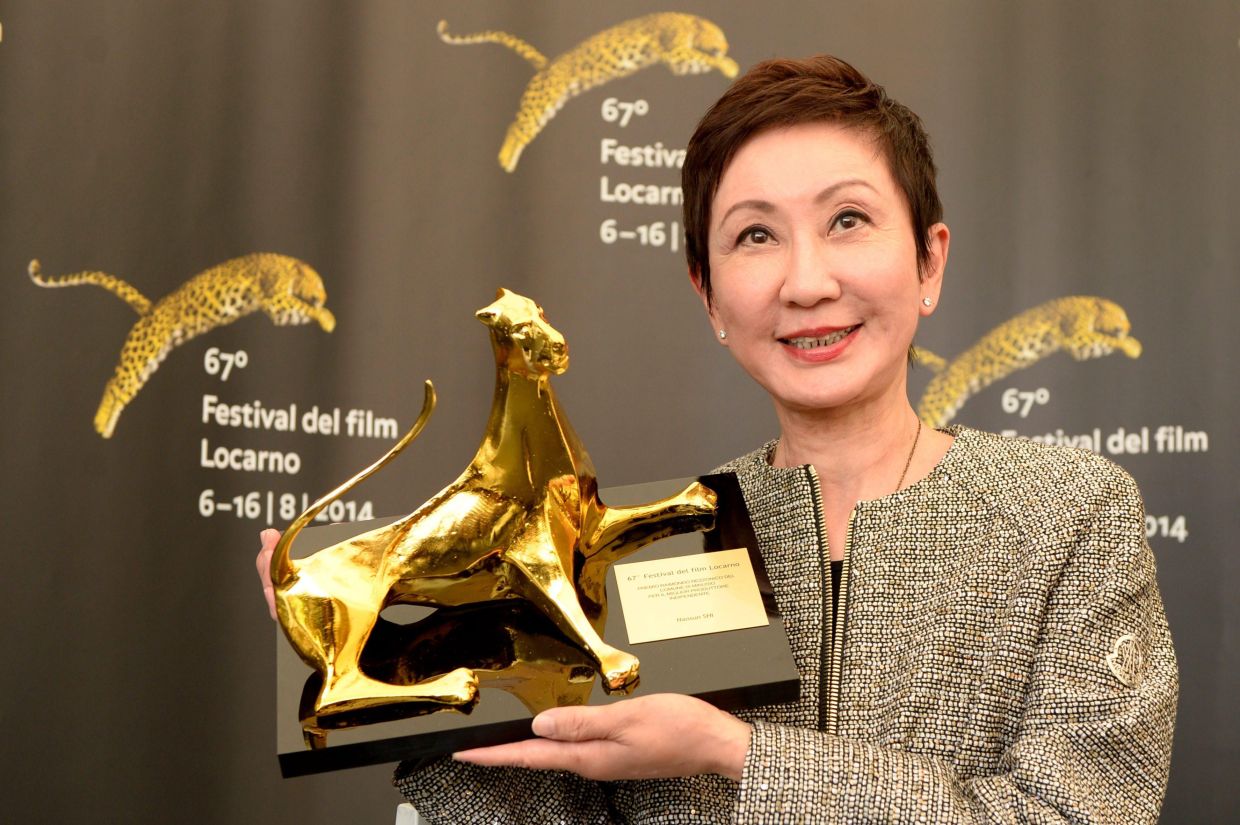
The death of Shi Nan-sun, the visionary producer who shaped Hong Kong cinema into a globally recognised force, has prompted an outpouring of grief from some of Asia's most celebrated film personalities. The 75-year-old veteran passed away peacefully on Monday evening at Hong Kong Sanatorium & Hospital, succumbing to complications arising from a bacterial infection that triggered multiple organ failure. Her passing marks the end of an era for an industry that owes much of its international prestige to her pioneering work in distribution, financing, and professional management.
Film Workshop, the production company Shi co-founded with acclaimed director Tsui Hark, announced that her health had been in steady decline since 2022, when she developed complications affecting her immune system. The deterioration accelerated in recent months as recurrent infections ravaged her body, ultimately overwhelming her remaining defences. She spent her final hours surrounded by family and loved ones, a peaceful conclusion that those closest to her have emphasised in their tributes. The company indicated that details regarding memorial services and funeral arrangements would follow in due course.
The tributes have flooded in from across the entertainment world, reflecting Shi's outsized influence on the careers of Hong Kong's most prominent actors and filmmakers. International star Jackie Chan, posting on mainland Chinese social media platform Weibo, described the film world as having "lost another legendary figure" and paid homage to what he termed her valour and the strength evident in her classic works. His words capture the sense that Shi represented not merely a successful business operator but a custodian of Hong Kong's artistic heritage during its most creatively fertile period.
Among the most poignant tributes came from actress Carina Lau Ka-ling, who posted alongside a vintage black-and-white photograph of Shi. Lau revealed the depth of her personal connection, acknowledging that she and her partner Tony Leung Chiu-wai had both drawn extensive wisdom from Shi on matters of professional conduct and personal integrity. She positioned Shi as a towering female role model in an industry historically dominated by male decision-makers, describing her as an "immensely respected representative of women" whose legacy would endure in the hearts of those whose careers she had touched. The tribute underscored how Shi's influence extended far beyond boardroom negotiations into the realm of mentorship and moral guidance.
Brigitte Lin Ching-hsia, Donnie Yen Chi-tan, and Shu Qi were among numerous film luminaries who publicly honoured Shi's memory through social media posts and statements to the press. Lin, who claimed a friendship with Shi spanning more than five decades, composed a particularly moving tribute posted at 4am on Tuesday that revealed the producer's quiet philosophy of personal obligation. Lin wrote of her intention to honour Shi by emulating her example and channelling positive energy to others, suggesting that Shi's impact transcended professional achievement to encompass a broader vision of how one should conduct oneself in the world.
Official recognition came swiftly from Hong Kong's government apparatus. Secretary for Culture, Sports and Tourism Rosanna Law Shuk-pui released a statement characterising Shi as a distinguished figure whose contributions had been instrumental to the sustained development of the territory's film sector over decades. Law emphasised that Shi had dedicated her existence to film and television production, bequeathing to Hong Kong audiences an invaluable catalogue of cinematic memories that would endure long after her death. Her words reflected the consensus view that Shi's legacy constituted a matter of public patrimony rather than merely private family or corporate concern.
Tsui Hark, Shi's former husband and longtime creative partner, offered his own account of her final struggle. He depicted her as having fought her illness with extraordinary resilience, clinging to life with characteristic fortitude until her immune system finally collapsed beyond recovery. According to Tsui, she maintained composure throughout her ordeal and departed peacefully in the company of those she loved most. His testimony conveyed admiration for her composure in the face of mortality and gratitude for the support that friends and well-wishers had extended during her decline.
Shi's most recent public appearance occurred in May when she attended the funeral of Linda Kuk Mei-lai, another veteran producer. The fact that she required a walking stick at that occasion prompted widespread concern about her deteriorating physical condition, foreshadowing the grave complications that would soon claim her life. The passage of months from that final public sighting to her death in December underscores how rapidly her health collapsed once her body's defences had been compromised by the bacterial infection.
Born and educated in Hong Kong, Shi followed an unconventional path into the film world. She pursued tertiary education in the United Kingdom, studying statistics and computing at the Polytechnic of North London before returning to her birthplace to launch a career in television production. This technical background and international exposure would prove invaluable when she entered the film industry in 1981 as an executive director at Cinema City, where her aptitude for administration, financing arrangements, contract negotiation, and international distribution channels quickly became apparent to colleagues and competitors alike.
In 1984, Shi took the decisive step of co-founding Film Workshop alongside Tsui Hark, launching what would become one of Hong Kong cinema's most significant production entities. She subsequently established Distribution Workshop, effectively creating the infrastructure through which locally produced films could penetrate international markets that had previously remained closed to Hong Kong content. Her role in professionalising Hong Kong's film business cannot be overstated; she transformed the industry from a collection of small, informal operations into a coordinated sector capable of competing globally with the studios of America, Europe, and Japan.
Shashi and Tsui married in 1996 and maintained their professional relationship throughout eighteen years of matrimony before divorcing in 2014. Their separation did not diminish their mutual regard; they continued to support one another's artistic endeavours and preserved a close friendship that lasted until her death. Brigitte Lin once provided insight into the profound nature of their bond, quoting legendary novelist Jin Yong to suggest that Shi had possessed an absolute devotion to Tsui that transcended conventional romantic attachment. Lin characterised her as viewing Tsui as a true artist worthy of complete admiration and protection, a perspective that shaped her decisions and priorities throughout their years together.
Shi's contributions to Hong Kong cinema extended beyond production and distribution to encompass significant advocacy work on the international stage. She received prestigious honours including appointment as an officer of France's Ordre des Arts et des Lettres and recognition as best independent producer at the Locarno International Film Festival. Throughout her career, she served as jury member or president for numerous major international film festivals, accumulating accolades that testified to her global vision and exceptional marketing acumen. In 2025, at the Hong Kong Film Awards, Shi and Tsui jointly received a lifetime achievement award, ensuring that their collective contributions would be formally enshrined in the industry's historical record.

