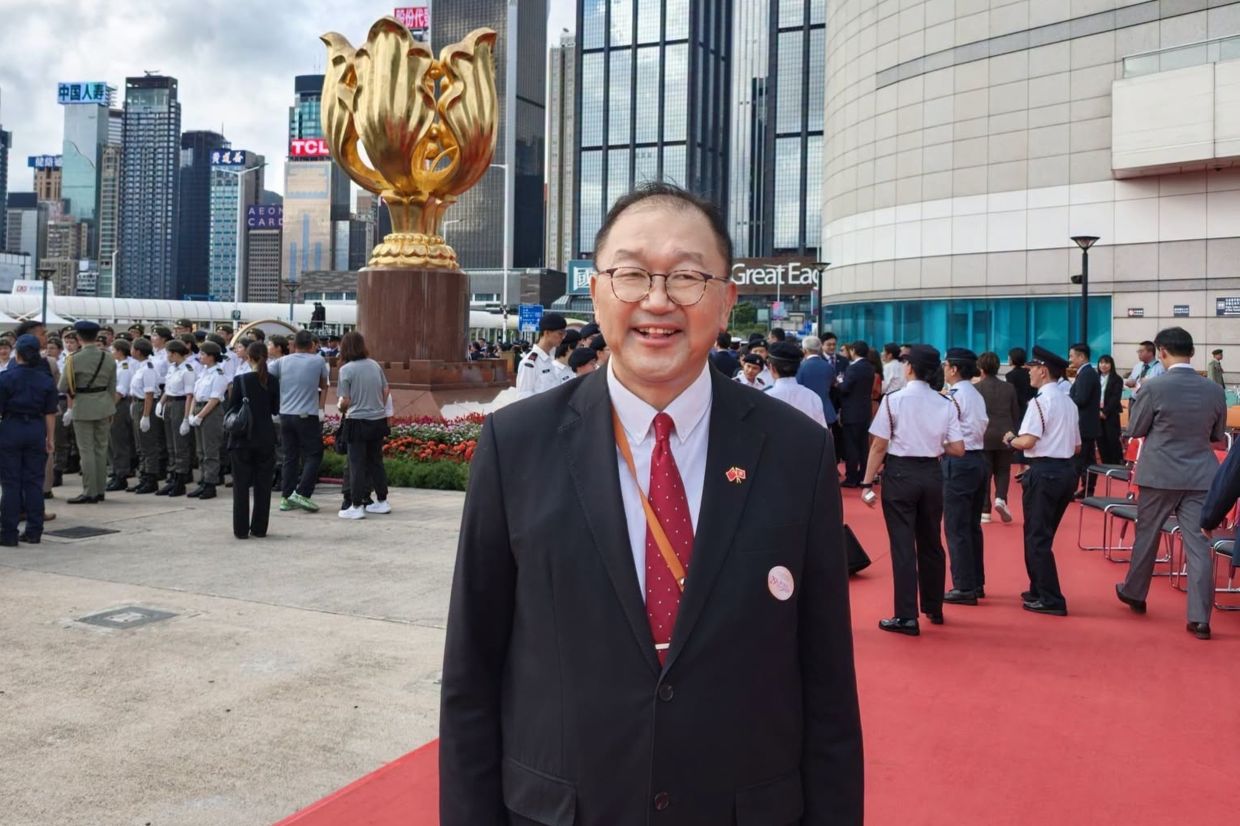
William Wong Kam-fai, a 66-year-old Hong Kong legislator and academic, has stepped down from the Legislative Council in the wake of a traffic incident that ended in his arrest on drink-driving and hit-and-run suspicions. His resignation on Friday represents the first departure from Legco over a scandal in more than two decades, underscoring the gravity of the situation and the political fallout it has triggered across Hong Kong's governing institutions.
The incident unfolded on Monday evening when Wong's vehicle careened out of control near a staff residence on campus, striking two parked cars in succession. Police took him into custody late that night, launching an investigation that would ultimately precipitate his sudden exit from the legislature. Wong's decision to resign came swiftly, suggesting both recognition of the reputational damage and a deliberate attempt to contain the political consequences of his actions for the institution itself.
In his resignation statement, Wong expressed contrition for the distress his conduct had caused society and the Legislative Council. He emphasised that stepping down was intended to minimise disruption to the legislature's operations, a framing that highlighted his awareness of institutional concerns. He also requested public forbearance, noting that ongoing police investigations prevented him from offering further commentary on the matter. Despite this constraint, he pledged to continue serving his community and Hong Kong in unspecified future capacities.
Legislative Council President Starry Lee Wai-king formally acknowledged Wong's departure, thanking him for his tenure and contributions to Hong Kong. The statement reflected institutional acceptance of the move, though it sidestepped any substantive discussion of the underlying scandal. Wong's decision also carries implications for his role as a member of the Chinese People's Political Consultative Conference, China's paramount advisory body, a position that adds national political dimensions to his personal misconduct.
Political analysts have characterised Wong's resignation as strategically prudent. Lau Siu-kai, a researcher with the Chinese Association of Hong Kong and Macau Studies, described the move as minimising damage to Wong's personal standing and the legislature's reputation. Lau suggested that retaining his seat could have exposed the government to criticism regarding the "patriots administering Hong Kong" principle, a cornerstone of Beijing's political framework for the territory. The speed of his departure, in this reading, serves multiple constituencies: it protects Wong from sustained legislative scrutiny, shields the council from accusations of tolerating serious misconduct, and preempts potential central government pressure regarding his CPPCC position.
Tam Yiu-chung, Hong Kong's former sole representative to the National People's Congress Standing Committee, concurred that resignation was the appropriate course. Tam's assessment emphasised the heightened ethical standards demanded of legislators, particularly within Hong Kong's current political climate. This perspective reveals how contemporary Hong Kong governance operates within stricter moral frameworks than prevailed in previous administrations, reflecting Beijing's emphasis on governance probity and regime legitimacy.
The practical consequences of Wong's departure remain partly unresolved. Because Wong represented the Election Committee constituency rather than a functional constituency, his absence is unlikely to disrupt the legislature's day-to-day functioning. However, the question of whether to hold a by-election to fill his vacant seat remains open. Government officials have indicated that financial considerations may guide this decision, and legal requirements do not mandate a by-election. A precedent exists: Stephen Wong Yuen-shan, also an Election Committee representative, departed in late 2022 to head a government think tank, and his seat remained vacant for approximately three years without a replacement poll.
Wong's resignation marks only the second such departure from Legco over scandal in a quarter-century. The previous instance involved Gary Cheng Kai-nam, who quit in September 2000 shortly after winning election. Cheng faced allegations that he had concealed business relationships, transmitted confidential government documents to business associates, and maintained an extramarital relationship. He was subsequently convicted on four counts—bribery, misconduct in public office, false accounting, and theft—and sentenced to 18 months imprisonment in 2001. The contrast between Cheng's downfall and Wong's resignation illustrates the evolving nature of political accountability in Hong Kong, where reputational damage and institutional concerns now prompt preventative action even before formal legal proceedings conclude.
Beyond his legislative role, Wong holds teaching and administrative positions at academic institutions, complicating his professional situation. The Chinese University of Hong Kong announced it had suspended him from administrative duties pending the outcome of police investigations, citing its commitment to staff conduct standards and professional ethics. This institutional response reflects broader concerns about how individuals embedded across multiple sectors of Hong Kong governance and public life respond to personal legal jeopardy.
Wong's case illustrates the contemporary political pressures within Hong Kong's system. Under Beijing's governance framework, exemplified by the national security legislation and evolving accountability mechanisms, the costs of personal misconduct for public figures have risen substantially. Wong's swift resignation appears calculated to demonstrate responsiveness to heightened ethical demands while also preempting potential cascading consequences across his various institutional affiliations. For Malaysian and Southeast Asian observers, the episode underscores how Hong Kong's political system continues tightening its standards for public conduct, a development with implications for how other regional democracies calibrate accountability mechanisms.
The unresolved elements of Wong's situation—the ongoing police investigation, potential charges, and his status with the CPPCC—suggest that institutional resignations may not end the political fallout from such incidents. His disappearance from Legco represents a contained resolution at the legislative level, yet the broader consequences of his conduct remain in flux. Whether Wong ultimately faces criminal prosecution, and whether Beijing accepts his CPPCC resignation without further action, will shape how observers interpret whether Hong Kong's governance system has successfully compartmentalised the scandal or merely deferred reckoning with it.

