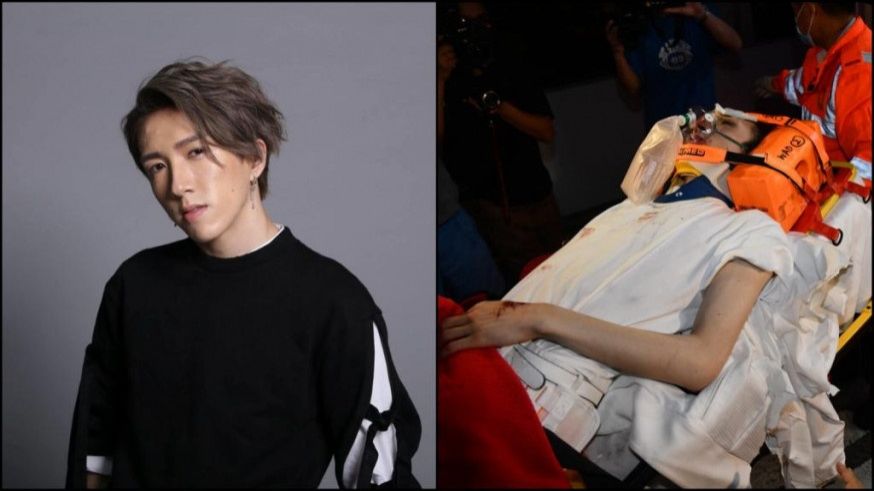
Mo Li Kai-yin, a Hong Kong dancer whose career ended catastrophically when a giant LED screen crashed down on him during a Mirror concert in 2022, has secured HK$6.29 million (approximately RM3.32 million) in compensation from his employer. The Hong Kong District Court's ruling on June 15 represents one of the largest payouts for workplace injury in the territory's entertainment sector, underscoring the severe consequences of safety lapses in high-risk performance environments.
The accident occurred on July 28, 2022, during the fourth performance of Mirror's planned 12-concert series at Hong Kong Coliseum. A four-by-four-meter LED panel suspended above the stage detached and fell directly onto the 31-year-old performer, causing instantaneous and irreversible damage to his cervical spine. The impact left Mo completely paralyzed from the neck downward, a fate that instantly transformed him from an active dancer into someone entirely dependent on external assistance for even the most basic human functions.
The court's findings were unsparing in their assessment of Mo's condition. Judges described his injuries as "catastrophic" and determined he had suffered permanent total incapacity. The judgment emphasized that Mo, once a vibrant performer who had built a multifaceted dance career, would now require three full-time caregivers to provide constant assistance with personal hygiene, meals, mobility, and all aspects of daily life. The ruling acknowledged what medical and psychological literature on severe spinal injuries confirms: Mo would never again experience the independence or self-determination that able-bodied adults take for granted.
The compensation structure reflected the comprehensive nature of his needs. Beyond the lump-sum award, the court mandated periodic payments to cover ongoing medical expenses, rehabilitation costs, and caregiver salaries extending across Mo's remaining lifespan. This multi-layered approach recognizes that catastrophic injuries generate perpetual financial obligations that cannot be fully captured in a single payment. The court also ordered Studiodanz, the production company employing Mo, to cover his legal expenses and pay interest on the awarded damages.
Before the accident, Mo had constructed a promising career in Hong Kong's entertainment industry. Having discovered his passion for dance while studying at university between 2015 and 2019, he transitioned to full-time performance work in 2019. His portfolio included performances at concerts, television programs, commercials, and music videos. Simultaneously, he maintained teaching positions across four dance studios, including Studiodanz itself. This dual role as performer and instructor positioned him as an emerging figure in local dance circles, someone with both artistic credentials and community investment.
The path to recovery has been arduous and incomplete. After the accident, Mo underwent emergency surgery and intensive care at Queen Elizabeth Hospital before transferring to private facilities in Hong Kong and overseas for specialized treatment. He has subsequently enrolled in an experimental rehabilitation program employing cutting-edge technologies, including regenerative medicine approaches and implantable microstimulation devices. While these interventions have yielded modest gains—he has regained some movement in his right arm and restored sensation in bladder and bowel function—they remain far removed from restoring his former mobility or independence.
Mo's personal circumstances have added layers of emotional complexity to his recovery journey. His father, Reverend Derek Li Shing-lam, initially abandoned his pastoral position in Canada to become Mo's full-time caregiver, dedicating himself entirely to his son's care and rehabilitation. However, Reverend Li's death on April 25 removed this crucial pillar of family support, shifting caregiving responsibilities entirely to paid professionals. The loss underscores how catastrophic injuries ripple through entire families, fundamentally altering relationships and life trajectories across generations.
Despite the grim prognosis, Mo has demonstrated remarkable resilience and determination. An Instagram video posted in March showcased him independently operating an electric wheelchair using his right hand, a modest but meaningful achievement that suggests ongoing neurological recovery and psychological motivation. These fragments of progress offer hope, even as the reality of permanent disability remains inescapable.
Studiodanz's culpability in the incident had been previously established through regulatory channels. The company faced a HK$132,000 fine from occupational safety authorities for violations of workplace safety regulations. Notably, Studiodanz declined to participate in the trial proceedings, a decision that likely influenced the court's findings and the maximum compensation awards across multiple categories. The company's absence from the courtroom conversation—no defense mounted, no alternative narrative offered—effectively conceded responsibility and allowed Mo's legal team to establish the full scope of damages unopposed.
The case carries implications extending well beyond Mo's individual circumstances. It highlights endemic safety concerns within Hong Kong's live entertainment sector, where ambitious technical productions sometimes outpace adequate safety infrastructure and training. The Mirror concert series, featuring one of Asia's most popular boy bands, had drawn enormous crowds and significant production budgets. Yet apparently insufficient attention was paid to securing overhead equipment against catastrophic failure.
For Malaysian and Southeast Asian entertainment professionals, Mo's case serves as a cautionary reminder of occupational hazards often overlooked in the pursuit of spectacular stagecraft. As regional venues increasingly adopt ambitious LED and projection technologies, the imperative for rigorous safety protocols, equipment inspection, and liability frameworks becomes increasingly urgent. The Hong Kong judgment establishes a compensation precedent that may influence how other regional jurisdictions evaluate similar claims.
Mo's ongoing rehabilitation journey represents both the potential and limitations of modern medical science. While technology enables meaningful recovery in some functions, spinal cord injuries remain largely irreversible. His compensation, substantial though it is, cannot restore what was lost—the career, the independence, the future he had envisioned. Instead, it serves as society's acknowledgment of the harm inflicted and a commitment to ensuring his ongoing care and dignity within the constraints of his new reality.