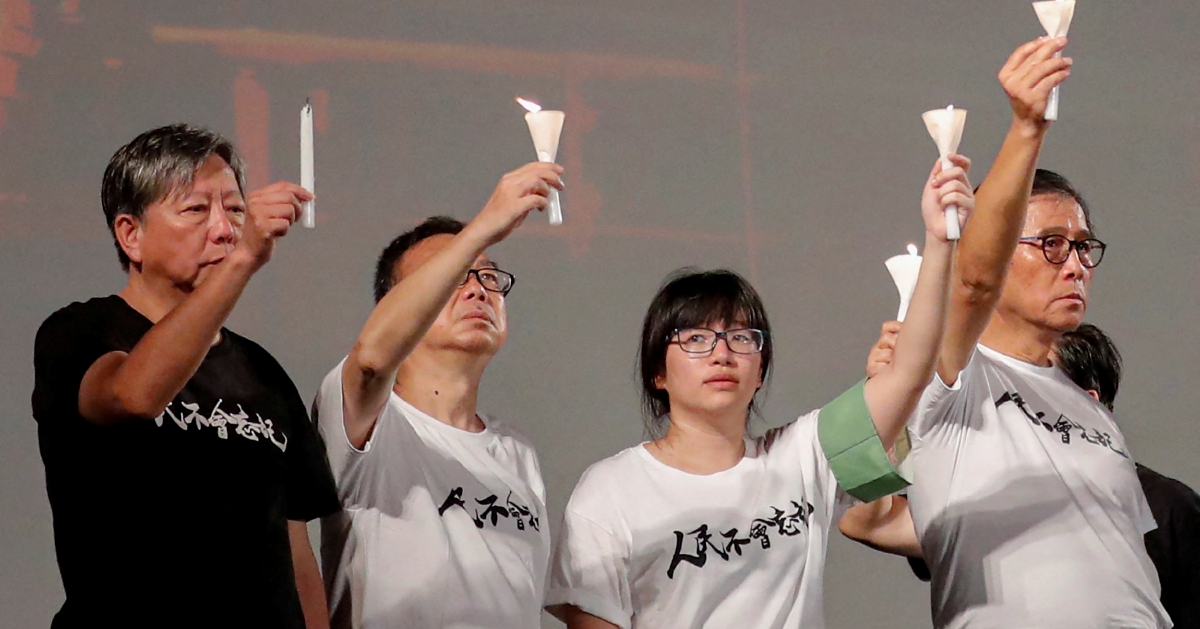
Two prominent Hong Kong activists have been convicted of inciting subversion for their role in organising annual vigils honouring victims of the 1989 Tiananmen Square military crackdown. The Friday verdict represents a significant escalation in authorities' control over public commemoration of events China deems politically sensitive, with profound implications for freedom of assembly and historical memory across the city.
The conviction stems from the pair's involvement in orchestrating candlelit gatherings that have become a defining feature of Hong Kong's civil society for more than three decades. These vigils, traditionally held at Victoria Park in Causeway Bay, attracted thousands of residents annually as they lit candles and observed moments of silence to remember those killed during the 1989 military operation. The gatherings served as rare public expressions of commemoration for an event that remains heavily censored and officially unacknowledged in mainland China.
Under Hong Kong's National Security Law, which China imposed on the territory in 2020 following pro-democracy protests, authorities have substantially narrowed the scope of permitted political expression and activism. The subversion charge is one of the law's broadest provisions, potentially capturing speech and conduct that prosecutors argue undermines the authority of Hong Kong's government or China's central authorities. The successful prosecution of these vigil organisers demonstrates how security legislation has been deployed to curtail activities that were once considered protected forms of political expression and commemoration.
The timing and nature of this conviction carry particular weight for Malaysia and other Southeast Asian democracies. It illustrates how national security frameworks, increasingly adopted across the region under various guises, can be weaponised against historical memory and peaceful activism. Malaysia has its own National Security Council Act and preventive detention laws that critics argue leave room for similar interpretations. The Hong Kong precedent thus serves as a cautionary marker for how such legislation might expand in practice, particularly concerning sensitive historical events or political gatherings.
Historically, the Tiananmen vigils represented one of Hong Kong's most visible platforms for maintaining institutional memory of an event the Chinese government has attempted to erase from public discourse. Official accounts in mainland China completely exclude acknowledgement of the 1989 incident from textbooks and media, while discussion remains heavily restricted online. Hong Kong's vigils provided a geographical and symbolic exception to this erasure, drawing participants from across the territory and occasionally from overseas. The conviction of those who facilitated these gatherings signals that such exceptions are rapidly closing.
The prosecution likely relied on evidence such as public statements, social media posts, or organisational materials in which the defendants expressed their commitment to remembering 1989. Under the National Security Law's definition of subversion, prosecutors may have argued that promoting public reflection on the crackdown and its victims inherently challenges the legitimacy of China's governance. This interpretive approach marks a departure from Hong Kong's historical treatment of such activities, where courts typically afforded significant protection to political speech and peaceful assembly even when addressing contentious topics.
For the international community, the conviction underscores broader concerns about Hong Kong's convergence with mainland China's governance model. Foreign governments, particularly Western democracies, have criticised the application of security law in ways they contend suppress fundamental freedoms. However, China and its supporters argue that the National Security Law was necessary to restore stability after months of anti-government protests that sometimes turned violent. This divergence in perspective reflects deeper geopolitical tensions surrounding Hong Kong's autonomy and the interpretation of its "One Country, Two Systems" framework.
The implications extend beyond historical commemoration. Civil society organisations throughout Hong Kong have become increasingly cautious about organising public activities that might be construed as challenging state authority, however indirectly. The conviction sends a chilling signal that even apolitical gatherings centred on remembrance could trigger prosecution. This self-censoring effect may prove as consequential as the actual conviction, deterring other organisations from testing the boundaries of permitted expression.
For Malaysian policymakers and observers of regional governance, the Hong Kong case illustrates tensions inherent in balancing national security with civil liberties. While Malaysia has not implemented legislation as expansive as Hong Kong's National Security Law, the trajectory elsewhere in the region suggests security frameworks are expanding rather than contracting. Understanding how such laws function in practice—and the cumulative effect on public discourse and civil society—remains vital for societies grappling with similar legislative proposals.
The convicted activists face potential imprisonment, though sentencing has not yet been announced. Regardless of the specific penalty imposed, the verdict represents a symbolic threshold: Hong Kong authorities have now formally prosecuted and convicted individuals for organising peaceful public gatherings aimed at remembering a historical event. This marks a departure from the territory's legal traditions and raises fundamental questions about what forms of expression remain protected in the post-2020 security law environment. The case will likely fuel international scrutiny and debate over Hong Kong's governance and reinforce concerns about the erosion of the distinct legal and political characteristics that once distinguished the territory from mainland China.

