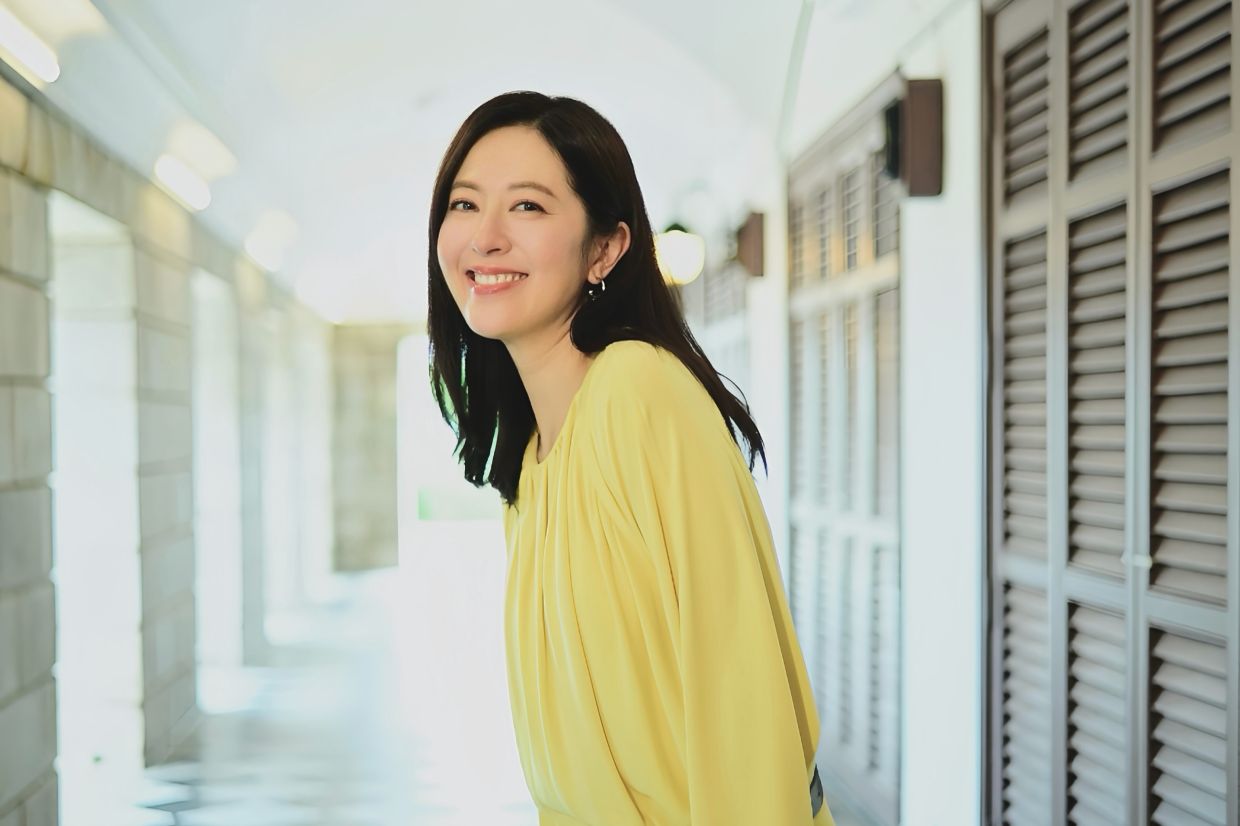
Hong Kong actress Natalie Tong recently opened up in an emotional television appearance about one of her deepest regrets: the years she lost with her mother due to an all-consuming focus on her career. The 45-year-old actress, visibly moved during the interview, discussed how the death of her mother in 2009 has continued to weigh on her conscience, serving as a painful reminder of what was sacrificed in the name of professional ambition. Her candid reflection offers a deeply personal window into how career demands in the entertainment industry can exact a hidden toll on family relationships, a tension that resonates across Asian cultures where filial piety remains a core value.
Tong traced the origins of her regret to the demanding years when she was building her career, a period during which she devoted nearly all her energy and time to work while simultaneously neglecting the people who mattered most. She explained how her singular focus on professional advancement meant that her mother received far less attention and care than she deserved, a realisation that came too late to reverse. The actress's acknowledgment of this imbalance speaks to the broader pressures faced by those working in competitive entertainment sectors, where visibility and output are often the currency of career advancement and job security. For Malaysian audiences familiar with the intensity of media and entertainment industries across the region, her story may resonate as a cautionary tale about the cost of unchecked ambition.
A particular tragedy compounded Tong's regret. Her mother had undergone a pacemaker implantation procedure that required regular maintenance and replacement, a necessary medical intervention to maintain her health and longevity. However, the family faced financial constraints that forced them to postpone the essential follow-up procedure, a decision made partly because Tong was absorbed in her professional responsibilities and could not engage fully in managing her mother's care. At the time, Tong believed there would be ample opportunity to address the situation later, a miscalculation that proved fateful. This dimension of her story underscores not only the emotional costs of career prioritisation but also the material consequences of inadequate family support systems and medical care planning.
The tragedy unfolded with sudden brutality. Her mother embarked on a trip, but shortly after returning home, she experienced a health crisis that seemed to come from nowhere. She began vomiting blood and required immediate hospitalisation. Tong rushed to the hospital, carrying an intuition that something was gravely wrong. The news she received there shattered her world. Her mother had died, and in that moment of devastating realisation, Tong collapsed emotionally, unable to process the finality of the loss. The abruptness of her mother's death robbed Tong of any opportunity for final conversations, reconciliations, or expressions of love, a tragedy that has shaped her understanding of mortality and the fragility of life.
In the years since her mother's passing, Tong has grappled with the philosophical and emotional dimensions of grief and regret. She has come to understand that while she cannot change what has happened, the regret itself serves as a powerful emotional anchor, reminding her daily of the irreplaceable nature of time spent with loved ones. She reflected that the pain lies not merely in losing someone, but in knowing that there were experiences, conversations, and moments of togetherness that will never come to pass. This distinction between loss and regret is crucial; it acknowledges that some suffering is rooted not in the event itself but in the recognition of missed opportunities and unmade choices.
These reflections catalysed a major life decision. In 2022, after spending nineteen years with the Hong Kong broadcaster TVB, Tong made the significant choice to leave her long-standing employment. The decision was not solely driven by career fatigue or professional disagreement, but rather by a conscious desire to reclaim her life and redirect her energies toward her family and personal wellbeing. This move represented a dramatic pivot away from the trajectory that had consumed her earlier decades, a chance to rewrite the narrative of her life while she still had time to do so. For Southeast Asian professionals in high-pressure industries, her decision to step back from institutional security offers a provocative model of prioritising personal values over conventional career advancement.
Tong has been deliberate about articulating that despite her enduring regrets, she has chosen not to allow them to become destructive or paralyzing. Instead, she frames her regrets as catalysts for positive change, motivating forces that have encouraged her to live differently and more intentionally. She emphasises the importance of possessing the capacity and courage to make corrections in one's life trajectory, to pivot away from destructive patterns and toward more fulfilling ways of being. This resilience in the face of genuine sorrow distinguishes her narrative from one of pure victimhood or despair.
Following her departure from TVB, Tong has redirected her considerable energy and entrepreneurial spirit toward new ventures. In 2023, she opened a bakery in Causeway Bay, signalling a shift from purely entertainment-based work to a more tangible, community-facing business endeavour. This venture into the food industry represents not merely a career change but a philosophical reorientation, a choice to create value through direct interaction with customers and the production of physical goods rather than through screen performances. The bakery also allows her greater flexibility and autonomy in structuring her time, a practical arrangement that aligns with her stated desire to spend more time with family members.
Despite her move away from traditional television work, Tong has not entirely abandoned performance. In 2025, she made her stage debut in theatrical production, a return to live performance that offers a different rhythm and structure compared to television work. She continues to make selective appearances on variety shows, maintaining a presence in the entertainment landscape while refusing to allow career demands to dominate her life as they once did. Her current professional portfolio represents a deliberate balance, combining creative expression with greater control over her schedule and priorities.
Tong's journey from regret to reinvention offers important lessons for audiences across Southeast Asia, particularly for ambitious professionals wrestling with the tension between career fulfilment and family obligations. Her story does not argue against career ambition or professional achievement, but rather advocates for intentionality in how we allocate our finite time and energy. The loss of her mother cannot be undone, but Tong's subsequent choices demonstrate that it is possible to learn from profound regrets and to recalibrate one's life in meaningful ways. Her openness about grief and her deliberate reconstruction of her priorities serve as a powerful reminder that life's most important moments often pass quietly, without fanfare, and that the time to cherish them is always now.

