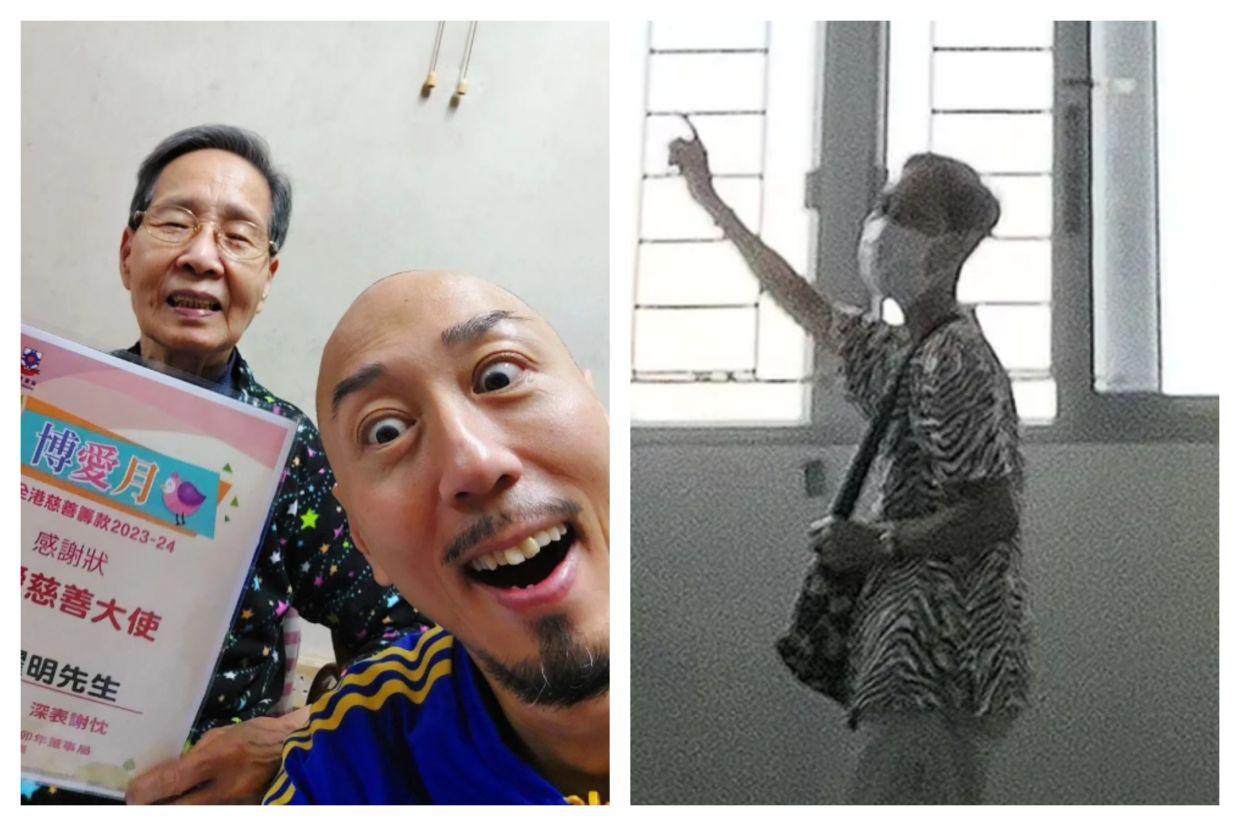
At 54, Hong Kong television star Dai Yiu Ming has achieved what many aspire to but few manage—buying a property specifically to provide stable housing for an ageing parent. The TVB actor recently shared his accomplishment on Instagram, posting images of the residence alongside heartfelt reflections on a promise kept to the woman who raised him. Though he acknowledged the considerable financial strain of the purchase, Dai expressed complete satisfaction with the decision, framing it as a deeply personal obligation that transcended monetary concerns. His candid social media post has since resonated across Hong Kong's online communities, drawing widespread admiration for what many view as a powerful demonstration of filial piety.
The weight of this achievement becomes clearer when examined against Dai's family history. His mother is now in her 80s and has spent the majority of her life in precarious living situations—first in humble shacks and later in aging public housing blocks that characterised post-war Hong Kong. She has endured hardships that many younger Hongkongers can scarcely imagine. Dai recounted how his mother once described surviving in an air-raid shelter during wartime by gathering sweet potato leaves to sustain herself, a testament to the resilience required of that generation. These biographical details transform his property purchase from a simple real estate transaction into a symbolic reversal of fortune, allowing him to finally provide his mother with the security and comfort she was denied throughout her earlier decades.
In his Instagram caption, Dai addressed his mother with an unusual blend of gratitude and apologetic tone, acknowledging that the gift came later in life than either might have hoped. "We only have this lifetime together. Even if there's a next life, we might not meet again," he wrote, expressing a philosophy rooted in Buddhist and Confucian traditions that remain influential in Hong Kong culture. This sentiment underscores the urgency he feels about ensuring his mother's wellbeing while she remains alive. He candidly admitted his own financial limitations, describing himself as unable to generate substantial wealth and therefore forced to practice extreme frugality to accumulate sufficient capital for the purchase. Rather than presenting this as a failure, Dai framed his modest means as motivation for disciplined saving—a narrative that appeals to working-class and middle-class Hongkongers facing similar economic constraints.
Dai's career trajectory in Hong Kong's entertainment industry provides essential context for understanding the magnitude of his achievement. He initially pursued acting through ATV's artiste training programme in 1991, making his professional debut in 1993. However, his early tenure at the broadcaster proved frustrating; feeling undervalued and lacking sufficient opportunities, he departed in 1994. Rather than immediately seeking another entertainment contract, Dai took practical work as a computer repair technician for half a year, suggesting he approached his career with flexibility and pragmatism rather than expecting overnight success. This willingness to diversify income streams would prove characteristic of his professional approach throughout subsequent decades.
Later in 1994, Dai secured a contract with TVB, the dominant regional broadcaster that has served as the primary launching pad for Hong Kong entertainment talent. Over the following decades, he cultivated a reputation as a skilled and reliable supporting actor, consistently appearing in drama series that formed the backbone of Hong Kong television's output. Unlike leading actors who dominate screen time and attract celebrity-level public attention, character actors like Dai occupy a particular niche—essential to productions yet rarely achieving the fame or remuneration of their more prominent colleagues. This career positioning meant that accumulating sufficient capital for property investment required sustained discipline over many years, making his accomplishment particularly noteworthy within the context of Hong Kong's notoriously expensive real estate market.
The actor's personal circumstances have fundamentally shaped his career decisions in recent years. More than a decade ago, his father passed away, fundamentally altering the family structure and placing greater responsibility upon Dai to serve as his mother's primary source of support and companionship. This bereavement experience likely intensified his motivation to provide material security for his surviving parent. In 2017, seeking expanded professional opportunities and potentially higher earnings, Dai relocated to mainland China to pursue acting work there. However, the separation proved emotionally untenable; his filial obligations and emotional bonds with his mother proved stronger than professional ambition. He returned to Hong Kong relatively quickly, consciously choosing proximity to his aging parent over career advancement in the larger mainland entertainment market. This decision speaks volumes about his personal values and priorities.
The public response to Dai's Instagram post has been overwhelmingly positive, with netizens expressing admiration for his dedication and sacrifice. Comments flooded in praising his devotion, with one commenter specifically noting that "Brother Yiu Ming's sense of filial piety and responsibility are unmatched." Another encouraged him to prioritise spending time with his mother while wishing both of them continued health and safety. These responses reveal that Dai's achievement taps into deeply rooted cultural values regarding elder care and family obligation that remain significant across Chinese and Southeast Asian societies. In an era when rapidly urbanising economies often fragment extended family structures, Dai's commitment to housing his mother represents a countercurrent to broader social trends.
The broader significance of this story extends beyond Dai's individual circumstances to illuminate fundamental tensions in contemporary Hong Kong society. Property ownership remains an aspirational goal for many residents given the territory's extremely high real estate prices, yet purchasing property specifically to benefit an elderly relative represents an even more ambitious undertaking. For much of Hong Kong's population, securing adequate housing for oneself constitutes a lifetime achievement; dedicating resources to provide superior housing for a parent represents a secondary accomplishment that many lack the financial capacity to pursue. Dai's story thus serves as both inspiration and implicit commentary on the economic challenges facing Hong Kong's working and middle classes.
Furthermore, Dai's narrative resonates particularly strongly with Southeast Asian audiences, where similar cultural emphasis on filial obligation, multi-generational family responsibility, and respect for elders remains prominent. Across Malaysia, Singapore, and other regional nations, many individuals navigate comparable tension between pursuing individual ambition and fulfilling family duties. Dai's conscious choice to prioritise his mother—first by returning from mainland China, and subsequently by channelling his modest earnings toward property purchase—exemplifies values that remain culturally significant throughout the region. His willingness to publicly acknowledge financial limitations while refusing to characterise this as failure also provides a counter-narrative to the conspicuous consumption often celebrated in entertainment media.
The timing of Dai's disclosure further underscores the urgency driving his actions. With his mother now in her 80s, the window for enjoying this gift together remains finite. Dai's reflective tone suggests awareness that mortality will eventually separate them, making the present moment particularly precious. This awareness infuses his achievement with poignancy—it is not simply a property transaction but rather a race against time to ensure his mother experiences security and comfort during her remaining years. The conscious acknowledgement of this mortality, unusual in entertainment industry narratives which typically emphasise youth and futurity, has struck a deep emotional chord with audiences.
Looking forward, Dai's story raises important questions about elder care models and family responsibility in affluent but economically stratified societies. Hong Kong, like other developed Asian economies, faces demographic shifts toward older populations while simultaneously witnessing generational changes in family structure. The traditional model of adult children housing and supporting aging parents increasingly competes with other economic demands and lifestyle choices. Dai's very public commitment to this traditional responsibility model may serve as either inspiration or commentary on the choices others face. His willingness to sacrifice and defer personal wealth accumulation for parental benefit suggests a hierarchy of values that increasingly represents a conscious choice rather than an inevitability.
Ultimately, Dai Yiu Ming's achievement transcends entertainment industry gossip to illuminate broader themes of filial piety, economic aspiration, and the particular vulnerabilities of elderly citizens who spent their lives in poverty. His 54 years of consistent work, his willingness to leave mainland opportunities to remain near his mother, and his decades of frugality culminating in property ownership collectively demonstrate a commitment to family obligation that resonates across multiple generations and geographic boundaries. In Hong Kong's property-obsessed culture and across Southeast Asian societies valuing elder respect, his story has become emblematic of values many cherish but few manage to actualise so completely.

