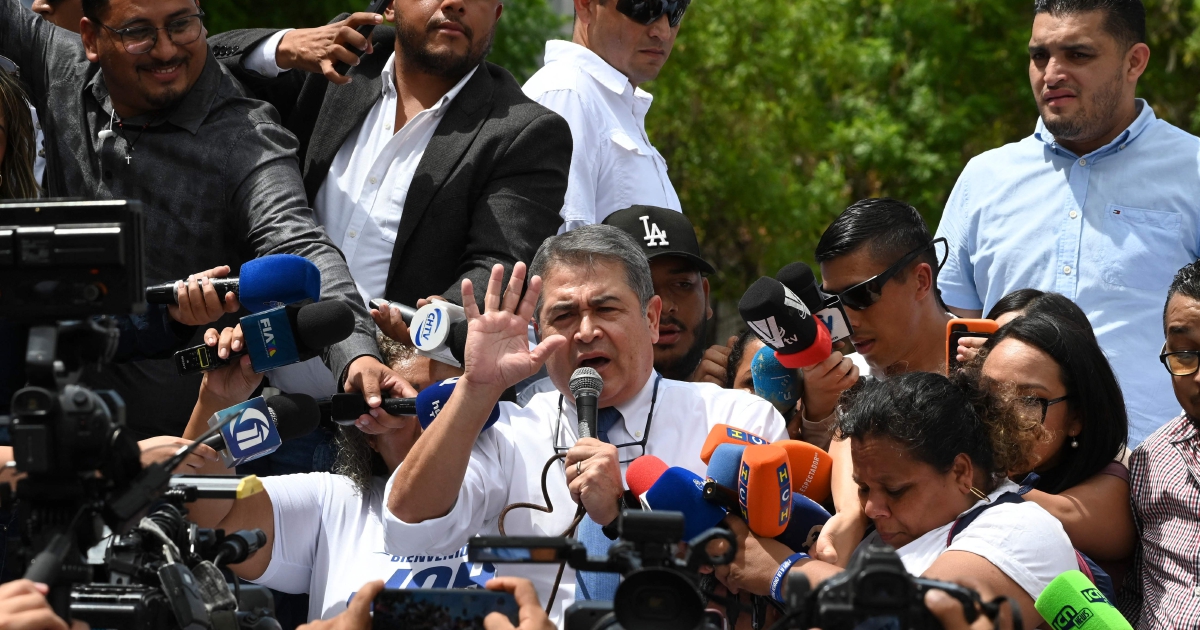
A Honduran court has ruled that former president Juan Orlando Hernández, who received a controversial pardon from President Donald Trump last year for US drug trafficking charges, may remain at liberty while standing trial on corruption allegations within Honduras. The decision by the judicial panel in Tegucigalpa marks a significant development in the legal saga of one of Central America's most polarising political figures.
Hernández's political career, which culminated in his 2014–2022 presidency, became increasingly mired in allegations of organised crime involvement and systematic corruption. His tenure as president witnessed widespread criticism from international observers and local civil society groups who documented patterns of institutional decay and alleged links between state officials and illicit drug networks. The judicial system's handling of his case has drawn scrutiny both domestically and regionally, with many viewing it as a barometer of Honduras's commitment to combating high-level corruption.
The issuance of the pardon by Trump in his final weeks as president drew sharp criticism from transparency advocates and anti-corruption campaigners across Latin America and internationally. Political analysts noted the surprising nature of the clemency, given that Hernández had previously been extradited to the United States to face federal charges related to drug trafficking. The pardon effectively negated that conviction and wiped away the legal liability he faced in American courts, removing what many saw as a decisive accountability mechanism for his alleged criminal conduct.
Hernández's return to Honduras following the pardon complicated the domestic legal landscape considerably. Local prosecutors had initiated a separate investigation into his alleged enrichment through corruption while serving as president. These charges focus on his administration's handling of public resources, particularly within security-related agencies and infrastructure projects. The distinction between the American drug trafficking case and the Honduran corruption inquiry has allowed legal proceedings to continue domestically even after the presidential pardon.
The court's decision to permit him to remain free rather than remand him in custody represents a departure from typical practices in high-profile corruption cases across Central America. Such rulings often reflect broader considerations about bail conditions, flight risk, and the robustness of the judicial system's ability to ensure defendants appear for trial. The Honduran court evidently determined that conditions could be established to guarantee Hernández's presence during proceedings while respecting presumptions of innocence.
For Malaysian observers monitoring governance and anti-corruption developments across the developing world, the Honduran situation illustrates the complicated intersection of national sovereignty, executive clemency powers, and transnational accountability mechanisms. Southeast Asian countries have increasingly coordinated with international bodies on corruption investigations, creating analogous tensions between domestic judicial independence and foreign intervention. The Trump pardon demonstrates how executive powers wielded at the highest levels can obstruct accountability processes established through extradition agreements and international legal cooperation frameworks.
The underlying corruption allegations in Honduras reflect patterns documented across Latin America where political leaders allegedly exploited state institutions for personal enrichment. Investigations into Hernández's administration have reportedly focused on connections between government contracts and alleged criminal organisations, particularly examining how security sector resources may have been diverted or monetised. These structural vulnerabilities—weak oversight mechanisms, porous institutional checks, and limited transparency in procurement—resonate with challenges identified by governance analysts studying Southeast Asian states.
The regional significance of the Honduran case extends beyond Central America. Countries throughout the Western Hemisphere and beyond have grappled with questions about whether and how to prosecute former heads of state for corruption and organised crime involvement. Honduras's approach offers a cautionary lesson about the persistence of impunity when international accountability mechanisms are circumvented. Malaysia's own experience with corruption investigations involving high-ranking officials provides a comparative framework for understanding how judicial systems can be tested by cases involving former leaders who command substantial political and financial resources.
The trial proceeding in Honduras will likely unfold over an extended timeframe, given the complexity of corruption cases involving state institutions and the inevitable appeals processes. During this period, Hernández's conditional liberty allows him to exercise certain freedoms whilst remaining subject to court oversight. The outcome of these proceedings carries implications for Honduras's broader efforts to strengthen rule of law and demonstrate that high-level officials can be held accountable through domestic courts, even when international pressure diminishes or foreign authorities intervene.
For nations in Southeast Asia monitoring developments across the Global South, the Honduran precedent underscores the importance of maintaining robust anti-corruption institutions insulated from executive interference. The case also highlights how presidents departing office may leverage their remaining powers to shield themselves or allies from accountability, a threat that anti-corruption architecture must anticipate. As Honduras proceeds with its domestic corruption trial, observers will assess whether its judicial system can overcome the obstacles created by the Trump pardon and deliver outcomes that reflect genuine accountability or whether institutional limitations ultimately constrain justice.

