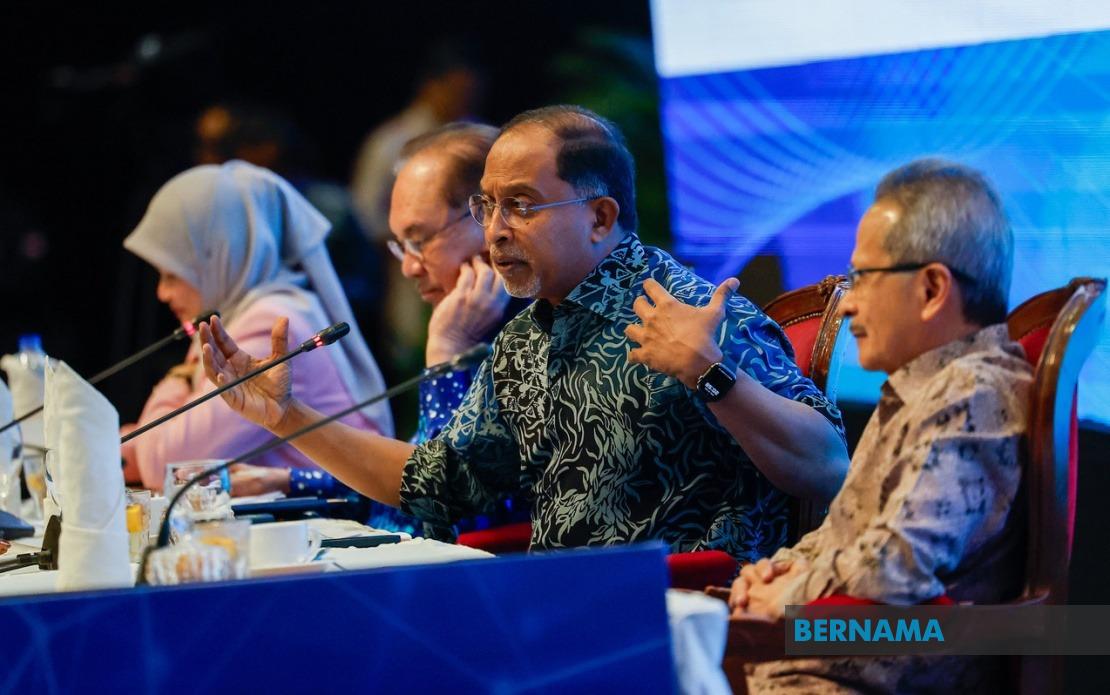
The future trajectory of Malaysia's higher education system hinges on modernising its legislative foundation, according to Higher Education Minister Datuk Seri Dr Zambry Abd Kadir, who has signalled that the Universities and University Colleges Act 1971 (AUKU) is ripe for substantial reform. Speaking at the MADANI Malaysian Scholars Forum Series 13 at the University of Malaya, Zambry underscored that existing regulations have become increasingly misaligned with contemporary educational needs, constraining rather than enabling institutional development. The forum, which examined the intersection of national education policy and the AUKU framework, brought together Prime Minister Datuk Seri Anwar Ibrahim as moderator, Education Minister Datuk Seri Fadhlina Sidek, and Tengku Datuk Mohd Azzman Shariffadeen, president of the Academy of Sciences Malaysia, to deliberate on systemic reforms.
Zambry's emphasis on legislative renewal reflects a recognition that Malaysia's higher education sector operates within an outdated regulatory architecture that predates the digital revolution and evolving global academic standards. The minister articulated that the ministry intends to explore broader legislative consolidation, potentially through the introduction of a unified One Higher Education Act that would subsume multiple sector-specific statutes into a coherent framework. This approach would streamline governance and eliminate the fragmentation that currently characterises higher education administration. Notably, Zambry acknowledged that previous restrictions embedded within AUKU have constrained institutional autonomy and restricted the intellectual environment within universities, a candidness that signals genuine intent to address long-standing grievances from the academic community.
Among the specific concerns Zambry flagged are protections for academic freedom and freedom of expression, domains where AUKU has historically been viewed as restrictive by scholars and student advocates. The minister indicated that student empowerment would feature prominently in any revised legislative framework, suggesting a shift toward greater participatory governance within universities. These commitments represent tacit recognition that Malaysia's universities, if they are to remain competitive globally and foster the intellectual dynamism required for advanced research and innovation, must operate with considerably greater latitude than current regulations permit. The constraints that Zambry referenced are not merely procedural irritants but substantive barriers that have influenced academic recruitment, research directions, and institutional prestige.
To translate these intentions into concrete legislative proposals, the Higher Education Ministry has established an Independent Committee tasked with gathering and assessing submissions from academics, student representatives, and other stakeholders. This consultative mechanism provides essential input for drafting reforms that reflect the lived experience of those within the higher education ecosystem rather than imposing top-down prescriptions. The committee's work will prove crucial in identifying which provisions of AUKU require modification, which should be eliminated entirely, and what new protections or flexibilities are necessary. By incorporating diverse perspectives, the ministry hopes to build consensus around reforms that enhance institutional effectiveness without compromising academic integrity or public accountability.
Paralleling these higher education initiatives, Education Minister Fadhlina Sidek articulated the Ministry of Education's commitment to equity and inclusivity through what she termed a "humane education" philosophy. Rather than viewing education as a mechanism primarily for generating human capital or sorting students by examination performance, Fadhlina emphasised that learning environments must accommodate the full spectrum of student needs—intellectual, emotional, and psychological. Her vision represents a counterpoint to credential-obsessed approaches that have long dominated Malaysian educational discourse, proposing instead that schools and institutions recognise children as multifaceted individuals rather than reducible to test scores or productivity metrics.
Fadhlina's articulation of humane education gained concrete expression through examples of innovative access programmes already operational within Malaysia's education system. Schools in Hospital, school-based rehabilitation centres, and specialised K9 and K11 models designed for Orang Asli students exemplify attempts to extend educational opportunity to populations that conventional schooling structures have historically marginalised. These initiatives acknowledge that geography, disability, and cultural context create barriers that standard institutional arrangements fail to address. By maintaining and expanding such programmes, the ministry signals recognition that equitable education demands flexibility and differentiation rather than one-size-fits-all uniformity.
The expansion of free pre-school access across Malaysia represents another substantive commitment to early childhood education equity. Fadhlina's emphasis on foundational learning reflects growing evidence that educational trajectories are significantly influenced by early childhood experiences, and that family financial constraints should not determine access to quality early learning. By subsidising pre-school provision at scale, the government attempts to address educational inequality at its source rather than attempting remediation at later stages when disparities have already calcified. This approach also acknowledges that educational burden-sharing extends beyond student and teacher to encompassing family economic circumstances.
Fadhlina's critique of examination-centric education systems points toward broader frustrations with metrics that have dominated Malaysian education for decades. The prioritisation of examination grades as primary indicators of success has created environments where learning becomes instrumental and narrowly focused on assessable competencies, often to the detriment of creativity, critical thinking, and personal development. Her call for education systems oriented toward developing "balanced, visionary individuals" with "mental resilience and strong moral values" reflects recognition that contemporary Malaysia requires citizens equipped not merely with technical skills but with the adaptive capacity, ethical grounding, and psychological resilience necessary for navigating complex, rapidly changing societies.
The acknowledgment that children arrive at school with "intellect, emotions, ambitions" alongside potential anxieties and limitations represents an implicit critique of educational approaches that ignore the affective and psychological dimensions of learning. Treating students as carriers of deficits to be remediated rather than as developing persons with particular strengths and challenges perpetuates cycles where vulnerable students are further stigmatised and disengaged. Fadhlina's framing suggests institutional responsibility extends beyond content delivery to encompassing student wellbeing, belonging, and dignity.
The convergence of these higher education and foundational education initiatives within a single forum reflects the Malaysian government's apparent commitment to viewing education as a integrated system rather than as disconnected primary, secondary, and tertiary segments. The presence of both Anwar Ibrahim and ministerial representatives from education portfolios underscores political prioritisation of educational reform. However, translating rhetorical commitment into sustained, adequately resourced implementation remains a persistent challenge within Malaysian governance, where ambitious initiatives frequently encounter bureaucratic inertia, resource constraints, and competing political priorities.
For Malaysian and regional observers, these developments carry significance extending beyond administrative reform. Malaysia's education system has long influenced policy conversations throughout Southeast Asia, and substantive reforms—particularly to legislation governing academic freedom—could establish precedents that reverberate across the region. Conversely, if the AUKU review process becomes mired in political controversy or if proposed liberalisations encounter conservative backlash, the episode may signal limits on education sector reform within the broader Malaysian political context. The coming months will reveal whether the articulated commitment to legislative modernisation translates into concrete statutory change or remains primarily aspirational.
For universities and academics, the promise of expanded academic freedom and reduced regulatory constraints offers potential benefits in recruitment, research competitiveness, and intellectual culture. Malaysian universities have long contended with brain drain as scholars migrate to institutional environments with fewer speech and publication restrictions. Genuine AUKU reform could enhance the competitive position of Malaysian institutions within global academic labour markets. However, realising this potential requires that reform extend beyond legislative text to encompassing genuine institutional cultural change and leadership willingness to tolerate greater academic autonomy and intellectual pluralism.
The student dimension of these discussions merits particular attention, as young people navigating Malaysia's universities have articulated longstanding grievances regarding restrictions on political expression, campus activism, and student governance participation. Zambry's explicit mention of student empowerment suggests receptiveness to expanding student agency within institutional decision-making. Whether this extends to meaningful participation in governance, curricular development, and campus life remains to be clarified, but the rhetorical opening provides advocates space to advance more substantial participatory reforms.

