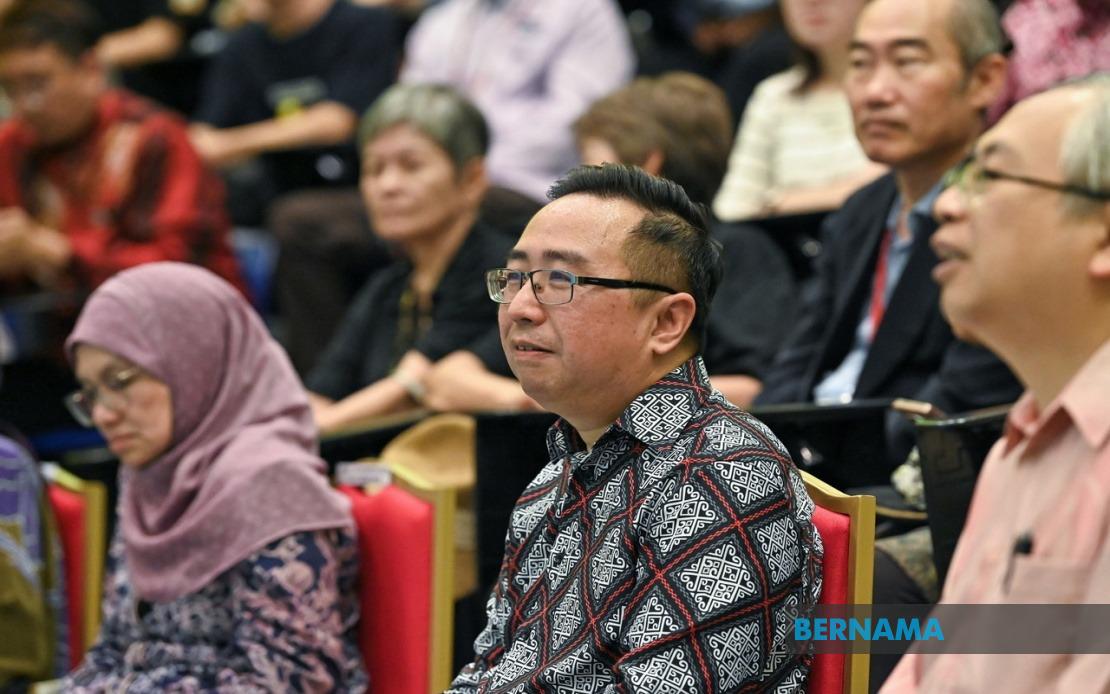
Science and technology graduates in Malaysia need not fear joblessness after completing their studies, as a surge in high-tech investments into the country is generating robust demand for qualified professionals across the sector. This reassurance came from Science, Technology and Innovation Minister Datuk Chang Lih Kang while inaugurating the 20th Malaysia Festival of the Minds at Universiti Tunku Abdul Rahman (UTAR) Kampar Campus on August 6. The minister's statement underscores a significant skills mismatch in the local labour market, where openings for science and technology professionals currently outnumber the available graduates and experienced workers capable of stepping into these roles.
Chang's remarks reflect growing confidence within government circles about Malaysia's trajectory as a technology hub in Southeast Asia. Rather than merely offering generic assurances, the minister anchored his optimism in concrete data about workforce shortages in critical technology sectors. This distinction matters considerably for prospective students weighing their educational choices and career paths. The abundance of opportunities, he suggested, stems not from speculative projections but from tangible investment flows already reshaping Malaysia's economic landscape, particularly in semiconductor manufacturing and related high-value industries.
The government's primary motivation for organising this outreach initiative extends beyond simply publicising job vacancies. Chang explicitly stated that a key objective was to counter prevailing anxiety about technological displacement. Many citizens harbour legitimate concerns that artificial intelligence and automation may render human workers obsolete, a fear that resonates across developed and developing economies alike. By engaging directly with university students through grassroots festivals and targeted campaigns, the Ministry of Science, Technology and Innovation (MOSTI) seeks to reframe the narrative around technological change. Rather than passively waiting for young people to approach government agencies with their doubts, the ministry is taking the initiative to explain how technological advancement, if properly managed, can augment rather than eliminate employment opportunities.
This proactive communication strategy reveals an important shift in how Malaysian policymakers address public concerns about technological disruption. The government recognises that reassurance must come from informed dialogue rather than abstract policy documents. By meeting students at universities and engaging them in open conversation about MOSTI's perspective on AI and automation, the ministry aims to build confidence in the future and encourage young Malaysians to invest their educational efforts in fields that genuinely offer promising career prospects.
Concurrently, the government is pursuing structural initiatives to ensure that the talent pipeline remains robust enough to meet escalating demand from multinational corporations and domestic technology firms. Close coordination between universities and industry partners has become essential as Malaysia competes regionally for advanced manufacturing investments. The strategy involves encouraging more secondary and tertiary students to specialise in science and technology disciplines, thereby expanding the pool of qualified professionals available to employers. This collaborative approach recognises that universities alone cannot drive curriculum changes or convince students to pursue demanding STEM fields without industry validation that genuine career pathways exist.
A particularly significant development announced alongside these workforce initiatives involves substantial financial commitments to advanced packaging technology capabilities. The Malaysian government has committed RM92 million from the Malaysia Science Endowment, while five industry partners have collectively contributed RM93 million, establishing a RM185 million joint investment programme spanning two years. This parity in funding levels demonstrates a deliberate effort to distribute financial responsibility between public and private sectors, ensuring that technology development does not rest solely on government shoulders.
The matching-fund arrangement reflects broader thinking about sustainable technology advancement in a developing economy. By requiring industry partners to match or exceed government contributions, policymakers create accountability mechanisms and ensure that private-sector actors maintain genuine commitment to achieving stated technological objectives. This approach differs substantially from models where government simply funds technology projects with limited industry involvement. The semiconductor and packaging sectors represent critical components of the global technology supply chain, and Malaysia's positioning within this ecosystem depends significantly on continuous technological upgrades and capability expansion.
Advanced packaging technology deserves particular attention because it occupies a crucial middle position within semiconductor manufacturing. While chip design and fabrication capture headlines and substantial investment, packaging—the process by which raw semiconductor dies are assembled, connected, and protected—represents a sophisticated technical domain requiring specialised expertise and infrastructure. Malaysia has established itself as a regional player in semiconductor packaging, and continued investment in upgrading these capabilities positions the country to capture higher-value portions of the semiconductor value chain.
The two-year timeline for achieving enhanced advanced packaging capabilities, with aspirations for full realisation by 2028, demonstrates realistic but ambitious goal-setting. Chang acknowledged that developing strategic technological capabilities involves genuine challenges, particularly regarding funding complexity and the intricate technical requirements involved. However, government and industry partners collectively expressed confidence in reaching stated milestones, suggesting that both public and private stakeholders have conducted thorough feasibility assessments and possess realistic roadmaps for achieving these objectives.
For Malaysian students contemplating career decisions, these developments offer substantive grounds for optimism regarding employment prospects in technology fields. The combination of expanding foreign direct investment, deliberate government-industry collaboration on capability development, and explicit workforce planning suggests that labour market demand for STEM professionals will likely remain robust over the coming decade. This outlook positions Malaysia favourably compared to many Southeast Asian neighbours where technology sector capacity remains more limited.
The implications for Malaysia's broader economic competitiveness merit consideration as well. Countries that successfully transition from low-value manufacturing to higher-value technology production typically do so by first developing domestic talent pools capable of supporting advanced industries. By actively encouraging more students to pursue STEM disciplines and creating confidence in their employment prospects, Malaysia is laying groundwork for sustained economic upgrading. The success of these efforts will significantly influence whether the country can maintain its position as Southeast Asia's most advanced semiconductor manufacturing centre over the next decade.

