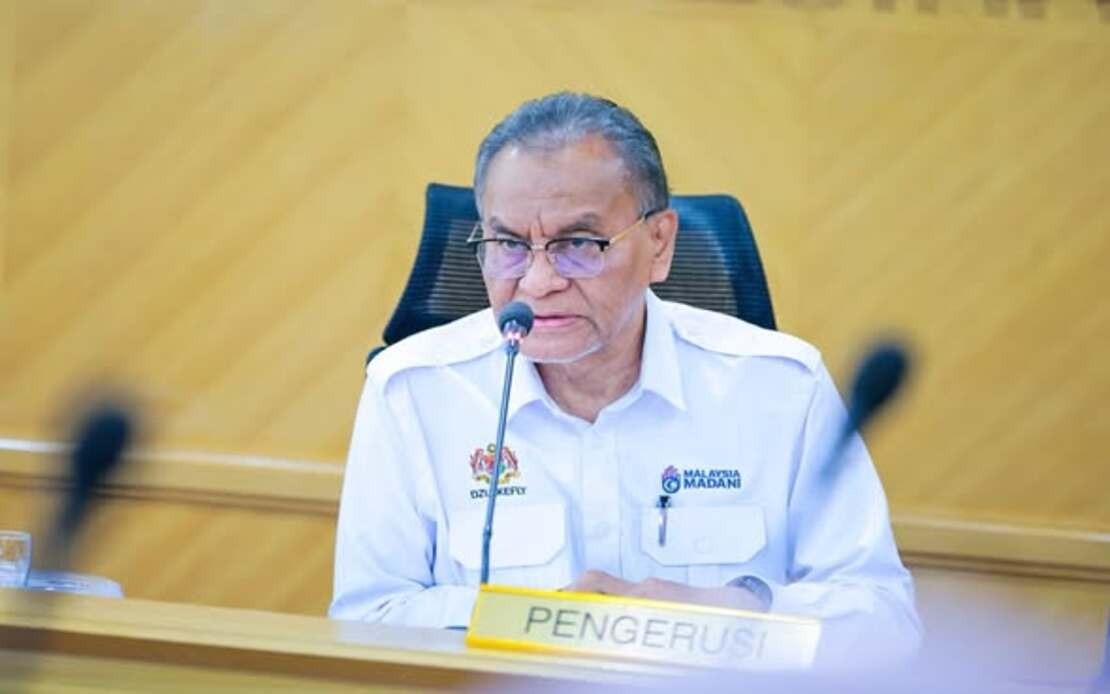
The Ministry of Health has thrown down a clear ultimatum to contractors managing over 1,300 health facility development projects across Malaysia: complete work to schedule or face contract termination. Health Minister Datuk Seri Dr. Dzulkefly Ahmad issued the warning through a Facebook statement, signalling a decisive shift toward accountability as the ministry confronts what it perceives as unacceptable delays in the nation's healthcare infrastructure pipeline.
The minister's stern message reflects mounting frustration within the health sector over the slow pace of facility upgrades and new constructions. By conditioning continued contracts on demonstrable on-site progress, the MOH is attempting to separate underperforming contractors from those capable of delivering timely results. This approach addresses a longstanding challenge in Malaysian public sector project delivery, where timeline slippage has frequently compromised healthcare service expansion and forced communities to wait years longer than planned for improved medical facilities.
Dr. Dzulkefly articulated the stakes clearly, framing the push for accelerated delivery as both a public service imperative and a fiscal responsibility issue. When health infrastructure projects languish, taxpayer funds remain tied up in incomplete works, and patients in affected regions continue operating under sub-optimal conditions. The minister's emphasis on preventing "waste of public funds" taps into broader concerns about value-for-money in government spending, particularly important given healthcare's critical role in national development priorities.
These remarks emerged during the MOH's Development Action Council meeting earlier this month, which convened senior officials from the Public Works Department and Finance Ministry. The presence of representatives from multiple agencies underscores that project delays often stem from interdependencies—securing approvals, coordinating with local authorities, managing utility connections—that demand cross-agency collaboration. By anchoring the discussion within this formal governance structure, the ministry signalled that oversight would be systematic and sustained rather than reactive.
The MOH has already begun demonstrating concrete results to justify its aggressive stance. As of August, the health sector reported completion of ten major facilities, including the Northern Region Blood Centre in Kedah and an additional block at Tuanku Ampuan Najihah Hospital in Negeri Sembilan. These tangible achievements provide leverage for the minister's push toward stricter accountability, offering proof that priority projects can advance when properly managed and resourced.
Equally significant is progress under the Program Cakna MADANI initiative, where 268 projects representing 37.75 per cent of the programme have reached completion status. This cluster of completed works encompasses rural clinic upgrades, expansion of haemodialysis facilities, and equipment modernisation—interventions that directly improve healthcare delivery capacity in underserved communities. The initiative's emphasis on equitable access reflects the MOH's broader strategic direction of redistributing quality healthcare beyond urban concentrations.
The convergence of these completion figures with the minister's tough stance on delays suggests a deliberate management strategy: celebrate successes loudly while maintaining pressure on laggards. For contractors, the signal is unambiguous—the MOH's tolerance for excuses has evaporated. This approach carries implications beyond individual projects. When a large government ministry demonstrates willingness to terminate contracts over performance failures, it potentially reshapes contractor behaviour across Malaysia's entire public works ecosystem, establishing precedent that timelines matter and will be enforced.
The minister's invocation of partnership with the Public Works Department, state governments, and utility companies acknowledges that field-level implementation challenges often exceed any single contractor's control. Bottlenecks at the grassroots—securing land access, coordinating with municipal authorities, managing supply chain disruptions—frequently derail even well-intentioned projects. By explicitly prioritising collaboration with these stakeholders, the MOH positions itself as a problem-solver rather than merely a penalty-issuer, potentially encouraging contractors to escalate obstacles rather than simply absorbing them.
For Malaysian patients and communities awaiting health infrastructure improvements, the minister's declaration represents a potential turning point. Access to adequate healthcare facilities remains unevenly distributed across the nation, with rural and semi-urban areas frequently experiencing shortages of beds, diagnostic equipment, and specialised services. Accelerating the 1,300-project pipeline could meaningfully expand healthcare reach, particularly in regions where infrastructure constraints have long constrained service delivery.
The timing of this enforcement push reflects broader health ministry priorities under the current administration. Healthcare system modernisation stands as a key policy objective, and infrastructure development forms a cornerstone of that agenda. However, without operational projects transitioning from construction sites to functioning facilities, policy ambitions remain theoretical. By prioritising completion rates and threatening contract termination, Dr. Dzulkefly is attempting to bridge the gap between strategic intent and ground-level reality.
From a fiscal perspective, Malaysia's healthcare system operates under persistent budget pressures. Funds tied up in delayed projects represent opportunity costs—money that cannot be redirected to operational expenses, staff recruitment, or other pressing needs. In this context, the minister's emphasis on preventing public fund wastage carries particular weight. Every month a major health facility remains incomplete represents not just delayed patient access but also capital inefficiency that compound budget constraints.
Looking forward, the success of this enforcement strategy will ultimately depend on implementation consistency. Contractors must believe that the threat of termination is genuine, requiring the MOH and Finance Ministry to demonstrate willingness to follow through on difficult decisions. Additionally, the ministry will need to manage the political sensitivities that arise when major projects are disrupted—delays and terminations create local employment impacts and generate criticism. Balancing accountability with pragmatism will test the resolve of health leadership in coming months.

