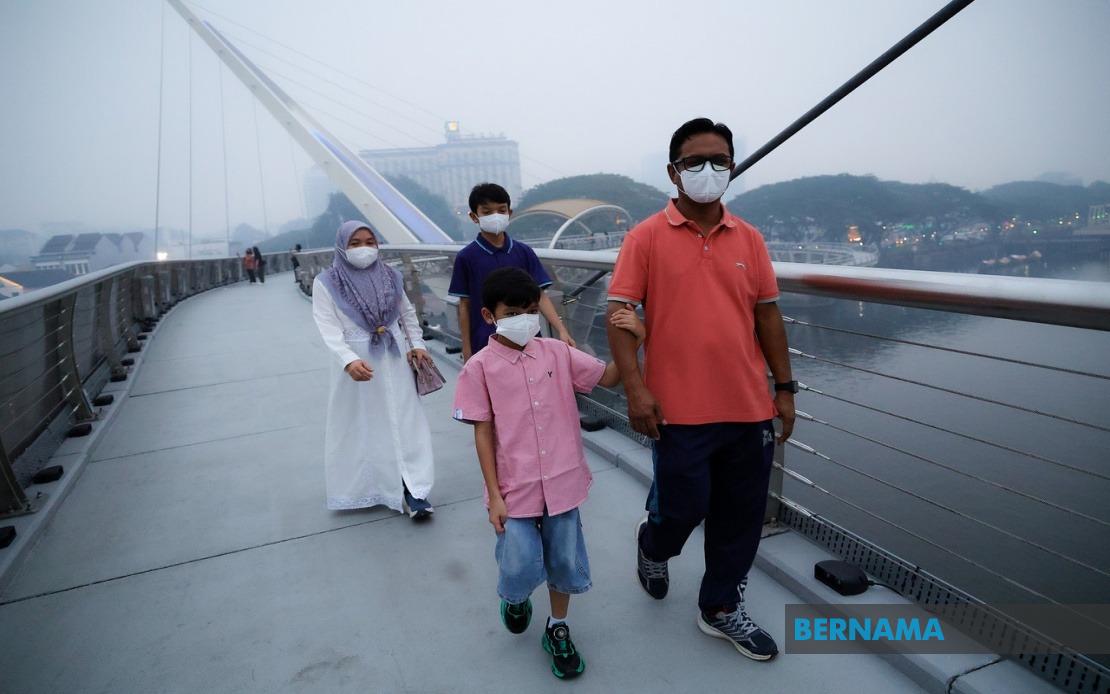
As haze conditions persist across Malaysia, health specialists are intensifying calls for public vigilance and proactive health measures to mitigate the mounting health toll from degraded air quality. The timing of these warnings coincides with alarming increases in respiratory and ocular cases at healthcare facilities, underscoring the tangible risks that air pollution poses to the population's wellbeing.
Dr Anas Ahmad Jamhari, a lecturer at Universiti Sultan Zainal Abidin's Faculty of Health Sciences, emphasises that residents must establish a routine of consulting daily Air Pollutant Index readings released by the Department of Environment before venturing outdoors. This practice becomes particularly critical when API measurements breach the 100-point threshold, signalling deteriorating air conditions. For those unable to remain indoors, proper respiratory protection becomes essential. Dr Anas advocates the use of N95 masks when outdoor exposure becomes unavoidable, but stresses that effectiveness depends entirely on correct application and a secure fit that creates a barrier against particulate matter.
The particulate concern centres on PM2.5 particles, microscopic pollutants that bypass the body's natural defences and penetrate deep into lung tissue. Dr Anas cautions that mask efficacy diminishes significantly when they are worn loosely, repeatedly removed, dampened by moisture, structurally compromised, or worn over facial hair that prevents a hermetic seal. Children face additional challenges, as masks sized for adults frequently fail to achieve proper contact with their smaller facial contours, rendering protection inadequate. For workers requiring extended outdoor exposure, the N95 mask remains the most suitable option, provided these fitting requirements are meticulously observed.
Beyond protective equipment, Dr Anas identifies a critical behavioural pattern undermining public health during haze episodes: many Malaysians persist with strenuous outdoor activities despite unhealthy air quality classifications. Running, cycling, and sports participation significantly elevate respiratory rate and air intake volume, enabling larger quantities of harmful particles to reach the respiratory tract. This continued exposure to outdoor exercise during poor air quality episodes elevates both immediate acute health effects and long-term chronic respiratory complications. The expert urges residents to postpone vigorous physical activities until air quality improves sufficiently.
Inside residential and commercial spaces, controlling indoor air quality becomes paramount. Dr Anas recommends maintaining sealed doors and windows during haze events and systematically eliminating domestic pollution sources. Cigarette and vape emissions, incense and candle burning, and high-smoke cooking activities all degrade interior air and should be suspended during haze periods. Vehicle air-conditioning systems require deliberate configuration to recirculate cabin air rather than drawing contaminated external air. Simultaneously, authorities must cease all open burning activities immediately, as these practices constitute a primary contributor to regional haze formation.
Understanding haze as merely a visibility-reducing phenomenon fundamentally misrepresents its health danger. Dr Anas explains that haze comprises a complex mixture of particles and chemical compounds, not simple smoke. The toxicological threat escalates because PM2.5 particles, once deposited within the respiratory system, trigger oxidative stress responses. This biochemical cascade initiates inflammation, cellular injury, and impaired lung function, disrupting normal respiratory processes and potentially causing lasting damage.
Datuk Dr Zainal Ariffin Omar, a public health medicine specialist, expands the analysis beyond API readings alone, incorporating meteorological factors into risk assessment. Temperature and humidity levels during haze episodes significantly influence health outcomes, yet often escape public consciousness. Elevated temperatures concurrent with haze conditions create compounded threats, as the combination accelerates heat-related illness risk alongside air pollution effects. Dr Zainal emphasises the necessity of maintaining vigorous hydration during simultaneous haze and heat conditions, as dehydration risk intensifies markedly under these combined stressors.
The intersection of haze with El Niño phenomena illustrates this dual-threat scenario particularly starkly. When elevated temperatures accompanying El Niño patterns coincide with transboundary haze events, populations face simultaneous risks of respiratory compromise and heatstroke. A comprehensive public health response must therefore address both hazards concurrently rather than adopting a narrow focus on API measurements in isolation. Dr Zainal warns that treating haze as an inevitable seasonal occurrence inadvertently encourages public complacency, with citizens maintaining normal routines despite elevated risk and subsequently demonstrating diminished preparedness when haze episodes recur.
Current surveillance data substantiate these expert concerns with sobering specificity. The Health Ministry reported that asthma-related attendances at sentinel health facilities experienced more than eightfold escalation during Epidemiological Week 34, reaching 1,811 cases compared to merely 219 cases the preceding week. Conjunctivitis presentations similarly surged, climbing from 146 to 720 cases across the identical period. These dramatic case increases reflect the direct health impacts of present air quality conditions across Malaysian populations.
Dr Zainal advocates for sustained public awareness campaigns that deliver health guidance through uncomplicated, easily comprehended formats. Current messaging approaches frequently fail to mobilise action until API readings attain severe classifications, suggesting that preventive education remains insufficiently effective. Continuous reinforcement of protective behaviours through accessible information channels would foster earlier intervention adoption, potentially reducing the healthcare burden associated with delayed precautionary measures. Strategic communication emphasising comprehensive risk factors, rather than API values in isolation, could reshape public understanding and behaviour patterns during haze episodes.
The convergence of expert medical guidance, epidemiological surveillance data, and meteorological complexity paints a picture of air quality challenges requiring multifaceted public and governmental responses. Individual precautions including mask usage, activity modification, and indoor air management form essential components of personal risk mitigation. Simultaneously, systemic approaches addressing open burning sources and coordinated regional air quality management remain fundamental to reducing pollution at source. For Malaysian residents and policymakers alike, the imperative for sustained vigilance and proactive health measures during haze periods represents not merely a seasonal inconvenience but a serious public health imperative demanding informed, sustained commitment.

