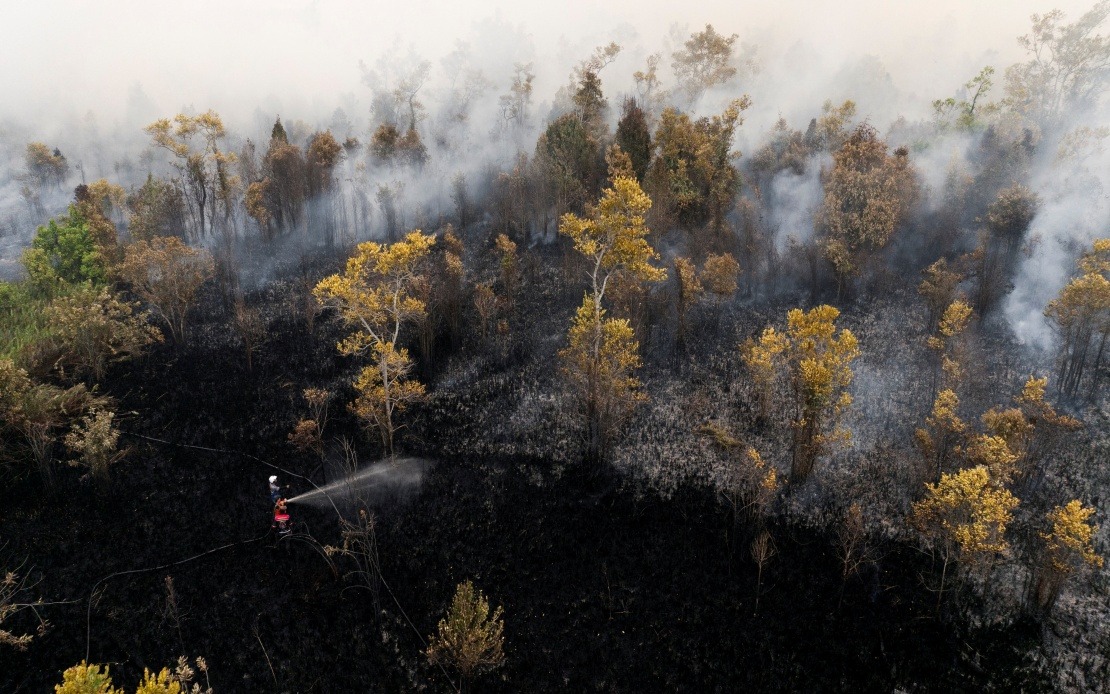
Singkawang Airport in West Kalimantan came to a complete standstill on Saturday as smoke from widespread forest and land fires rendered flight operations impossible, marking another disruption to regional air connectivity as Indonesia battles persistent environmental emergencies across the island of Borneo. The airport, which primarily serves domestic routes, made the decision to ground all aircraft for passenger safety, instructing travellers to liaise directly with their airlines for rebooking and compensation arrangements.
The airport's cancellation announcement, shared through its official Instagram channel, underscores the severity of visibility conditions in the western section of Indonesian Borneo, where Singkawang sits approximately 145 kilometres north of provincial capital Pontianak. What began as a localised concern has mushroomed into a crisis affecting critical transport infrastructure and stranding passengers across the region during a period of sustained fire activity. The decision reflects a growing pattern of disruption that extends beyond mere inconvenience, threatening regional supply chains and economic activity dependent on reliable air transport.
Responsibility for coordinating the national response rests with Indonesia's Transport Ministry, which has maintained constant surveillance over smoke patterns and their cascading effects on airport operations throughout Kalimantan. The ministry's Civil Aviation Directorate, led by Lukman F. Laisa, emphasises that maintaining strict safety protocols around visibility thresholds is non-negotiable, regardless of commercial pressures or passenger demand. Airlines operating from affected airports must comply with mandatory operational minimums, with flight delays, diversions, and cancellations the inevitable consequences when atmospheric conditions fall short of regulatory requirements.
Laisa's public statement reaffirmed that aviation safety takes absolute precedence over scheduling convenience, with operators obligated to implement necessary adjustments when visibility drops below established safety benchmarks. This principled stance, while operationally disruptive in the short term, represents the international standard that protects lives. The coordination mechanisms between the Transport Ministry and operational stakeholders remain active, though the effectiveness of these efforts depends heavily on progress in suppressing the underlying fire activity.
Satellite surveillance conducted by NASA's Terra and Aqua platforms painted an alarming picture of fire distribution across the Kalimantan region as of late Friday evening. The data revealed 56 high-confidence hotspots concentrated in Central Kalimantan, 51 identified in West Kalimantan where Singkawang is located, and an additional 19 detected in South Kalimantan. These figures represent active fire signatures confirmed through advanced remote sensing technology, though actual fire numbers likely exceed satellite detection capabilities, particularly for smaller or obscured burns. The concentration of hotspots in West Kalimantan explains why Singkawang Airport faced such severe visibility constraints.
Indonesia's Meteorology, Climatology and Geophysics Agency (BMKG) has catalogued portions of West and Central Kalimantan as experiencing air quality classified as very unhealthy, a designation that carries serious health implications for vulnerable populations including children, elderly residents, and those with respiratory conditions. Air quality indices reaching this threshold typically indicate pollutant concentrations that justify public health warnings and recommendations for reduced outdoor activity. The haze represents not merely an aviation concern but a broader public health emergency affecting millions of residents across the affected provinces.
Response efforts to contain and extinguish the fires continue at multiple operational levels. Ground-based firefighting teams work in concert with aerial water-bombing operations, though such efforts face inherent limitations when fires spread across vast areas of difficult terrain. The ministry has additionally prepared weather modification capabilities, commonly known as cloud seeding, which can be deployed once atmospheric conditions become suitable for such interventions. This multi-layered approach acknowledges that no single suppression method suffices for fires of this scale and geographic dispersal.
Law enforcement has begun investigating the origins of these fires with particular intensity in Central Kalimantan, where police leadership has identified approximately 12 suspects connected to forest and land fire incidents as of mid-August. Inspector-General Iwan Kurniawan, heading Central Kalimantan's police operations, confirmed that comprehensive investigations aim to establish causal factors and establish individual responsibility. Some cases have already progressed to the point where specific individuals face suspicion of involvement, suggesting that at least some fires resulted from anthropogenic causes rather than natural phenomena alone.
The attribution of these fires matters considerably for policy implications. If deliberate land clearing, agricultural expansion, or commercial activity drive a significant proportion of the burning, then enforcement mechanisms and regulatory frameworks become relevant tools for future prevention. Conversely, fires arising from naturally-occurring conditions or uncontrollable circumstances demand different policy responses. The ongoing investigations will likely reveal a mixed picture, with some fires traceable to specific actors and others resulting from complex interactions of human activity and environmental conditions.
For Malaysian readers and regional observers, the Singkawang situation serves as a potent reminder that transboundary environmental challenges respect no political boundaries. Smoke and haze from Indonesian fires have historically drifted across the region, affecting air quality in Malaysian urban centres and occasionally forcing similar aviation disruptions domestically. The demonstrated capacity of Indonesian fires to incapacitate major transportation infrastructure implies potential spillover effects for cross-border commerce and travel that Malaysian businesses and travellers depend upon. Regional cooperation frameworks remain essential for managing such challenges, as unilateral efforts within Indonesia's borders cannot fully address impacts felt throughout Southeast Asia.
The intensity and frequency of these fire seasons reflect broader environmental pressures within Kalimantan, including competing demands for land use, agricultural intensification, and economic development pressures. Peatland conversion, which has accelerated in recent decades, creates landscapes particularly susceptible to burning, with fires in peatlands generating exceptionally dense smoke that proves especially difficult to suppress. Long-term solutions require engaging the economic actors and land managers whose decisions shape land use patterns, not merely responding to each season's fires through emergency suppression.
As Singkawang Airport remains shuttered and passengers navigate rebooking challenges, the broader question of regional fire management capability persists. Indonesia's current approach combines emergency suppression with investigative accountability, yet the persistent recurrence of major fire seasons suggests that preventive mechanisms require strengthening. For Malaysian observers monitoring these developments, the situation underscores the interconnected nature of environmental challenges across Borneo and the necessity of sustained regional attention to land management practices that affect us all.

