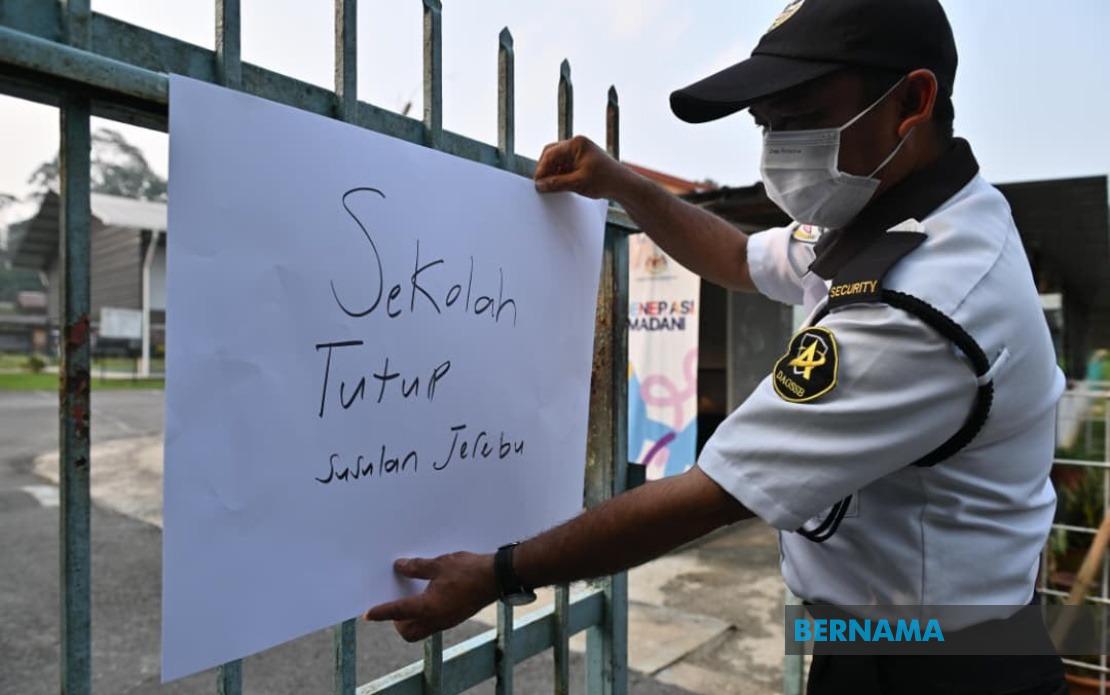
Authorities in Sarawak have ordered the temporary closure of 108 schools across the Serian district following a sharp deterioration in air quality, with Air Pollutant Index (API) readings climbing beyond the 200 threshold. The precautionary measure, implemented by state education officials, aims to shield students and school personnel from the health risks posed by hazardous atmospheric conditions. The decision reflects growing alarm over transboundary haze affecting the state, a recurring environmental challenge that disrupts normal routines and places vulnerable populations at heightened risk.
The Sarawak State Disaster Management Committee (JPBN) confirmed that affected schools will transition to Home-Based Teaching and Learning (PdPR) to maintain educational continuity during the air quality emergency. This approach allows students to remain engaged with their coursework from safer indoor environments while authorities monitor pollution levels. The committee emphasized that the shift to remote instruction ensures learning outcomes are preserved despite the disruption to conventional classroom operations. As Southeast Asian nations grapple with seasonal haze from agricultural burning in neighbouring regions, such coordinated educational responses have become increasingly routine across the affected territories.
Under Sarawak's National Haze Action Plan, the protocol for school closures is clearly defined: educational institutions must shut their doors immediately once API levels reach 200. This threshold, falling within the "very unhealthy" category, signals that prolonged exposure poses significant health consequences for vulnerable age groups. The API scale itself ranges from zero to 50 for good air quality, 51 to 100 for moderate conditions, 101 to 200 indicating unhealthy levels, 201 to 300 as very unhealthy, and above 300 as hazardous. By establishing this automatic trigger point, authorities remove discretionary decision-making and ensure consistent protective action across all schools statewide.
The air quality deterioration has accelerated markedly since August 1, when JPBN Sarawak began documenting an upward trajectory in API readings across the state. By mid-afternoon on August 12, monitoring stations recorded two areas within the very unhealthy category: Tebedu registered 212, while Serian measured 202. Simultaneously, eleven additional locations—including major urban centres like Kuching and Sibu alongside smaller communities such as Lundu and Lawas—fell within the unhealthy range. This widespread geographic distribution underscores the pervasive nature of the pollution event and the challenge it presents for state-level air quality management.
The haze situation carries particular implications for Malaysia's broader environmental governance. As a nation positioned amid some of Southeast Asia's most transboundary air pollution challenges, Malaysia regularly confronts episodes triggered by agricultural burning in Indonesia and occasionally beyond. The Serian school closures exemplify how external environmental pressures translate into domestic policy responses, affecting thousands of families and requiring rapid institutional adaptation. For Malaysian policymakers, this recurrence reinforces the need for sustained diplomatic engagement with neighbouring countries on land-use practices and cross-border environmental cooperation frameworks.
Healthcare and public health authorities have emphasized special vigilance regarding high-risk population segments. Children, elderly persons, pregnant women, and individuals with pre-existing respiratory or cardiac conditions face substantially elevated health hazards under very unhealthy air conditions. These groups experience accelerated symptom onset and more severe clinical outcomes when exposed to particulate matter and other atmospheric pollutants. The closure of schools accordingly prioritizes paediatric health by removing a major source of exposure, though families must still exercise caution during outdoor movement between home and other locations.
Beyond educational institutions, Sarawak JPBN has issued broader public advisories discouraging non-essential outdoor activities when air quality deteriorates. The guidance reflects evidence-based recommendations developed by regional health agencies and adapted to local contexts. Residents are encouraged to monitor official API readings, check government health bulletins, and make informed decisions about physical exertion and time spent outside. Window closures, air purifier use, and mask-wearing during unavoidable outdoor exposure represent complementary individual protective measures that complement institutional responses.
The Sarawak authority has simultaneously cautioned against speculation and unverified claims circulating through informal communication networks. Misinformation about haze severity or duration can precipitate unnecessary panic, fuel health anxiety, and erode public confidence in official guidance. In an era of rapid social media transmission, coordinating accurate public messaging represents a critical governance function. Authorities have directed residents to rely exclusively on information disseminated through formal government channels, establishing JPBN and state education bodies as the authoritative sources for pollution updates and corresponding policy adjustments.
For Malaysian policymakers and regional analysts, the Serian school closures underscore persistent environmental vulnerabilities affecting Southeast Asian communities. While individual countries implement responsive domestic measures, the transboundary character of haze phenomena demands sustained multilateral cooperation. Investment in agricultural technologies that reduce burning, regional environmental monitoring systems, and mutual aid agreements constitute longer-term strategies complementing immediate protective actions like school closures. The incident also highlights how environmental crises increasingly intersect with educational equity concerns, potentially affecting academic progression for students in affected areas more severely than peers in unaffected regions.

