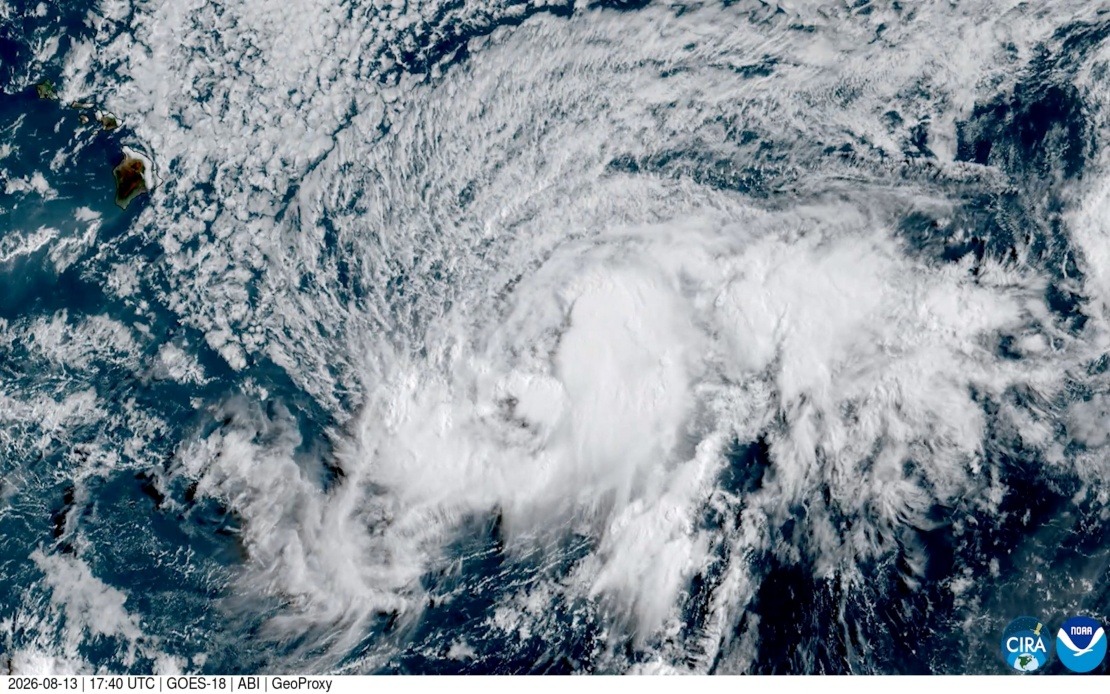
The Hawaiian archipelago faces an uncommon meteorological threat this weekend as Tropical Storm Lala continues its northwestward trajectory toward the Big Island, with forecasters predicting the system will cross the threshold into hurricane strength before making landfall. The National Hurricane Centre has confirmed that Lala should attain hurricane status by the time it approaches the Big Island on Saturday, creating a scenario that residents and emergency management officials view with considerable concern given the rarity of such events in the island's recent history.
What makes this developing storm particularly noteworthy is the exceptional nature of a direct hurricane strike on the Big Island. According to historical research conducted by atmospheric scientists at the University of Hawaii who examined newspaper records dating back centuries, the last confirmed hurricane to make landfall on the Big Island occurred in 1871—a Category 3 storm that impacted the northeastern reaches of the island. Vanessa Almanza, a meteorologist stationed with the National Weather Service in Honolulu, underscored the significance of this drought in major hurricane landfalls, noting that this would represent the first hurricane strike on the Big Island during the modern satellite era, which began in the 1960s. "First time since satellites," Almanza remarked, emphasizing the unprecedented nature of the current threat within the contemporary meteorological observation period.
The forecast trajectory shows Lala tracking perilously close to the Big Island's southern tip, bringing with it a dual hazard profile that extends beyond wind damage. The approaching storm system threatens to deliver torrential rainfall across the islands, creating conditions ripe for destructive flooding in vulnerable communities and low-lying areas. Simultaneously, the strong winds accompanying a strengthened hurricane could create ideal conditions for the rapid spread of wildfires, a persistent concern throughout Hawaii where dry conditions and intense solar radiation regularly create tinderbox vegetation patterns.
Government authorities have responded by implementing graduated alert systems across the Hawaiian Islands. A full hurricane warning remains in effect specifically for the Big Island, signalling the highest level of preparedness required for that jurisdiction. Meanwhile, neighbouring Maui County—which encompasses the islands of Maui, Molokai, Lanai, and Kahoolawe—is operating under a tropical storm warning, reflecting the expectation that these areas will experience significant tropical storm-force winds and precipitation even if Lala's core bypasses them directly.
For Malaysian and Southeast Asian observers, this meteorological event carries instructive parallels to tropical cyclone threats that regularly impact the region. The Pacific hurricane season operates somewhat independently from the Atlantic season, and Hawaii's position in the central Pacific exposes it to storms that develop from tropical disturbances tracking across thousands of miles of open ocean. Unlike the Indian Ocean and Western Pacific basins where Malaysia and its neighbours monitor monsoon systems and typhoons during peak seasons, the Hawaiian Islands experience their principal hurricane season from June through November, with August and September typically producing the greatest activity.
The vulnerability of island communities to such events resonates particularly with Southeast Asian policymakers and disaster management professionals, who face comparable challenges when managing tropical cyclones that threaten densely populated archipelagic nations. Hawaii's experience demonstrates that even in developed island economies with sophisticated early warning systems and well-resourced emergency management infrastructure, preparing for rare but catastrophic weather events requires sustained investment and community engagement.
Hawaii's isolation in the middle of the Pacific Ocean creates unique challenges for disaster response that differ markedly from mainland United States hurricane preparedness. Supply chain disruptions, limitations on available medical resources, and the constraints of evacuating large populations from islands all represent complications that hurricane planners must address. The Big Island, with population centres scattered across its volcanic terrain, presents additional logistical difficulties for emergency services attempting to coordinate response operations across variable terrain and limited transportation networks.
Historical hurricane impacts on Hawaii, though infrequent, have demonstrated the islands' vulnerability to extreme tropical cyclones. The rarity of direct hits creates a paradoxical situation where institutional memory of hurricane response gradually fades, potentially leaving newer generations of residents and officials with insufficient familiarity regarding emergency procedures and necessary preparations. This generational knowledge gap compounds the challenge facing Hawaii as Lala approaches.
The forecast accuracy regarding Lala's ultimate track and intensity will depend heavily on real-time monitoring over the coming days. Tropical systems in the central Pacific can exhibit surprising variability in their final approach, occasionally weakening more rapidly than anticipated or maintaining unexpected intensity. Meteorologists will continue refining predictions as additional observational data becomes available, though the general threat profile of a strengthening tropical system approaching the Hawaiian Islands appears well-established at this stage.

