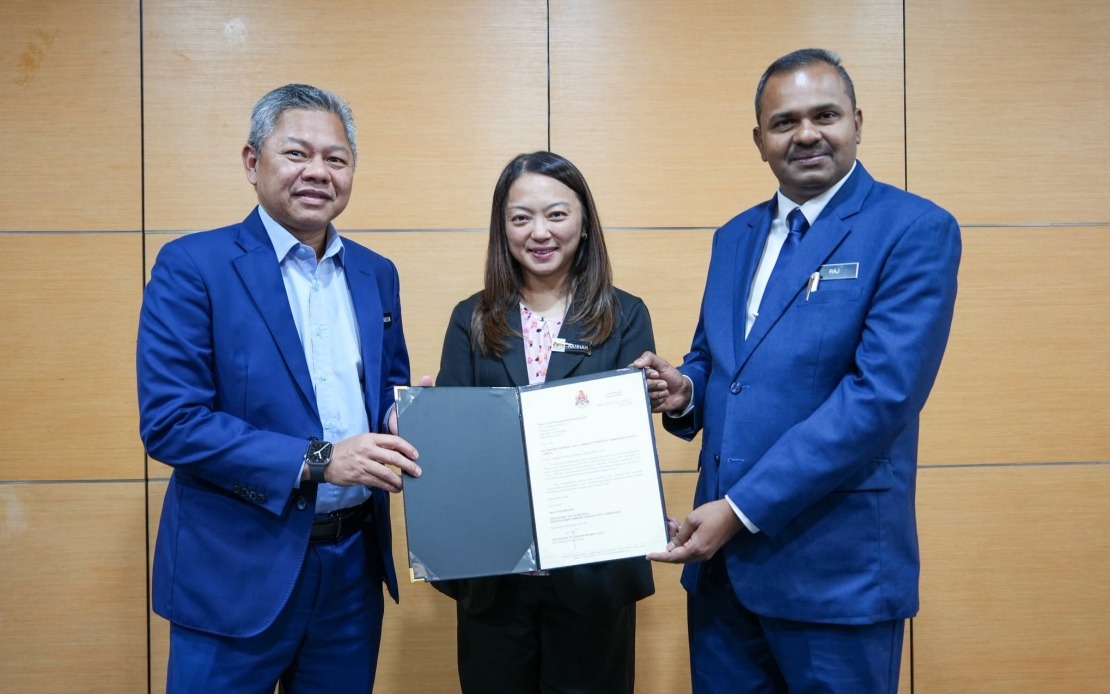
Federal Territories Minister Hannah Yeoh has thrown her backing behind former prison officer S. Thiyagaraj following his appointment to the Kuala Lumpur City Advisory Board, signalling ministerial confidence in the newcomer as the capital seeks to enhance its governance structures. The appointment was formalised during a ceremony where Kuala Lumpur Mayor Datuk Seri Fadlun Mak Ujud presented Thiyagaraj with his official letter, with Yeoh present to witness the occasion. In her remarks, the minister characterised the moment as an opportunity for fresh talent to contribute meaningfully to the city's administrative framework.
Yeoh's endorsement underscores the significance the Federal Territories Ministry places on the advisory board's function within Kuala Lumpur's governance ecosystem. The minister emphasised that advisory board members carry substantial responsibility to elevate city administration through improved efficiency, transparency, and responsiveness to residents' concerns. This framing reflects broader efforts by the ministry to position advisory bodies as integral rather than peripheral to decision-making, particularly as Kuala Lumpur navigates complex urban development and administrative challenges. By publicly celebrating Thiyagaraj's appointment, Yeoh has signalled that the ministry views such civic positions as deserving serious attention and resource allocation.
Thiyagaraj brings an extensive background in law enforcement and security administration to the role. His career with the Prisons Department spanned nearly two decades, running from 2005 through 2023, during which he rose to the rank of Assistant Superintendent of Prisons. Notably, much of his expertise was concentrated in the Technical Intelligence and Investigation Unit, suggesting he accumulated substantial experience in analytical and investigative work within the corrections system. This professional trajectory indicates that his appointment may bring security and administrative perspectives to city planning discussions—areas where prison management experience could offer relevant insights for urban administration.
The Kuala Lumpur City Advisory Board functions as a consultative body tasked with providing counsel to the Mayor on governance and development matters affecting the capital. Rather than wielding direct decision-making authority, the board's influence operates through the quality of advice and analysis it delivers to the Mayor's office. This structure means that board members' effectiveness depends significantly on their ability to synthesise diverse stakeholder interests and translate them into actionable recommendations. The board's importance has grown as Malaysian cities increasingly grapple with balancing rapid development, public welfare, and governance accountability—challenges that require input from individuals with varied professional backgrounds.
Yeoh's statement reveals ministerial expectations that Thiyagaraj will approach his duties with integrity and professional commitment. The minister specifically highlighted that his role involves furnishing views and recommendations that serve the broader benefit of city residents, rather than narrow sectional interests. This framing emphasises that advisory board appointments carry an implicit mandate to prioritise public interest over other considerations. By publicly articulating these expectations at the appointment ceremony, Yeoh has created a form of accountability where Thiyagaraj's performance will be measured against the standards she has publicly enunciated.
The appointment occurs within a broader context of institutional reform and governance enhancement in Kuala Lumpur. As Malaysia's capital city, Kuala Lumpur faces distinctive challenges related to its dual status as both a commercial and administrative hub, alongside managing diverse populations with competing priorities. Advisory bodies like this one represent mechanisms through which the municipality seeks to incorporate expert input and public-oriented perspectives into policy development. The inclusion of individuals with security and administrative backgrounds reflects recognition that effective city governance requires multidisciplinary expertise spanning law enforcement, urban planning, infrastructure, and community relations.
Thiyagaraj's transition from the corrections sector to urban advisory work represents the kind of mid-career crossover that increasingly characterises Malaysian public administration. Rather than remaining siloed within their original agency, experienced professionals are increasingly being repositioned into advisory and consultative roles where their accumulated knowledge can be deployed across different governmental domains. This trend suggests a systemic shift towards breaking down departmental compartmentalisation and fostering knowledge transfer across government structures. For Thiyagaraj personally, the appointment represents recognition of his professional standing and an opportunity to influence urban governance from a different vantage point.
The advisory board mechanism reflects Malaysian governance philosophy that values consultation and stakeholder input, even where final decision-making authority remains concentrated with elected or appointed officials. This approach attempts to balance efficiency with inclusivity, allowing the Mayor to benefit from diverse perspectives without creating unwieldy decision-making structures. However, the effectiveness of such boards depends heavily on whether their recommendations are genuinely considered or merely performed as a bureaucratic formality. The degree to which Thiyagaraj and fellow board members' input actually shapes mayoral decisions will determine whether this institution functions as a meaningful governance enhancement or becomes an ornamental feature of city administration.
Looking forward, Thiyagaraj's tenure will likely be evaluated against multiple criteria: whether he actively participates in board deliberations, the quality of analysis he contributes to discussions, his ability to bridge between technical expertise and public interest considerations, and ultimately whether his recommendations demonstrably influence city governance outcomes. His background in intelligence and investigation work may prove particularly valuable when the board addresses complex issues involving security considerations, infrastructure resilience, or analytical assessment of city dynamics. The appointment thus represents not merely a ceremonial gesture but a potential inflection point in how Kuala Lumpur incorporates security and administrative expertise into its governance deliberations.

