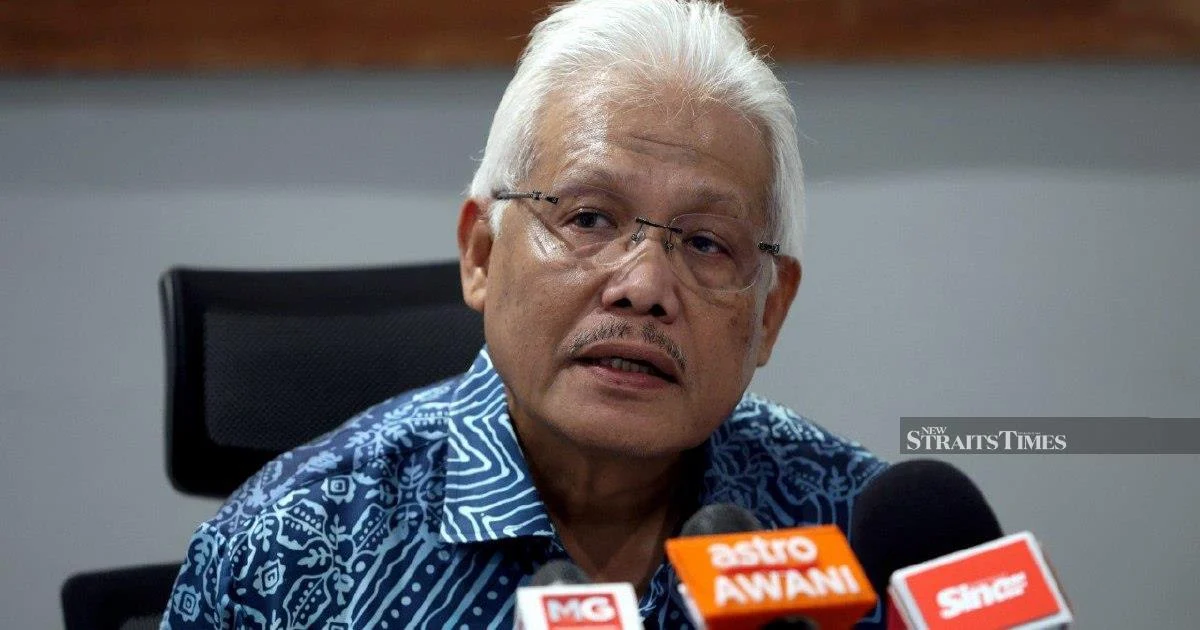
Hamzah Zainudin and the newly rebranded Parti Wawasan Negara have signalled an ambitious political agenda centred on reconciling two of Malaysia's most consequential Malay-Muslim movements. The party, which underwent a transformation from its former incarnation as Parti Cinta Malaysia, now envisions itself as a crucial intermediary capable of mending the fractious relationship between Pas and Umno — two organisations whose competition for Malay political supremacy has repeatedly dominated the national landscape.
The strategic positioning reflects a calculated recognition of Malaysia's contemporary political dynamics, where fractures within the Malay-Muslim bloc have created opportunities for alternative parties to claim a unifying mantle. Rather than directly confronting either establishment, Parti Wawasan Negara appears intent on claiming the ideological and organisational space between them. This approach acknowledges a persistent concern among Malaysian political observers: that prolonged antagonism between Pas and Umno undermines coherent Malay representation and weakens negotiating capacity in coalition-building scenarios that determine government formation at federal and state levels.
The rebranding itself carries symbolic weight. The transition from Parti Cinta Malaysia to Parti Wawasan Negara suggests an evolution toward a broader, more inclusive institutional identity. The term "wawasan negara" — encompassing national vision or perspective — implies a framework transcending narrow factional interests. This nomenclature mirrors historical precedent in Malaysian politics, where party names explicitly referencing vision or ideology have sometimes succeeded in attracting cross-cutting constituencies dissatisfied with traditional organisational loyalties.
Hamzah Zainudin's personal political trajectory makes him a potentially credible broker. His career has encompassed high-ranking positions within the Umno-led coalition and Perikatan Nasional governments, suggesting operational familiarity with both establishment power structures and alternative alignments. His current positioning as party leader attempting mediation carries implicit claims to pragmatism and accessibility across Malaysia's fractious Malay political terrain.
The articulated rationale—preventing divisions detrimental to the rakyat—employs nationalist rhetoric that simultaneously appeals to broad constituencies while remaining sufficiently vague to accommodate diverse interpretations. In Malaysian political discourse, invocations of collective Malay-Muslim welfare have traditionally legitimised merger proposals, coalition rearrangements, and intermediary initiatives. The framing suggests that fragmentation itself represents the underlying pathology requiring remedy, rather than interrogating whether proposed unification mechanisms actually serve populational interests or primarily redistribute power among elite stakeholders.
Pas and Umno have navigated complex historical and ideological differences that complicate superficial reconciliation efforts. Pas's Islamist intellectual framework, emphasis on Islamic jurisprudence in governance, and occasional populist positioning contrast markedly with Umno's establishment conservatism, pragmatic secularism in administrative practice, and entrenched patronage networks. Previous bridging attempts have foundered on these foundational contradictions, suggesting that Hamzah Zainudin's initiative confronts structural obstacles extending beyond individual diplomatic skill.
Malaysian political observers note that intermediary positioning carries inherent risks. Third parties attempting to mediate between dominant forces frequently discover their utility diminishes once primary competitors reach settlement, or conversely, that attempting mediation alienates both principals without achieving substantive reconciliation. Parti Wawasan Negara must therefore sustain sufficient organisational capacity and political leverage to render itself indispensable rather than dispensable in coalition calculations.
For regional observers, the initiative underscores persistent significance of Malay political cohesion in Southeast Asian power dynamics. Malaysia's constitutional framework, federal structure, and demographic composition mean that Malay-Muslim political alignment remains foundational to government stability. Initiatives attempting to reformulate these relationships ripple across borders, influencing Singapore's minority policy adjustments, Indonesia's assessment of Malaysian stability, and ASEAN consensus-building requirements.
The timing of Parti Wawasan Negara's bridge-building efforts coincides with broader realignments in Malaysian politics following successive electoral cycles that produced hung parliaments, minority governments, and unprecedented coalition combinations. Traditional assumptions about Umno-Pas antagonism as permanent structural features have eroded somewhat, replaced by recognition that contemporary Malaysian politics permits fluid reconfiguration. Hamzah Zainudin's party appears strategically positioned to capitalise on this fluidity.
Successful bridging would require demonstrating to both Pas and Umno constituencies that shared Malay-Muslim governance advantages outweigh ideological, organisational, or patronage-based objections to closer alignment. This remains formidable, as both parties have invested substantial resources in maintaining distinct institutional identities, membership bases, and claims to unique representations of Malay-Muslim interests. Whether Parti Wawasan Negara commands sufficient political resources and organisational legitimacy to facilitate such recalculation remains uncertain.
The initiative also carries implications for Opposition coalition mathematics. Should Hamzah Zainudin's party successfully position itself as neutral mediator between rival Malay forces, it potentially constrains Opposition parties' ability to exploit Umno-Pas divisions for electoral advantage. Conversely, if Parti Wawasan Negara's bridging efforts prove unsuccessful, the party risks irrelevance—losing credibility as mediator without establishing itself as primary electoral competitor against either Pas or Umno.
Moving forward, observing Parti Wawasan Negara's concrete institutional developments, electoral positioning, and organisational growth metrics will clarify whether the bridging initiative represents serious strategic repositioning or primarily rhetorical positioning for negotiating relevance within Malaysia's complex, perpetually reconfiguring coalition ecosystem.

