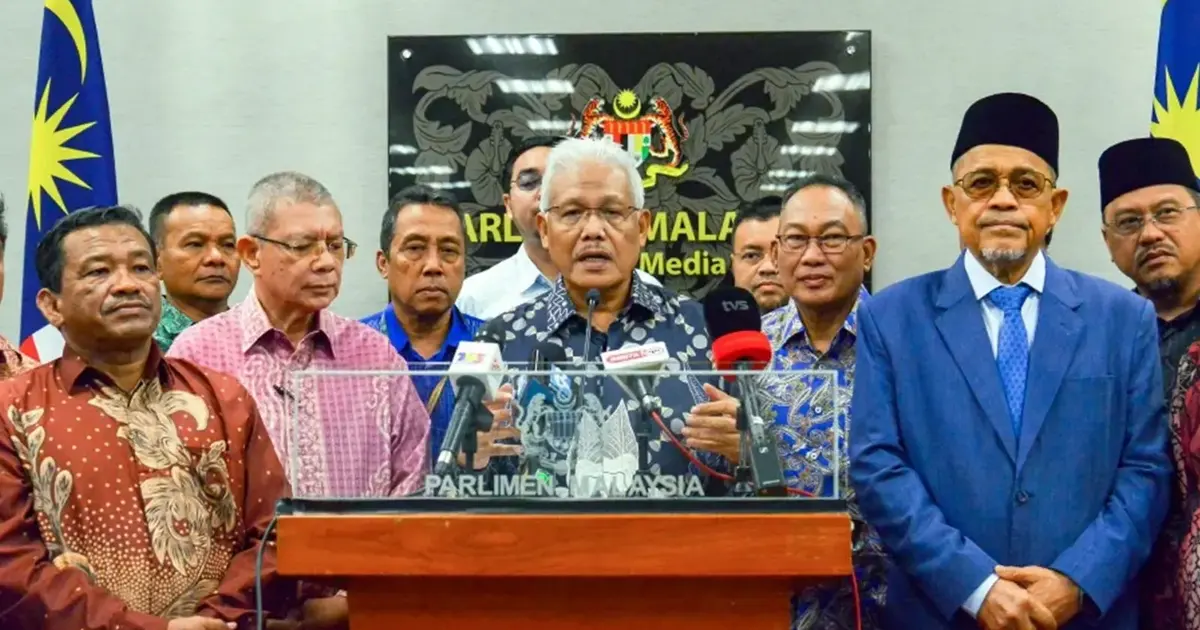
The opposition leader has intensified scrutiny of a high-profile government appointment, demanding that authorities provide transparent justification for selecting a former anti-corruption chief as an adviser to Malaysia's primary financial crime-fighting body. Hamzah Zainudin's intervention signals growing parliamentary concern about the decision to engage Azam Mohamed in an advisory capacity with the National Anti-Financial Crime Centre (NFCC), raising questions about institutional independence and the handling of sensitive positions during a period of legal uncertainty.
The timing of Azam's appointment has triggered particular unease within opposition quarters. Azam's transition from leading the Malaysian Anti-Corruption Commission to an advisory role at the NFCC comes while the former agency head navigates his own legal entanglements. This coincidence of circumstances has prompted Hamzah to request detailed clarification regarding both the nature of Azam's responsibilities and the reasoning behind the government's confidence in his suitability for the position under current circumstances. The opposition leader's questions reflect broader anxieties about whether such appointments might be influenced by considerations beyond merit and expertise.
The National Anti-Financial Crime Centre operates as a crucial institution within Malaysia's architecture of financial oversight, coordinating efforts against money laundering, terrorist financing, and other economic crimes that threaten national security and economic stability. The appointment of an adviser to this entity carries substantial weight given the organization's mandate and its intersection with law enforcement operations. For this reason, any ambiguity surrounding the decision-making process risks undermining public confidence in the institution's neutrality and effectiveness. Hamzah's demand for explanation reflects legitimate institutional governance concerns rather than mere partisan posturing.
Azam Mohamed's former position as MACC chief granted him considerable influence over high-profile investigations and enforcement actions. His detailed knowledge of ongoing cases and investigative methodologies makes his current advisory relationship to the NFCC a matter requiring careful oversight. The potential for conflicts of interest or the appearance of impropriety becomes heightened when individuals transition between positions while facing legal scrutiny themselves. The opposition leader's questioning specifically addresses this gap in accountability, seeking to ensure that public institutions remain insulated from the kind of complications that might arise from such transitions.
The government has not yet issued a comprehensive public statement addressing the specific concerns that Hamzah has articulated. This communication vacuum has permitted speculation to flourish regarding the rationale behind the appointment. Standard practice in government appointments typically involves public announcements that explain the appointee's qualifications, the scope of the advisory role, and how the decision aligns with institutional objectives. The apparent absence of such detailed justification has inadvertently amplified parliamentary and public interest in understanding the decision-making process.
Such appointments carry particular sensitivity in Malaysia's contemporary political context, where questions about institutional independence and the politicization of enforcement agencies remain contentious. The appointment of advisers to key institutions has occasionally become entangled with broader political dynamics, leading observers to examine whether such decisions reflect purely professional considerations or incorporate political calculations. Azam's appointment, therefore, must be understood against this backdrop of heightened public awareness regarding how government positions are distributed and how advisory relationships function within sensitive institutional frameworks.
The NFCC itself remains a relatively recent institutional addition to Malaysia's financial crime infrastructure. Established to enhance coordination among various agencies dealing with financial crimes, the centre relies on the credibility and independence of its advisory structures to function effectively. When appointments to such bodies attract parliamentary questions and opposition demands for clarification, it suggests that either the communication surrounding the decision has been inadequate or that legitimate governance concerns require addressing. Either scenario benefits from fuller official explanation.
Hamzah's intervention may also reflect concerns about how advisory roles within government institutions operate more broadly. Unlike formal appointments that typically require parliamentary approval or public consultation, advisory positions sometimes operate with less transparency regarding their scope, compensation, and specific functions. This lack of standardized accountability mechanisms for advisory appointments has become an increasing focus for parliamentarians interested in strengthening institutional governance standards. The NFCC adviser position may serve as a catalyst for broader discussions about how such roles should be structured and supervised.
The broader context of investigations involving Azam adds another dimension to the opposition leader's questioning. When individuals holding advisory roles to sensitive institutions simultaneously face legal proceedings, the potential for complications—whether procedural, ethical, or perceptual—multiplies significantly. Government authorities typically attempt to manage such situations through clear protocols and transparent communication about how conflicts are being mitigated. The apparent lack of such communication in this instance has created space for legitimate inquiry about whether appropriate safeguards exist.
Moving forward, the government faces pressure to provide detailed responses addressing each element of Hamzah's concerns. This may require outlining Azam's specific responsibilities within the NFCC advisory structure, explaining the selection criteria that led to his appointment, and clarifying how any potential conflicts of interest are being managed. Such transparency would not necessarily require rescinding the appointment, but it would demonstrate the government's commitment to institutional integrity and parliamentary accountability. For Malaysian governance standards, establishing clear precedents for how such situations should be handled carries implications extending well beyond this individual appointment, potentially influencing how future governments manage similar institutional transitions and advisory relationships across the public sector.

