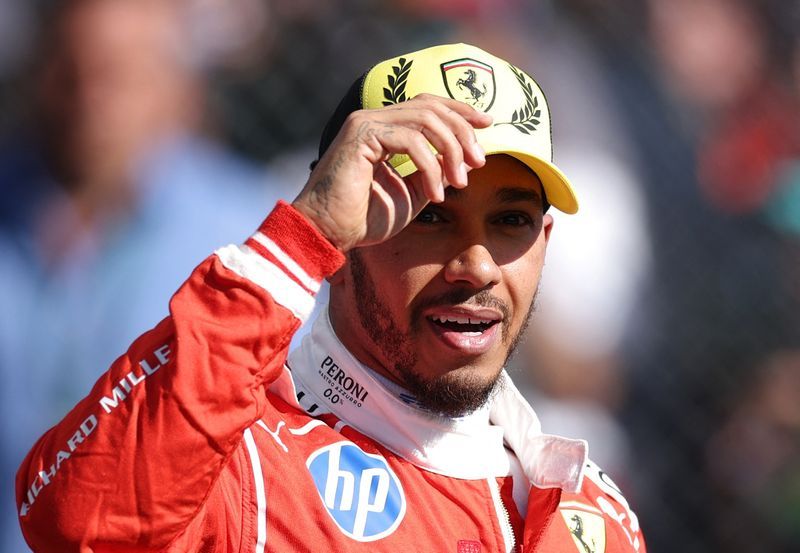
Lewis Hamilton arrives at the Hungaroring this weekend positioned to cap off the first half of the Formula One season on an optimistic note, with Ferrari providing the seven-time world champion an opportunity to move further up the championship standings. The Budapest circuit has long been a happy hunting ground for the 39-year-old Briton, whose eight previous victories there represent an extraordinary track-specific record that underscores his mastery of this particular challenge. Meanwhile, the championship-leading Mercedes team faces an increasingly urgent technical puzzle, with George Russell's unexplained performance deficit creating mounting concern within the squad as they prepare for the mandatory August break.
Russell's current predicament represents one of the paddock's most pressing mysteries heading into this pivotal weekend. The Mercedes driver has been losing substantial time on the straights, a technical anomaly that has baffled his team's engineers and dominated conversation in the motorhome area throughout recent races. What makes the situation particularly acute is the stark contrast with his 19-year-old Italian teammate Kimi Antonelli, who continues to demonstrate impressive consistency and pace, having secured six victories in the opening ten races of the campaign. This disparity has transformed Russell's season trajectory sharply downward, particularly following his spin-off into the gravel during last Sunday's Belgian Grand Prix—his third occurrence of leaving the track without points this season. Once considered the championship favourite, Russell now finds himself 50 points behind Antonelli, an alarming deficit that threatens to render his title challenge mathematically and psychologically uncompetitive before the calendar reaches its second half.
Hamilton's resurgence provides a sharper counterpoint to Russell's struggles. The Scuderia driver has climbed into second place overall following Russell's mishap in Belgium, positioning himself 45 points adrift of the Mercedes frontrunner. His arrival at the Hungaroring carries particular significance given his unmatched familiarity with this venue and his recent form across different track types. Hamilton's tally of eight victories at Budapest stands unmatched in the modern era, and a ninth triumph this weekend would equalize his remarkable record of nine wins at Silverstone, a remarkable testament to his consistency at specific circuits. Beyond raw victory count, Hungary represents a circuit where Hamilton's proven championship-winning experience and adaptive driving style have historically given him decisive advantages over the field.
The Hungaroring itself presents a unique challenge within the contemporary F1 calendar, fundamentally altering the competitive hierarchy that has dominated recent races. Unlike the high-speed, power-dependent straights of circuits like Spa-Francorchamps, this Budapest track rewards precision, racecraft, and aerodynamic balance over raw engine horsepower. This characteristic shift in demand directly benefits Ferrari, whose much-discussed engine deficit becomes less consequential when sustained top-speed capabilities matter less. Fred Vasseur, Ferrari's team principal, has adopted a characteristically cautious stance when discussing his team's potential this weekend, explicitly warning against overconfidence despite the obvious advantages the track layout presents. Vasseur emphasized that each race weekend demands fresh technical work, highlighting that successful execution at Budapest will require meticulous setup engineering, sophisticated tyre management strategies, and consistent performance delivery rather than any guaranteed competitive advantage.
Charles Leclerc has emerged as Ferrari's form driver in recent rounds, having claimed victory at Silverstone before finishing second in Belgium, whereas Hamilton won in Barcelona and posted third and fourth-place finishes respectively at Silverstone and Spa. This divergence in recent performance suggests that both Ferrari drivers possess capabilities to challenge for victory, though Leclerc's momentum may prove meaningful heading into the Hungarian weekend. The team will seek to build upon this foundation while navigating the technical complexities that Vasseur has identified as central to success at this particular venue.
Young Antonelli, despite his commanding points lead, has acknowledged the competitive uncertainty surrounding Hungary by predicting a potential four-way battle involving his own Mercedes squad, Max Verstappen's Red Bull team, and the McLaren outfit. This assessment reflects the genuine competitive unpredictability that arises when F1 arrives at circuits where energy deployment and power management fade in relative importance compared to raw driving skill and chassis balance. Antonelli characterized Hungary as resembling Monaco-like conditions, where maximizing velocity through the technical sections becomes paramount and driver performance directly translates to competitive advantage. His recognition of McLaren and Red Bull as serious contenders suggests he recognizes that the championship battle may prove far less settled this weekend than recent Mercedes dominance might suggest.
McLaren will arrive in Budapest armed with substantial technical upgrades designed to improve their competitive position. The team has prepared a new floor specification alongside multiple aerodynamic components, continuing their incremental approach to performance development. Additionally, the Woking-based team will utilize this weekend as a testing opportunity for an experimental rear wing configuration, potentially gaining valuable data for future development while managing real-time competitive requirements. The technical initiative reflects McLaren's recognition that maintaining pressure on Mercedes and Red Bull requires continuous technical innovation alongside race-weekend performance delivery.
Drivers' availability considerations have also entered the equation for this weekend's proceedings. Italian reserve driver Leonardo Fornaroli, the previous year's Formula Two champion, will participate in Friday's opening practice session as Piastri takes a scheduled rest from first practice activities. This tactical rotation allows McLaren to maximize data gathering while managing driver workload during a demanding early-season schedule. The arrangement reflects the increasingly sophisticated approaches that teams employ to extract maximum strategic advantage from every available training opportunity.
Aston Martin will also introduce mechanical upgrades this weekend with a long-awaited chassis revision, representing the team's continued efforts to climb the competitive order. However, their plans for further power unit enhancements face temporal constraints, as the latest Honda specification will only arrive at their facility following the Dutch Grand Prix at month's end. This staggered development timeline reflects the complex coordination required when multiple technical departments must align upgrade schedules with both manufacturing timelines and logistical realities across a global supply chain.
The Hungarian Grand Prix therefore arrives at a juncture of competitive fluidity, where technical advantages prove less predictable than at previous venues and tactical execution becomes paramount. For Hamilton and Ferrari, the weekend represents a genuine opportunity to capitalize upon circuit characteristics that diminish the engine performance disadvantages that have constrained their campaign. For Mercedes and the broader competitive field, Budapest demands immediate problem-solving and tactical precision, lest the mid-season break arrives without satisfactory resolution to the technical challenges currently defining their championship challenge.

