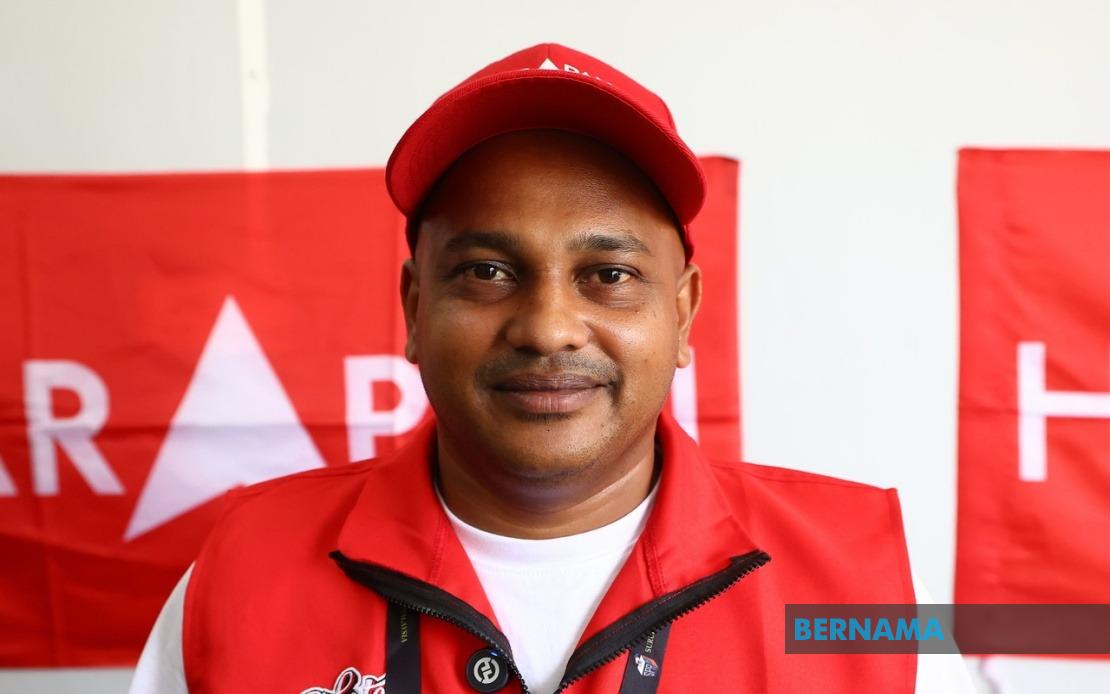
Guna Balakrishnan, the Pakatan Harapan candidate contesting the Layang-Layang state seat in Johor's upcoming election on July 11, has committed to delivering tangible results within his first 100 days should voters return him to office. During a campaign stop in Kluang, he presented four core priorities that emerged directly from his ground engagement with residents, reflecting both the urban infrastructure challenges and rural concerns that characterise this diverse constituency of 25,181 registered voters.
The candidate's platform addresses a practical mix of quality-of-life issues that resonate across Johor's varied electorate. Street lighting represents the most immediate infrastructure concern, with Guna targeting the resolution of between 50 and 60 per cent of outstanding complaints in the initial campaign phase. This incremental approach suggests a realistic assessment of the bureaucratic and financial constraints involved in state-level implementation, avoiding the hyperbolic promises that often characterise electoral rhetoric in Malaysian politics.
Telecommunications expansion constitutes the second pillar of his plan, with Guna expressing confidence that much of the connectivity challenge can be resolved within the 100-day window. His explanation reveals strategic thinking: the foundational infrastructure, including essential feeders, already exists in many areas. The gap can be bridged through targeted installation of additional transmitters in underserved locations, a more efficient pathway than wholesale network reconstruction. This technical specificity distinguishes his approach from purely aspirational campaigning and suggests consultation with telecommunications experts during policy development.
Wildlife encroachment emerged as a significant concern during Guna's grassroots outreach, indicating the pressure facing rural communities at the interface between agricultural land and natural habitats. The Layang-Layang area, with its mix of developed and pastoral zones, experiences genuine friction as expanding human settlement encounters fauna seeking traditional territories. Addressing this requires coordinated action between state wildlife authorities and local government, presenting a substantive governance challenge beyond simple resource allocation.
The fourth priority targets the persistent problem of oil palm fruit theft, a rural agricultural crime that has long plagued Malaysia's plantation sector. The frequency with which residents raised this issue during campaigning underscores its economic and security implications for farming families, particularly smallholders who lack sophisticated security infrastructure. This priority demonstrates Guna's responsiveness to agricultural constituencies that might otherwise feel overlooked by urban-focused political agendas.
Guna's broader manifesto, unveiled separately, extends considerably beyond these immediate priorities to encompass longer-term development vision. Flood management infrastructure features prominently, reflecting Johor's recurring susceptibility to seasonal inundation. Road infrastructure upgrades address mobility concerns affecting both economic connectivity and daily quality of life. The emphasis on digital access and internet coverage echoes national aspirations toward inclusive digital economy participation, particularly relevant for populations in Layang-Layang's less-served areas.
Human capital development initiatives reveal socially-conscious policy thinking. Women's entrepreneurship support acknowledges both gender equity principles and the economic reality that female-led enterprises constitute an increasingly vital segment of Malaysia's small and medium enterprise landscape. Expanding Technical and Vocational Education and Training pathways addresses the chronic skills mismatch in Malaysia's labour market while offering youth alternatives to conventional university education, a particularly significant consideration in constituencies where employment opportunities remain limited.
The proposed senior citizen activity centre responds to demographic realities as Malaysia's population ages. Creating dedicated spaces for elderly community members serves both social and public health functions, reducing isolation and fostering intergenerational solidarity. This reflects evolving political consciousness regarding the needs of ageing voters, a cohort whose electoral significance continues expanding across Malaysia.
The Layang-Layang contest presents a three-way competition that shapes the campaign dynamics significantly. Guna faces Barisan Nasional's Chua Jian Boon and the incumbent Abd Mutalip Abd Rahim, who carries Perikatan Nasional's banner. This triangular configuration means no faction enjoys overwhelming electoral dominance, forcing all candidates toward substantive engagement with voter concerns rather than reliance on conventional party machinery. Early voting commences on July 7, with the main election following four days later.
For Malaysian voters and political observers, this campaign illuminates the granular nature of state-level political competition in the post-2018 Malaysian political landscape. Rather than abstract ideological contests, campaigns increasingly revolve around specific, localisable service delivery promises that constituencies can evaluate against actual performance. Guna's emphasis on measurable outcomes within a defined timeframe—resolving particular percentages of complaints, installing specific infrastructure components—establishes benchmarks against which voters can eventually hold him accountable.
The manifestation of these concerns across a state election in Johor, Malaysia's second-largest state by population, carries implications beyond the constituency itself. As Malaysian states increasingly assert autonomy over local governance agendas, and as federal-state relations remain fluid under current political configurations, the specific priorities articulated by candidates signal emerging patterns in regional governance thinking. Infrastructure, digital inclusion, and quality-of-life concerns transcend partisan boundaries, suggesting convergence around practical development narratives.
The election underscores how Malaysian electoral politics has evolved from predominantly top-down messaging toward more responsive, constituency-specific engagement. Guna's detailed commitments on street lighting percentages and transmitter installation reflect voter demand for specificity over rhetoric. This granularity serves voters better, enabling subsequent accountability mechanisms, though it also places candidates under genuine pressure to deliver measurable results within compressed timeframes.
As Johor heads toward its state election, campaigns such as Guna's demonstrate that competitive Malaysian politics, while retaining significant partisan dimensions, increasingly operates through the language of pragmatic service delivery and infrastructural improvement. Whether promises materialise after July 11 will shape voter expectations and political accountability frameworks across the state and beyond.

