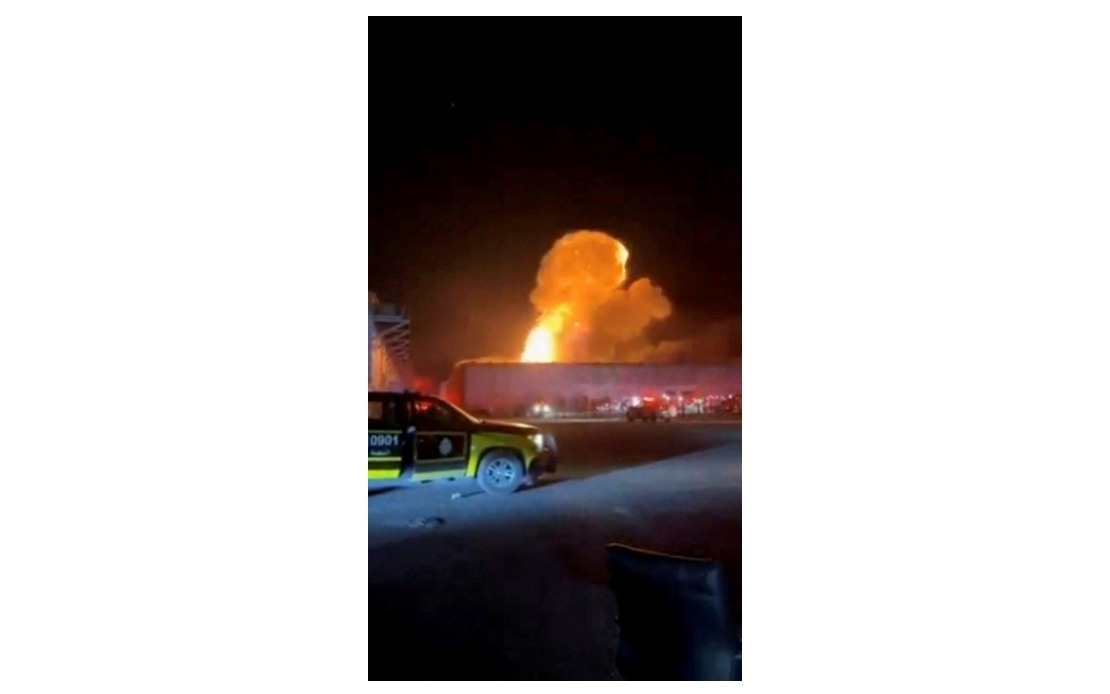
The Persian Gulf descended into crisis mode on Friday as three nations simultaneously activated emergency warning systems in response to escalating military confrontations. Bahrain, Qatar, and Kuwait each initiated protective measures after reporting incoming threats, with each country's interior ministry issuing directives for citizens to seek immediate shelter. The coordinated activation of air defence systems and public alert mechanisms underscores the severity of the situation and reflects the fragility of security arrangements across one of the world's most strategically vital regions.
Kuwait bore the brunt of the immediate threat, with the country's military confirming that its air defence network was actively engaging hostile missiles and unmanned aircraft. The Kuwaiti Interior Ministry instructed residents to proceed to the nearest secure location while adhering to official guidance. The lack of detailed information from Kuwait's defence establishment only heightened public concern, though military officials stated that defensive operations were underway without providing specifics about the nature or origin of the attacking systems. The activation of civil defence protocols in Kuwait suggested capabilities beyond minor incursions—indicating a coordinated assault of considerable scale.
In Bahrain, which houses critical US military installations including the headquarters of the US Naval Forces Central Command, authorities activated emergency sirens across populated areas and directed civilians toward designated safe zones. The simultaneous alerts in Qatar reinforced the sense that the threat extended across multiple nations rather than targeting a single location. Qatar's Interior Ministry characterised the security situation as high-risk, ordering the public to remain indoors and maintain protective positions. The breadth of the alert system activations suggested either a widespread attack dispersed across multiple targets or coordinated strikes designed to demonstrate capability across the entire region.
The immediate catalyst for Friday's escalation trace back to Iranian military action. The Iranian armed forces announced they had conducted drone operations targeting a US military facility within Bahrain's territory, a significant act of direct aggression against American interests in the heart of the Gulf. This assertion—whether fully accurate or strategically stated for psychological effect—carried immense weight in signalling Tehran's willingness to escalate beyond previous patterns of restraint. The strike represented a fundamental shift in the conflict's trajectory, moving from statements of intent to demonstrated military operations.
The broader context of these escalations reveals a region caught between competing powers with irreconcilable strategic interests. Starting in February, the United States and Israel coordinated a substantial military campaign against Iranian targets, fundamentally altering the regional security calculus. Tehran responded with significant retaliatory strikes using missiles and unmanned systems against Gulf nations that serve as hosts to American military infrastructure. What emerged was a cycle of action and counter-action, with each move prompting increasingly forceful responses.
While diplomatic efforts appeared to have borne fruit recently, with Pakistan reportedly mediating discussions that produced a framework agreement aimed at de-escalation between Washington and Tehran, the apparent fragility of these arrangements became evident. The agreement, intended to establish parameters for ending hostilities and establishing sustained peace, proved insufficient to arrest the momentum of military operations. Recent days have witnessed particular volatility centred on control and access through the Strait of Hormuz, a waterway critical to global energy markets. The two adversaries have exchanged attacks in and around this strategic chokepoint, each attempting to demonstrate resolve and capability.
For Malaysia and the broader Southeast Asian region, such developments carry considerable economic implications. Approximately one-third of globally traded petroleum passes through the Strait of Hormuz, meaning any disruption or sustained military conflict creates pricing pressures felt across Asia. Malaysia, as an energy-importing nation with significant petroleum product consumption, faces potential cost escalation if the conflict continues or intensifies. Malaysian manufacturing industries and transportation sectors prove particularly vulnerable to energy price spikes, which can cascade through supply chains and reduce competitiveness.
The escalation also complicates the regional geopolitical environment beyond immediate Persian Gulf concerns. Southeast Asia has carefully maintained balanced relations with multiple global powers, and any deepening of US-Iran antagonism creates pressure for regional nations to choose sides or face accusations of insufficient commitment. Malaysia's maritime trade, which relies on freedom of navigation through contested waters globally, suffers when regional powers engage in military adventurism that threatens shipping lanes. The precedent of major powers conducting military operations in response to perceived threats establishes concerning templates for resolving disputes.
The activation of simultaneous civil defence systems across multiple Gulf nations Friday also reflects the interconnected nature of regional security. Threats against American military positions in Bahrain or Kuwait inevitably affect neighbouring states through secondary effects, including fallout patterns or expanded conflict zones. Qatar and Bahrain, despite their smaller populations and distinct security establishments, recognised that remaining neutral observers was impossible—they too faced consequences from the regional military escalation. This collective vulnerability paradoxically underscores both the genuine threat level and the absence of effective regional mechanisms for managing major-power competition.
The question now centres on whether the Pakistani-mediated framework agreement can withstand the centrifugal forces of military momentum and strategic competition. Previous ceasefires and de-escalation agreements have foundered when either party perceived advantage in resuming operations. The timing of Friday's escalation—occurring after recent diplomatic progress—suggests that either the agreement lacked sufficient enforcement mechanisms or that one side interpreted it as permitting continued military operations short of total war. The distinction between aggressive action and violation of diplomatic terms proves crucial to understanding whether Friday represents tactical escalation within an agreed framework or fundamental abandonment of diplomatic progress.

