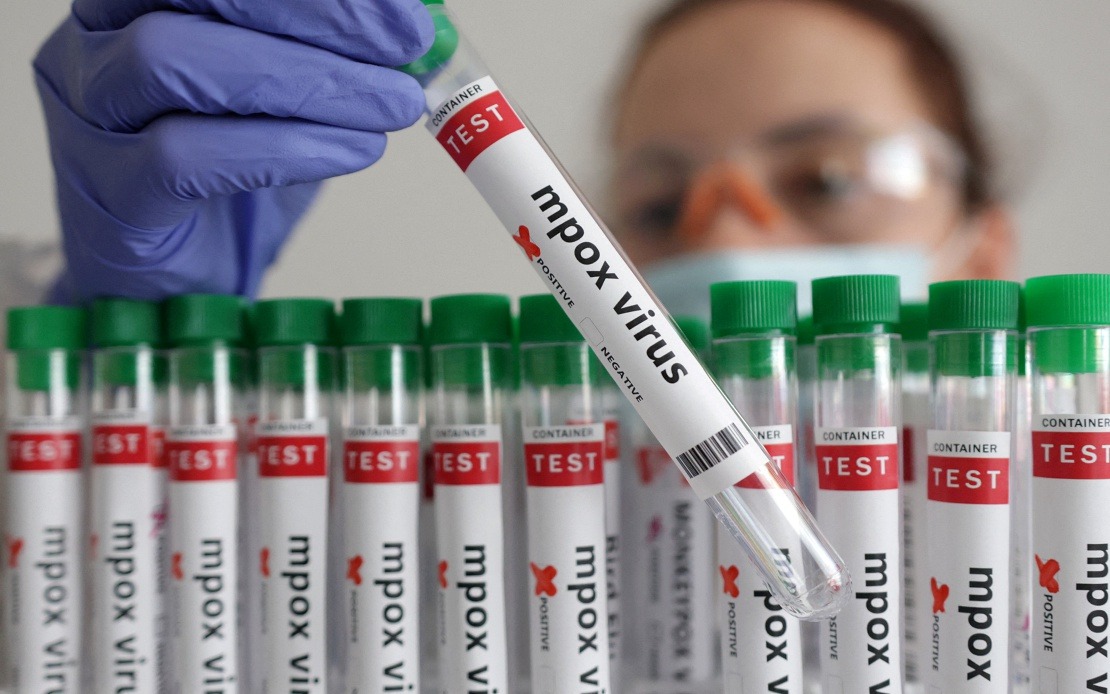
Guinea-Bissau has documented its first confirmed case of mpox, triggering a coordinated public health response as the West African nation joins the growing list of countries confronting the viral outbreak. The discovery signals heightened vigilance in a region already grappling with infectious disease management challenges, and underscores the persistent threat mpox poses beyond the African continent where it has circulated for decades.
Public Health Minister Quinhin Nantote made the announcement on Saturday evening, identifying the patient as a 27-year-old woman who presented to a medical facility on June 24 with symptoms requiring investigation. The woman's presentation prompted health workers to collect samples from her skin lesions, a key diagnostic indicator of mpox infection, and submit them to Guinea-Bissau's National Institute of Public Health for initial analysis. That facility's testing revealed the presence of mpox virus genetic material, establishing a preliminary diagnosis within the country's own laboratory infrastructure.
To ensure diagnostic accuracy and establish international verification, the collected samples underwent secondary confirmation at the Institut Pasteur in Dakar, Senegal, one of West Africa's leading reference laboratories. This external validation completed the diagnostic pathway and provided definitive confirmation that Guinea-Bissau was now facing an active mpox transmission event. The Institut Pasteur's positive result removed any ambiguity about the case classification and triggered the formal activation of Guinea-Bissau's disease response protocols.
In response to the confirmation, Guinea-Bissau's health authorities initiated their national emergency response framework aligned with international standards. The activation specifically draws on provisions outlined in the International Health Regulations, the binding agreement governing countries' obligations during public health emergencies, and incorporates guidance from the World Health Organisation, the UN agency coordinating global disease response efforts. This institutional alignment ensures that Guinea-Bissau's response meets internationally recognised standards for epidemic control and information-sharing.
A critical component of the activated response involves epidemiological investigation designed to map the patient's social contacts and movement patterns during the infectious period. Health authorities are working to identify individuals who had close contact with the confirmed case, assess their exposure levels, and establish monitoring protocols to detect any secondary cases before they progress to severe illness. This contact-tracing work represents the frontline of containing localised transmission and preventing broader community spread.
Surveillance capacity across Guinea-Bissau has been substantially reinforced following the confirmation, with enhanced monitoring systems now operational throughout the country's territory and specifically at its international borders. This geographical expansion of surveillance reflects the recognition that mpox can spread through travel, and that border screening and monitoring serve as an early warning mechanism for new cases arriving from neighbouring countries. The heightened border vigilance is particularly significant given Guinea-Bissau's position within West Africa, where regional movement is substantial and epidemiological conditions favour viral spread.
Public communication has emerged as a parallel priority, with Minister Nantote issuing guidance on preventive behaviours applicable to the general population. The recommended measures include regular and thorough handwashing, a fundamental hygiene practice that interrupts transmission pathways, and the avoidance of close physical contact with individuals exhibiting fever or characteristic skin rashes. These accessible behavioural recommendations aim to empower ordinary citizens with practical protective strategies while raising public awareness about mpox symptoms and transmission routes.
Mpox itself is a zoonotic viral pathogen that typically cycles between animal populations and humans, though human-to-human transmission is well-documented and clinically significant. The virus spreads primarily through direct contact with infectious body fluids, respiratory droplets expelled during close interaction, and contaminated materials such as clothing or bedding that harbour viral particles. The clinical presentation characteristically includes fever, musculoskeletal pain, and the hallmark skin lesion rash that distinguishes mpox from other febrile illnesses, alongside lymphadenopathy or swollen lymph nodes that reflect immune activation.
For Malaysian and Southeast Asian observers, Guinea-Bissau's mpox confirmation carries relevance as a reminder of the ongoing circulation of this pathogen across Africa and its potential for international travel. While mpox outbreaks have primarily centred on the African continent, the 2022 global monkeypox spread to multiple continents including Malaysia, where cases were confirmed, demonstrating the virus's capacity to traverse long distances through air travel and international commerce. Guinea-Bissau's case reinforces the principle that regional disease surveillance networks and coordinated preparedness remain essential components of pandemic prevention in an interconnected world.
The West African region faces particular challenges in disease surveillance and outbreak response, encompassing limited laboratory capacity, constrained healthcare infrastructure, and ongoing competition for resources across multiple health priorities. Guinea-Bissau's ability to rapidly confirm this mpox case through its national institute and to access international reference laboratory verification, despite these broader constraints, reflects meaningful investments in laboratory networks and cross-border health cooperation. The speed of confirmation—approximately one week from symptom presentation to definitive diagnosis—demonstrates functional capacity that should facilitate early case detection and containment efforts.
The activation of Guinea-Bissau's response mechanisms occurs within a broader context of intensified global attention to mpox following the 2022 international outbreak. Heightened surveillance globally has improved case detection rates, and countries have built laboratory capacity, trained epidemiological staff, and established response protocols that enable rapid confirmation and public health action. Guinea-Bissau's response pattern—initial national testing, external verification, contact investigation, and surveillance intensification—mirrors best-practice protocols established during the international outbreak response.
As Guinea-Bissau mobilises to contain this initial case and prevent wider transmission, the country's experience will contribute important epidemiological data about mpox circulation in West Africa and the effectiveness of rapid response measures in resource-constrained settings. Close monitoring of whether additional cases emerge from contact investigations will indicate whether transmission remains contained or whether community spread has occurred. The coming weeks will be critical for understanding the scope of this outbreak and the adequacy of Guinea-Bissau's public health response capacity.

