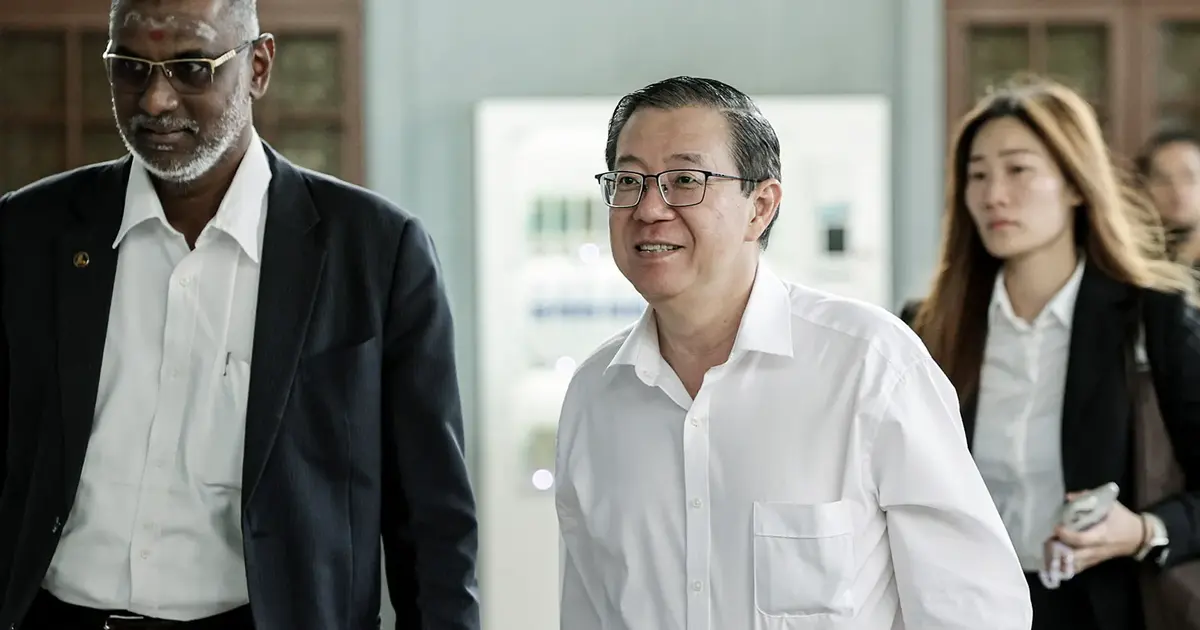
During ongoing court proceedings, a Malaysian Anti-Corruption Commission investigator disclosed that Lim Guan Eng, the former Penang Chief Minister, had sought clarification from state government officials regarding the legal standing of a major infrastructure tunnel project. The sessions court heard evidence suggesting that the state's executive council, the highest decision-making body in Penang's state government, had engaged in detailed discussions about the project's compliance with existing laws and regulations.
The MACC officer's testimony indicates that the Penang state legal adviser participated in these deliberations at the direction of the executive council itself. This detail proves significant because it demonstrates that senior government machinery was involved in examining the project's legitimacy before any major decisions were finalised. The court proceedings have revealed the involvement of multiple state officials in what appears to have been a structured evaluation process.
The tunnel project in question has been a subject of considerable public interest and scrutiny in Penang, one of Malaysia's most densely populated states where infrastructure development remains contentious. The project's scope, funding mechanisms, and necessity have all drawn criticism from various quarters, including opposition politicians and civil society groups who questioned whether such a massive undertaking was justified or properly evaluated.
For Malaysian readers following this case, the revelation carries implications for how state-level decision-making is scrutinised by anti-corruption authorities. The MACC's investigation suggests that consulting legal advisers on project legitimacy, while potentially a prudent step, does not necessarily shield officials from potential charges if investigators later determine that impropriety occurred. The distinction between seeking legal guidance and acting appropriately on that guidance represents a crucial legal threshold.
The executive council's discussion of the tunnel project's legality reflects the type of governance structure that exists across Malaysian states, where such councils typically comprise the Chief Minister and several exco members overseeing different portfolios. The involvement of the state legal adviser in these discussions aligns with standard administrative practice, though questions about the advice rendered and whether it was followed remain central to the investigation.
Penang's governance has been unusually scrutinised over recent years, partly because the state government has pursued numerous infrastructure projects and urban development initiatives. The tunnel scheme, in particular, was presented as a solution to persistent traffic congestion in Penang's overcrowded urban corridors, but its estimated costs and environmental impacts sparked significant debate within the state legislature and among residents.
The court testimony sheds light on the administrative mechanics of how state governments handle major projects, revealing that multiple layers of consultation and legal review occurred before implementation. However, the MACC's investigation suggests that these internal consultations alone were insufficient to address corruption concerns or potential procedural irregularities that the anti-corruption body believes warrant prosecution.
For Southeast Asian observers, this case illustrates ongoing challenges faced by regional governments in balancing infrastructure development with transparency and accountability. Malaysia has strengthened its anti-corruption framework in recent years, and cases involving senior elected officials carry significance beyond individual culpability, reflecting broader questions about institutional integrity and public trust in governance.
The trial's progression will likely determine whether seeking legal advice from state officials constitutes adequate due diligence or whether additional procedures should have been followed. This outcome could influence how future major projects are evaluated and approved at the state level across Malaysia, potentially requiring enhanced documentation and broader consultation beyond traditional executive council discussions.
The involvement of the state legal adviser in the executive council's deliberations, as described by the MACC investigator, indicates that formal legal opinions were requested and presumably rendered. Whether these opinions were properly documented, what recommendations they contained, and whether the executive council acted consistently with any advice provided remain questions that the court may address as the trial continues.
Penang's infrastructure priorities have been a recurring point of political contention, particularly between the state government and federal authorities who sometimes compete for influence over development projects. The tunnel scheme represented a significant state initiative that, if approved and constructed, would have represented a substantial commitment of state resources and borrowing capacity.
The MACC's investigation into this project reflects the anti-corruption body's expanded mandate to scrutinise major government undertakings, not merely individual acts of bribery or embezzlement but broader questions of whether proper procedures were followed and whether public resources were allocated appropriately. This broader investigative approach characterises modern anti-corruption enforcement across Southeast Asia.

