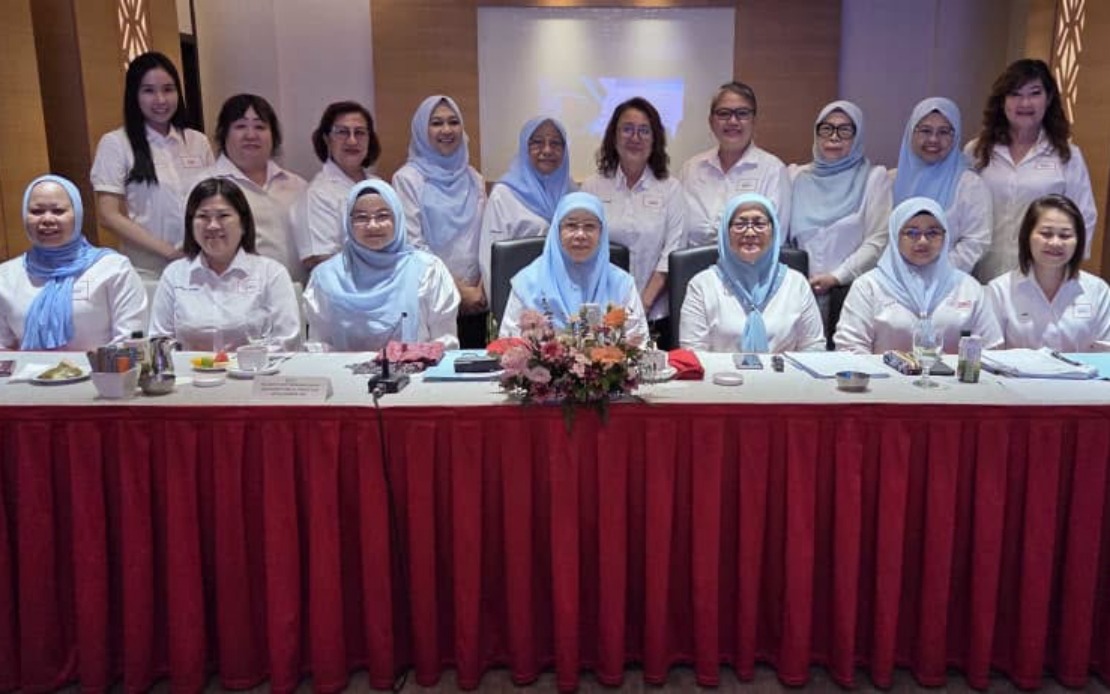
The Gabungan Rakyat Sabah (GRS) Women's wing has taken organizational steps to strengthen its position within the broader coalition framework by establishing five dedicated operational units, according to an announcement made in Kota Kinabalu. The decision emerged from a gathering of the wing's leadership, with Datuk Seri Azizah Mohd Dun, the wing's chief, confirming the development and outlining the purpose behind this structural reorganization.
The newly formed units address distinct areas critical to contemporary political engagement: the Policy and Strategy Unit will focus on long-term directional planning and tactical responses to emerging political developments, while the Economic Unit will concentrate on matters related to financial policy and business-oriented community concerns. A dedicated Health Unit has been created to address public health issues and related advocacy, complementing these efforts with the Information Unit, which will manage communications strategy and media engagement. The Welfare Unit rounds out this configuration, targeting social support initiatives and community assistance programmes.
Leadership of these units has been distributed among senior figures within the organization. Azizah herself will oversee the Policy and Strategy Unit, ensuring alignment with broader coalition objectives. Datuk Surinam Sadikun has assumed responsibility for the Economic Unit, positioning her to shape the wing's approach to fiscal matters and commercial policy engagement. Simi Linggom will direct the Health Unit's activities, bringing focus to medical and public health advocacy. Datin Atin Belynda Buntot has been assigned to lead the Information Unit, overseeing how the organization communicates with both members and the broader public. Datin Wong Siow Lee, also known as Mary Wong, will head the Welfare Unit's operations.
The timing of this organizational restructuring reflects broader calculations about the electoral calendar and the need for political coalitions to maintain operational momentum during uncertain periods. In Malaysia's constitutional framework, the government must call a general election before the parliament's current term expires, creating a window within which campaigning intensity typically increases. Sabah, as one of the country's largest states and historically a closely contested electoral arena, represents significant strategic importance for any coalition seeking to strengthen its overall parliamentary position.
According to Azizah, the establishment of these units aims to enable the GRS Women's wing to execute programmes with genuine community impact while simultaneously deepening the organization's connection to grassroots constituencies. The structured approach reflects a recognition that effective political organizations cannot rely on ad-hoc responses to community needs but rather require systematic planning and dedicated personnel to address specific policy domains. By compartmentalizing responsibilities, the wing intends to create clarity around decision-making processes and accountability.
Azizah emphasized that political environments remain fundamentally unstable and require organizations to maintain constant alertness. The statement that the GRS Women's wing cannot afford to remain complacent or comfortable in its current state suggests an acknowledgment that opposition movements may challenge the coalition's dominance, particularly at the state level where Sabah's political dynamics have proven volatile. The remarks underscore pressure within the coalition to demonstrate active engagement with constituents rather than relying on past electoral victories or organizational inertia.
The emphasis on regular meetings, coordinated effort, and readiness to adapt represents a counterweight to the risk of organizational calcification that sometimes affects established political movements. In the Malaysian context, where state-level governments have occasionally shifted dramatically between election cycles, maintaining dynamic and responsive party machinery constitutes a core competitive advantage. Sabah's history of political realignment, including the defection of state legislators and shifts in coalition composition, provides concrete evidence of the volatility that Azizah referenced.
For the broader GRS coalition, which includes multiple parties across Sabah and comprises a critical component of the federal government's parliamentary majority, the strengthening of individual party machinery carries implications beyond state-level politics. Any deterioration in coalition strength at the state level creates ripple effects that influence federal stability and the government's capacity to advance legislation. Therefore, the GRS Women's wing's organizational expansion should be understood not merely as a routine party management matter but as an element within the coalition's overall strategy to consolidate electoral support.
The five-unit structure also reflects contemporary political communication demands. The dedicated Information Unit acknowledges that political messaging now occurs across multiple platforms and requires coordinated strategy rather than improvised responses. Similarly, the Economic and Health Units suggest recognition that modern voters evaluate political organizations partly through their capacity to articulate coherent positions on substantive policy matters, not merely through personalistic appeals or patronage distribution.
For Malaysian observers, the GRS Women's wing initiative offers insight into how established coalitions prepare for electoral competition. The approach demonstrates that even organizations holding significant political power recognize the necessity of continuous organizational improvement and structural innovation. Whether these institutional changes translate into enhanced electoral performance will become apparent when Malaysians next proceed to the polls, but the investment in organized structure suggests the coalition takes its competitive challenges seriously.

