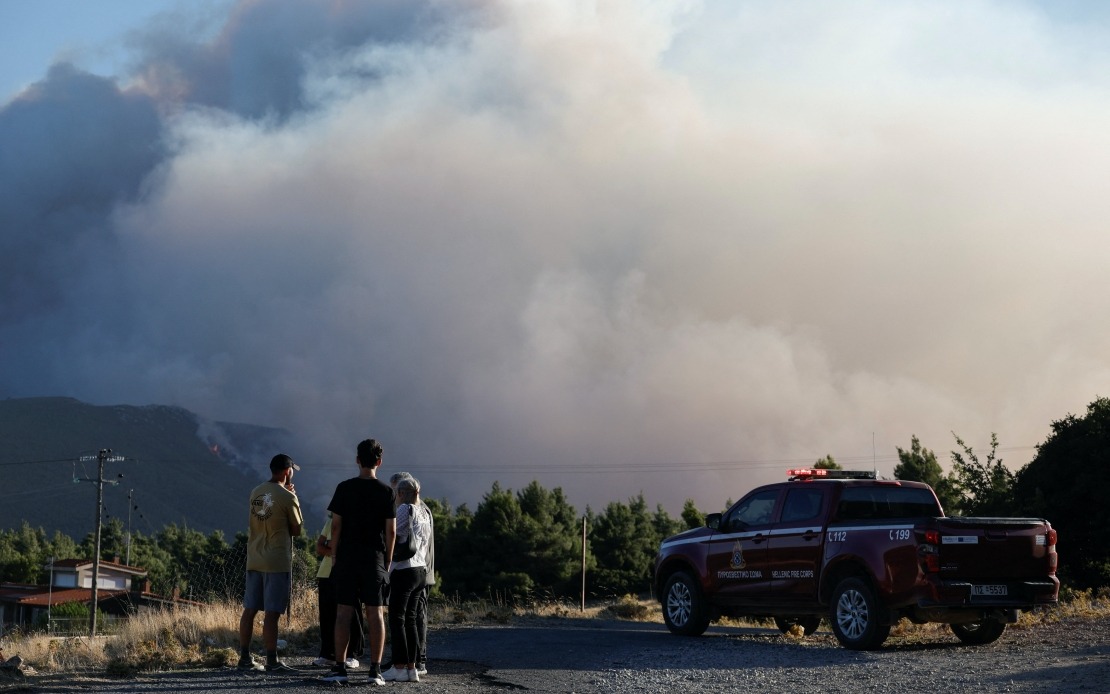
Devastating wildfires continued their assault on Greece's western regions on Sunday as emergency services deployed unprecedented resources to contain the rapidly spreading flames approaching the city of Megara, located approximately 50 kilometres west of Athens. The crisis represents one of the most significant fire emergencies to affect the wider Athenian area in recent years, mobilising emergency personnel throughout the night and into daybreak as the situation remained critical and unpredictable.
The scale of the deployment underscored the severity of the threat, with at least 500 firefighters positioned across the affected zones in a coordinated response that extended far beyond Greece's borders. The contingent included specialised international teams dispatched from Romania and France, reflecting the scale of mutual assistance required when single-nation resources prove insufficient. Military vehicles supplemented civilian firefighting capacity, while volunteers joined professional emergency responders in efforts to halt the flames' eastward progression through the mountainous Kithairon region.
Weather conditions proved instrumental in determining the fire's trajectory and intensity throughout the crisis. Strong winds repeatedly accelerated the flames' spread, creating moments of extreme danger when the fire's advancement became difficult to predict or control. The communities of Veniza and Psatha experienced particularly acute pressure, facing direct exposure to the advancing inferno as meteorological conditions shifted unpredictably. The combination of high temperatures, low humidity, and persistent wind gusts created ideal conditions for rapid fire propagation, complicating containment efforts despite the marshalling of substantial resources.
Aerial support provided crucial reinforcement once daybreak permitted flight operations. Firefighting aircraft and helicopters commenced bombing runs with water and flame-retardant compounds at first light, according to reporting from state broadcaster ERT. These assets offered capabilities that ground-based crews could not replicate, allowing operators to attack flames in terrain where terrestrial access remained limited or entirely impossible. The coordination between air and ground operations represented a sophisticated response to an emergency that demanded simultaneous action across multiple operational domains.
The rapid eastward advancement of the fire created mounting anxiety regarding Megara's immediate prospects. With the flames reported to be only a few kilometres from the city limits, authorities faced the prospect of urban evacuation if containment efforts faltered. Megara's population and infrastructure now represented a critical threshold—successful prevention of the fire's urban encroachment would validate the mobilised response, while failure to establish firebreaks could necessitate emergency evacuations and expose residential areas to catastrophic damage.
Investigations into the fire's origins yielded troubling findings regarding potential criminal responsibility. Greek authorities reported that 13 people had been arrested nationwide on charges of negligent arson, suggesting that human carelessness or deliberate action contributed to initiating or exacerbating the conflagration. This dimension of the crisis highlighted endemic vulnerabilities within fire prevention systems and the consequences of inadequate public consciousness regarding the dangers of uncontrolled flames during high-risk weather periods.
The geographic scope of Greece's current fire crisis extended beyond the Athens region to encompass the island territories as well. Cephalonia experienced its own major wildfire, though that blaze did not presently threaten populated settlements according to official assessments. Meanwhile, fires affecting Crete appeared to have reached containment phases, with media sources indicating that the flames had largely been extinguished despite earlier evacuations affecting several towns. However, the damage inflicted already proved substantial, with approximately 200 homes reportedly destroyed on that island, though official confirmation of specific casualty figures remained pending.
Quantifying the environmental destruction revealed the scale of ecological impact accumulating across the affected regions. Meteorological specialists cited in the Protothema news portal estimated that approximately 10,000 hectares of land across the north-western and western zones surrounding Athens had been consumed by the current fires. This vast expanse of incinerated terrain represented not merely lost vegetation but compromised water retention capacity, destabilised soil structures, and eliminated wildlife habitat across multiple ecosystems. The ecological recovery timeline for such devastated landscapes typically spans decades, with profound implications for local agricultural productivity and environmental stability.
For Malaysian observers monitoring these developments, the Greek crisis illuminates vulnerabilities affecting Mediterranean and other fire-prone regions with escalating intensity as climate patterns shift globally. Southeast Asia's own vulnerability to transboundary haze and large-scale wildfires—particularly across Indonesia and Myanmar—demonstrates that sophisticated resource mobilisation and international cooperation mechanisms remain essential prerequisites for managing fire emergencies at the scale increasingly encountered during extreme weather periods. The Greek response model, with its emphasis on international mutual assistance and coordinated aerial operations, offers instructive lessons for regional disaster management frameworks currently under development across Southeast Asian governance structures.

