Greece has escalated its wildfire preparedness to the maximum alert level, designating Thursday August 6 as presenting a critical fire risk across three major population centres including the capital Athens. The General Secretariat for Civil Protection, which operates under the Climate Crisis and Civil Protection Ministry, classified the threat as Category 4—the highest possible rating—across the regions of Attica, Viotia, and Evia. This escalation signals that authorities anticipate conditions particularly conducive to rapid fire spread and uncontrollable blazes, triggering the mobilisation of all available emergency resources.
When a red alert is declared at this level, Greece's National Civil Protection Mechanism automatically transitions to full operational capacity, marshalling personnel and equipment across multiple response agencies. Ground teams from the fire service will conduct systematic patrols throughout vulnerable zones, while police and armed forces units support these efforts both on foot and from vehicles. Simultaneously, aerial reconnaissance missions using helicopters and fixed-wing aircraft will provide real-time monitoring of potential ignition sites and early warning of developing fires. This coordinated multi-agency approach reflects the scale and speed with which wildfires can overwhelm individual fire brigades, particularly when multiple incidents occur simultaneously across a region.
Under the red alert framework, authorities have implemented preventive traffic restrictions and visitor limitations across forest areas and other ecologically vulnerable zones. These measures aim to reduce the human footprint in fire-prone regions during peak danger periods, minimising the possibility of accidental ignitions caused by discarded cigarettes, unattended campfires, or engine sparks. Authorities have also issued direct public appeals urging residents to refrain from any activities that could generate flames or embers, including outdoor cooking, controlled burns, or industrial operations in open settings. Such warnings underscore how even routine human activities become potential disaster triggers when atmospheric and vegetation conditions align unfavourably.
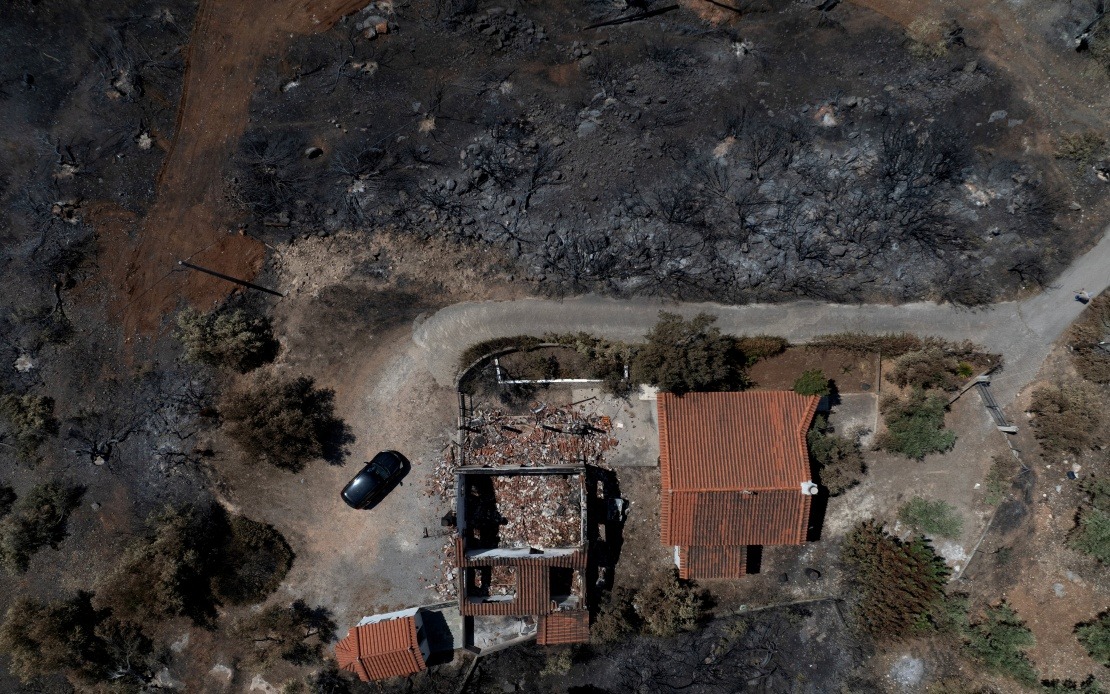
The alert arrives as Greek firefighting crews continue battling a major wildfire that emerged last week across the Viotia region and subsequently pushed westward into the broader Attica zone. Satellite data from the European Union's Copernicus monitoring system confirms this single incident has charred approximately 14,424 hectares—equivalent to roughly 35,642 acres—making it one of the most significant fire events in the region this season. The sheer spatial footprint of this blaze demonstrates how quickly Mediterranean wildfires can overwhelm response capacity, consuming large swathes of land in days despite substantial personnel and equipment deployment.
This ongoing major fire has already exacted a tragic human toll. During aerial operations mounted on Sunday, two firefighting helicopters collided mid-air, resulting in the deaths of a Danish pilot and a Greek aerial coordinator. The incident underscores the extreme hazards confronting specialist personnel engaged in firefighting operations, where pilots must navigate challenging terrain, coordinate with ground teams, and perform precise manoeuvres while contending with smoke, turbulent air conditions, and poor visibility. The collision represents a stark reminder of the operational costs associated with large-scale wildfire response and the risks inherent in helicopter-based firefighting missions.
Separate from the major ongoing blaze, firefighters also brought a smaller incident under control near Koropi, located southeast of Athens, on Wednesday. This fire originated in low vegetation within the Driggia area at approximately 1.45 pm local time and mobilised substantial response resources including 52 personnel—notably incorporating three specialised forest commando units trained in rugged terrain operations. The response included 14 ground vehicles and four helicopters, supplemented by two water-dropping aircraft and an additional helicopter coordinating overall aerial strategy. Local municipal authorities contributed water tanker support, while operations centres tracked fire progression through thermal imaging and optical drone surveillance. An arson investigation team was subsequently dispatched to establish whether the Koropi fire resulted from deliberate ignition, accidental human action, or natural causes.
For Southeast Asian observers, Greece's wildfire challenges carry particular relevance as regional climate patterns increasingly mirror Mediterranean fire conditions. Indonesia and other regional countries experiencing severe dry seasons face analogous escalating risks, and Greece's systematic approach to alert systems, resource coordination, and public communication offers instructive models. The deployment of satellite monitoring, aerial reconnaissance, and integrated inter-agency command structures reflects international best practices that countries across Southeast Asia might adapt to their own geographic and institutional contexts.
The frequency and intensity of such alerts in Greece reflect broader patterns of changing climate conditions across southern Europe. Extended dry periods, elevated temperatures, and reduced moisture in vegetation create tinderbox conditions where minimal ignition sources can trigger conflagrations consuming thousands of hectares. Climate scientists attribute these trends partly to longer, more intense summer seasons and reduced rainfall during traditional fire-prone months. For Mediterranean and Southeast Asian regions alike, this trajectory suggests that wildfire management will become an increasingly central governance challenge, requiring substantial long-term investment in detection, response, and prevention infrastructure.
Greece's decision to issue a red alert while simultaneously managing an active major fire demonstrates how contemporary wildfire administration operates across multiple temporal and spatial scales. Authorities must simultaneously respond to present emergencies whilst preparing for imminent threats, coordinating resources between active incidents and preventive positioning. This management challenge intensifies when multiple fires ignite concurrently, potentially exceeding available personnel and equipment. The red alert mechanism essentially acknowledges that normal peacetime operational capacity becomes insufficient and that extraordinary mobilisation measures represent the only appropriate response to extreme fire conditions.

