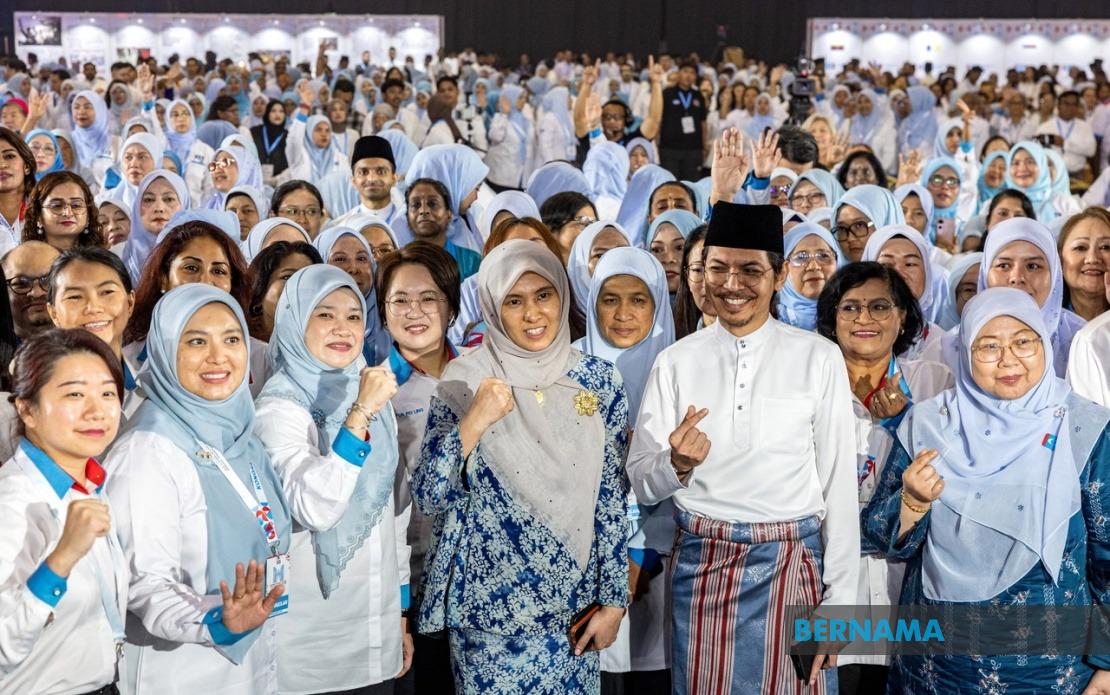
Political leaders cannot afford to operate in isolation from their constituencies. This fundamental principle formed the centrepiece of remarks delivered by Angkatan Muda Keadilan (AMK) chief Muhammad Kamil Abdul Munim during the conclusion of deliberations on his policy address at the party's 2026 National Congress in Melaka on Wednesday. The messaging underscores a broader concern within Malaysia's ruling coalition about maintaining electoral relevance as the country moves toward the next general election cycle.
Muhammad Kamil articulated a comprehensive framework for political sustainability that extends well beyond traditional campaign machinery. According to his perspective, the architecture of effective governance and party management rests on multiple pillars—narrative control, organisational infrastructure, communication channels, and critically, the human dimension of direct community engagement. Each element, he suggested, reinforces the others, creating a resilient structure capable of weathering political headwinds and competitive pressure from opposition movements.
The emphasis on community relations carries particular weight in the Malaysian context, where local concerns often diverge from national policy discourse. Voters routinely evaluate political parties based on their accessibility and responsiveness to neighbourhood-level issues—street maintenance, education facilities, healthcare services, and economic opportunities within their immediate surroundings. Political leaders who neglect this local dimension risk appearing disconnected, regardless of their party's performance in managing national affairs.
Muhammad Kamil was explicit about the strategic function of grassroots networks in the competitive battle for public perception. He contended that maintaining proximity to communities allows parties to establish authoritative narratives before opposition forces can fill the information vacuum with alternative interpretations. In an era of rapid information dissemination through social media and digital platforms, the capacity to frame issues and counter false claims operates as a critical competitive advantage. Parties that lack embedded presence in local communities struggle to compete effectively in this narrative marketplace.
The AMK chief identified a particular vulnerability that concerns the party structure: the risk of ideological drift and dilution of purpose among newly recruited members. Without deliberate programmes introducing fresh recruits to party philosophy, historical struggles, and foundational principles, new members may join primarily for patronage benefits or career advancement rather than genuine commitment to the party's platform. This gradual erosion of ideological coherence can fundamentally weaken organisational integrity across generations.
Addressing this concern requires systematic investment in member education and engagement at the grassroots tier. Muhammad Kamil urged local-level leaders to intensify their activity schedules, creating regular opportunities for members—particularly newcomers—to interact with party figures, discuss policy positions, and develop deeper understanding of organisational values. Such programmes serve multiple functions simultaneously: they socialise members into party culture, deepen personal loyalty, and create networks of committed activists capable of mobilising support during electoral campaigns.
The distinction Muhammad Kamil drew between national and local campaign strategies reflects a sophisticated understanding of electoral dynamics. While national narratives around major policy achievements and leadership credentials certainly matter, election outcomes ultimately depend on constituency-level performance and local perceptions of representative responsiveness. Parties that concentrate campaign resources exclusively at the national level, treating local contests as secondary theatres, frequently discover that macro-level success does not automatically translate into parliamentary seat gains where local factors dominate voter decision-making.
This approach carries implications beyond immediate electoral calculation. Robust grassroots engagement creates feedback mechanisms through which national leadership can understand emerging community concerns, anticipate voter sentiment shifts, and recalibrate policy priorities accordingly. Leaders lacking such intelligence networks operate with incomplete information, potentially pursuing strategies misaligned with constituents' actual needs and preferences. The investment in community relations therefore functions as both a competitive tool and a governance improvement mechanism.
For Malaysia's broader political ecosystem, the emphasis on grassroots mobilisation reflects anxieties about consolidating electoral advantages at a moment of significant demographic and technological change. Younger voters increasingly obtain political information through digital channels rather than traditional party structures, potentially reducing the effectiveness of conventional grassroots engagement methods. Political parties must therefore adapt their community engagement strategies to incorporate digital communication and social media while maintaining the trust-building value of face-to-face interaction that remains psychologically meaningful to many voters across age cohorts.
Muhammad Kamil's remarks also touch on intergenerational transmission of political culture—how parties sustain ideological commitment across membership cycles as older activists retire and younger participants assume greater responsibility. Without intentional efforts to inductate new members into party values and historical narratives, organisational identity gradually becomes hollow, reduced to a vehicle for power acquisition rather than an instrument for pursuing substantive political objectives. This cultural preservation function of grassroots engagement remains essential for parties seeking longevity beyond individual leaders or electoral cycles.

