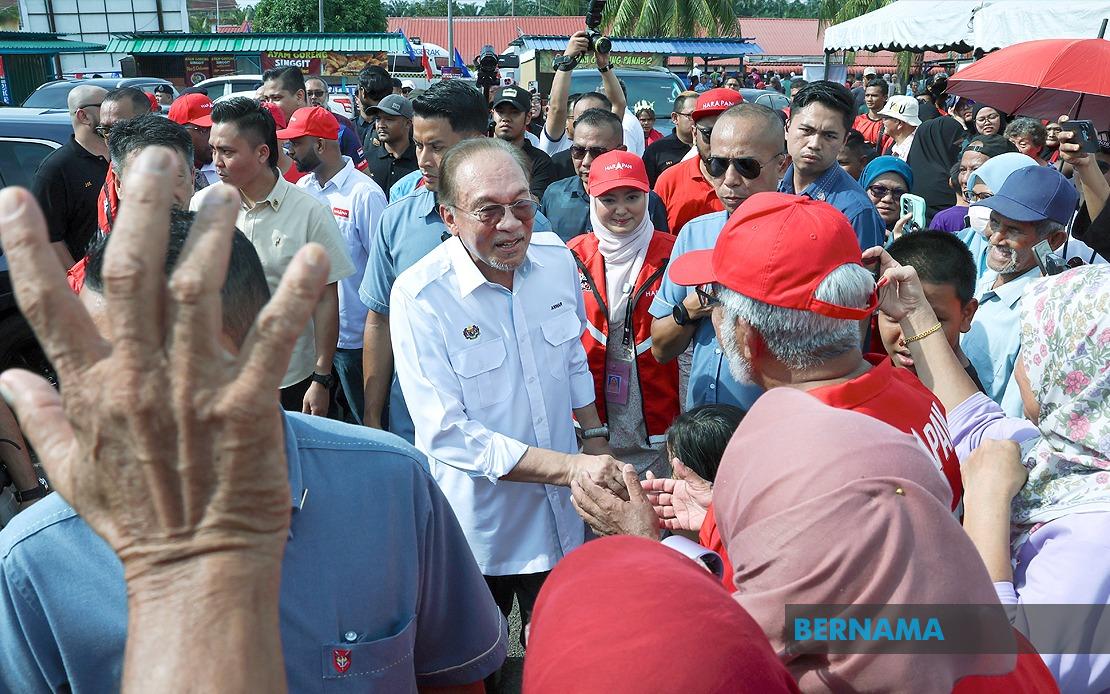
A grandmother's determination to make her grandson's wishes come true led to an unexpected encounter with Prime Minister Datuk Seri Anwar Ibrahim at a community event in Felda Palong Timur, Segamat, last Sunday. Rosimah Mohammad, 58, undertook the journey on a motorcycle from her home in Kampung Pudu, Segamat, accompanied by her nine-year-old grandson Muhammad Afif Ikhwan, who had long harboured a deep admiration for the Prime Minister. What began as a simple trip to attend a programme evolved into a cherished family memory that has stayed with the young boy ever since the encounter took place.
The anticipation leading up to the event was palpable within the household. Muhammad Afif's excitement was so intense that he found it difficult to sleep in the days before the programme, his mind preoccupied with the prospect of finally seeing his idol in person. For many children across Malaysia, political figures who are prominent in national discourse become sources of inspiration, and this young boy was no exception. His grandmother recognised the significance of his wish and made the effort to transport him to the venue, understanding that such moments of connection between citizens and their leaders can become foundational memories in a child's formative years.
When they arrived at the event location, Rosimah positioned herself and her grandson strategically near the pathway that would lead to the stage, ensuring they would have a clear view of the Prime Minister as he made his way through the gathering. The plan was modest—simply to see Anwar from a closer vantage point than would normally be possible for attendees sitting further back. However, as the Prime Minister approached the stage and began greeting members of the public in a gesture of connection with constituents, Muhammad Afif seized the opportunity with the unselfconscious boldness that characterises childhood. He pushed through the crowd surrounding him and extended his hand towards Anwar, hoping for an acknowledgement.
What happened next exceeded all reasonable expectations. Rather than merely returning the handshake, Prime Minister Anwar made the spontaneous decision to invite the young boy onto the stage to stand beside him while he delivered his speech to the gathered crowd. Rosimah, observing this development from her position in the audience, was overwhelmed with emotion at witnessing her grandson's dream materialise in such an extraordinary manner. The expression on Muhammad Afif's face—a mixture of surprise and profound happiness—became a moment she would treasure, knowing that she had played a crucial role in creating this memory for her grandchild.
The significance of this interaction extended beyond the immediate moment of the event itself. After learning about the child's backstory and the grandmother's efforts to fulfil his wish, Prime Minister Anwar expressed his appreciation through a follow-up gesture. PKR deputy information chief Siti Aishah Shaik Ismail visited Muhammad Afif's home in Kampung Pudu on behalf of Anwar, representing what the Prime Minister described as a special gesture of appreciation for the young boy's admiration. During this visit, Siti Aishah presented a bicycle, a school bag, and a new pair of shoes—practical gifts that acknowledged both the boy's enthusiasm and the grandmother's dedication in bringing him to the event.
The emotional resonance of the encounter has proven lasting for the child. According to Rosimah's account, Muhammad Afif has preserved the shirt he wore on that significant day, cradling it in his arms each night as he reflects on the experience. For many children, such tangible reminders of memorable encounters serve as bridges to reliving those moments—the fabric of the shirt becoming almost sacred in its connection to the event. This detail reveals the profound impact that a brief interaction with a prominent public figure can have on a young person's emotional landscape, reinforcing values about ambition, respect for leadership, and the reality that effort and determination can sometimes yield extraordinary results.
The story also illuminates broader themes relevant to Malaysian society. At a time when political discourse can often become divisive or cynical, this account demonstrates the potential for authentic human connection between leaders and citizens. Anwar's willingness to deviate from his schedule to accommodate the young boy, coupled with his subsequent gesture of sending representatives to the child's home, suggests an engagement with the human dimensions of public service that transcends the purely ceremonial aspects of political office. Such actions, whether calculated or spontaneous, carry symbolic weight in shaping public perceptions of leadership accessibility and responsiveness.
From the grandmother's perspective, her resourcefulness in navigating the logistical challenges of reaching the event location reflects a broader pattern of Malaysian families investing time and effort to participate in civic and political life. The choice to travel by motorcycle through an oil palm estate—neither a quick nor particularly convenient mode of transport—underscores the value she placed on facilitating her grandson's aspirations. This kind of intergenerational transmission of civic engagement, where grandparents actively support younger family members' participation in public life, contributes to the maintenance of social cohesion and democratic participation across communities.
The narrative also carries implications for understanding urban-rural dynamics within Malaysia. Segamat, located in Johor, represents the kind of secondary city where direct access to national leadership is less routine than in major metropolitan areas. By bringing a Prime Minister's programme to Felda Palong Timur, the government was extending its reach to communities that might otherwise have limited opportunities for such face-to-face encounters. For Muhammad Afif and his grandmother, the event represented not merely a political appearance but a genuine opportunity for connection that might not readily recur in their daily lives.
Looking forward, moments like this one between a child and his nation's Prime Minister may serve to deepen the boy's engagement with civic responsibility and political participation in his adult years. When young people experience positive interactions with their leaders, they are more likely to develop confidence in democratic institutions and a sense of agency within the political system. Muhammad Afif's experience—made possible through his grandmother's determination—may thus contribute to his long-term trajectory as a citizen, influencing how he understands his own relationship with governance and public institutions throughout his life.

