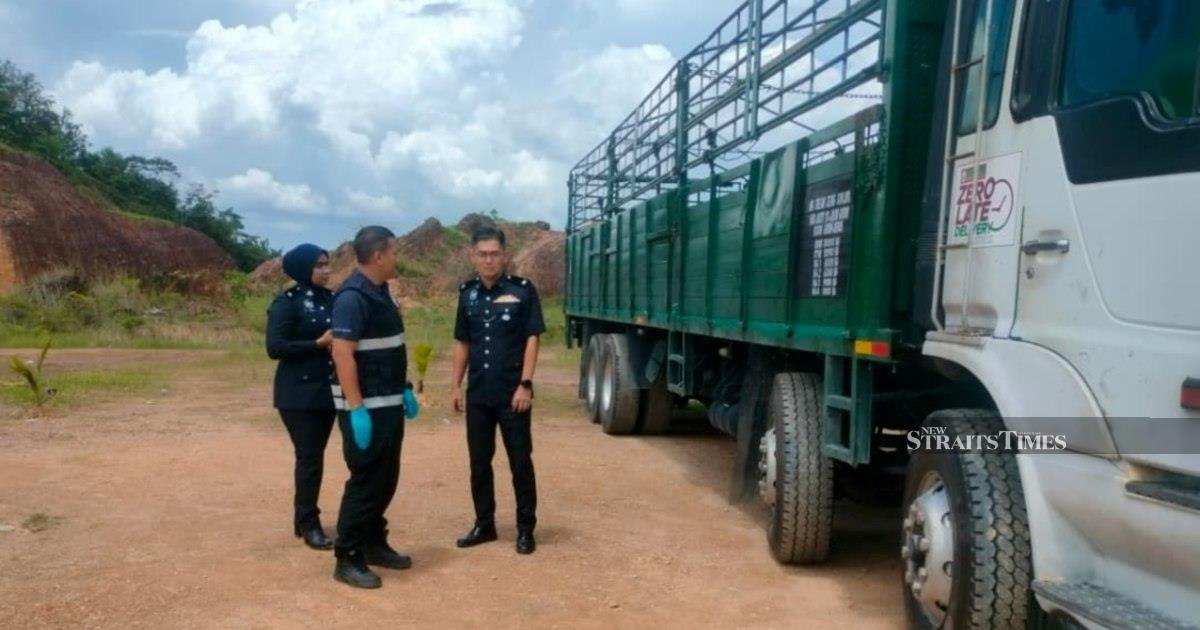
A tragic accident in a residential compound in Sungai Petani has claimed the life of a young toddler, renewing concerns about vehicle safety in domestic spaces. The 2-year-old girl was fatally struck by a lorry while her grandfather was reversing the heavy vehicle into the driveway of their home in Kampung Bukit Kuang on Tuesday. Police have since detained the 61-year-old man to assist with investigations into the circumstances surrounding the incident, marking another devastating case of unintended vehicular harm within a family setting.
According to initial reports, the incident occurred during what would have been a routine manoeuvre at the residence. The child was in the vicinity of the driveway when the lorry began its reverse movement. Despite the tragic outcome, preliminary indications suggest the grandfather may not have been aware of the toddler's presence at the critical moment. The lack of visibility around large vehicles during reversing remains a persistent hazard, particularly in compact residential spaces where children may move between play areas and driveways without warning.
Police have classified the death as requiring investigation, and the detained grandfather faces potential questioning regarding whether proper safety checks were performed before the vehicle began moving. Malaysian traffic regulations typically require drivers to ensure the area around a vehicle is clear before engaging in reverse manoeuvres, a requirement that becomes even more critical in family compounds where young children are present. The investigation will likely examine whether standard precautions were followed and whether visibility was compromised by environmental factors or the design of the driveway.
This incident reflects a broader pattern of driveway-related accidents across Malaysia and the region that disproportionately affect young children. Reversing vehicles are particularly dangerous because of substantial blind spots that make detecting small objects—and especially moving children—exceedingly difficult. Studies on vehicle safety consistently highlight that toddlers, whose unpredictable movements and lower visibility to drivers create compounded risk, are among the most vulnerable groups in such scenarios. The prevalence of large commercial vehicles in residential areas adds another layer of complexity to this public safety issue.
The Sungai Petani tragedy underscores the need for heightened awareness among family members and caregivers regarding vehicular hazards near homes. Many such accidents occur when children are left unsupervised or when multiple adults assume someone else is watching. In multi-generational households, which remain common in Malaysia, the coordination of childcare responsibilities can sometimes become unclear, potentially creating gaps in supervision. The detention of the grandfather suggests police are thoroughly examining all factors, including whether proper warnings were issued before the lorry began moving and whether anyone was designated to monitor the child during the manoeuvre.
Community safety experts frequently advocate for practical measures to reduce such risks in residential settings. These include installing reversing cameras with monitor systems on vehicles, using audible warning devices, appointing spotters to observe blind spots during manoeuvres, and establishing clear safety zones in driveways where young children should not venture unsupervised. Some new vehicles sold in Malaysia now come equipped with advanced safety features such as automatic braking systems that activate if an obstacle is detected during reversing, though these technologies remain absent from many older and commercial vehicles still in widespread use.
The implications for Malaysian families are sobering. Every year, preventable vehicular incidents in residential and commercial compounds claim lives that could be spared through heightened vigilance and systematic safety practices. The cooperation between family members—particularly between those operating vehicles and those supervising children—must be explicit and confirmed before any potentially hazardous activity commences. In a context where large vehicles are essential for livelihoods and commerce, integrating safety protocols that protect the most vulnerable members of society remains an ongoing challenge.
For the extended family facing this devastating loss, the investigation represents both a procedural necessity and, in some sense, an attempt to understand how such a tragedy could occur. The detention of the grandfather does not necessarily imply criminal negligence, but rather reflects standard police practice in fatal accidents where the cause requires clarification. The investigation will examine vehicle condition, maintenance records, road surface conditions, visibility, and the circumstances immediately preceding the incident.
This tragedy will likely prompt renewed discussions within Kedah authorities and nationwide among traffic safety officials about prevention strategies specific to residential spaces. The Road Safety Department and municipal councils may intensify awareness campaigns targeting households with young children, particularly those in compounds where commercial or larger vehicles are regularly operated. Educational initiatives directed at older family members who frequently operate vehicles near grandchildren could highlight the specific risks posed by reversing manoeuvres and the importance of clear communication protocols.
The path forward for this family will involve not only coping with the immediate grief but also navigating the investigative and potentially legal processes that follow such incidents. For the broader community, the incident serves as a stark reminder of how quickly a moment of inattention—however unintended—can transform an ordinary day into a tragedy that reverberates through generations. As Malaysian society continues to modernise with increasing vehicle ownership and larger vehicles in residential areas, integrating comprehensive safety consciousness into everyday family routines remains essential to preventing such losses.

