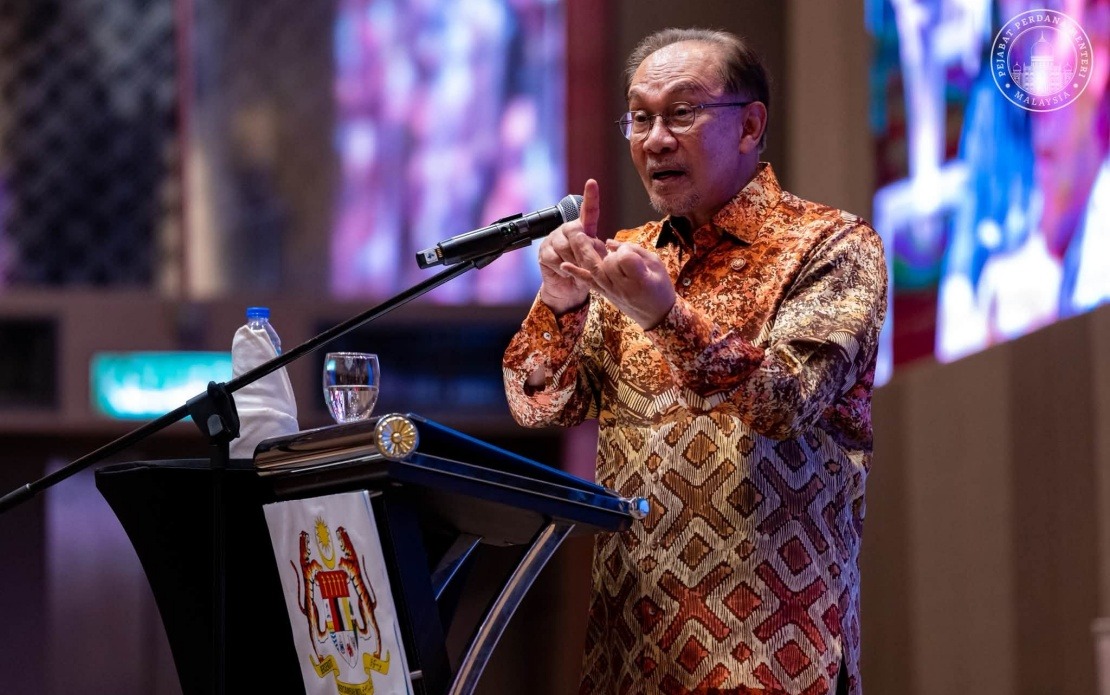
Prime Minister Datuk Seri Anwar Ibrahim has pledged that the government will mobilize all available resources to assist young Malaysians in confronting the diverse obstacles they encounter in an increasingly complicated global landscape. The commitment emerged following his participation in community dialogue sessions and the opening of a significant international youth gathering in Selangor, where he directly engaged with young people to understand their priorities and grievances.
The Prime Minister participated in two major youth-focused events in Klang, Selangor: a "Temu Anwar" session and the inaugural 2026 International Youth Assembly, known by its acronym HAMKA. These platforms provided direct channels for young people to present their perspectives and recommendations on matters affecting their generation, ranging from economic opportunities to social integration and political participation. In his subsequent reflection on these interactions, Anwar stressed the government's intention to translate youth feedback into tangible policy responses and programme modifications.
In his public statement, Anwar acknowledged that contemporary youth inhabit a world characterized by unprecedented complexity and intellectual diversity. The landscape in which young people operate today features competing narratives, divergent ideological positions, and frequent friction between different groups and worldviews. Rather than viewing this pluralism as inherently problematic, the Prime Minister framed it as an opportunity for constructive engagement, provided that such discourse remains anchored in rigorous reasoning, substantive argumentation, and basic civility.
The Prime Minister's remarks reflect growing recognition within the federal government that youth engagement requires more than symbolic gestures or paternalistic policy-making. The emphasis on listening to young people's "views and advice" suggests an openness to input that challenges conventional thinking or existing government approaches. This orientation aligns with broader efforts by the Anwar administration to rebuild public trust and demonstrate responsiveness to citizen concerns, particularly among younger demographics who have expressed frustration with governance and economic prospects in previous years.
Anwar's reference to HAMKA and its historical namesake, the influential cleric and intellectual Abdul Malik Karim Amrullah, provides important context for understanding the government's youth philosophy. The choice of this particular historical figure—renowned for intellectual rigor, fearless public advocacy, and literary contributions—underscores the administration's positioning of youth engagement around knowledge creation and courageous expression rather than mere compliance or consensus-building. The invocation serves to connect contemporary youth development to established Malaysian intellectual traditions and Islamic scholarly heritage.
The government's framing of youth support within "available capacity" introduces a note of realism about budgetary and bureaucratic constraints. This phrasing suggests acknowledgment that solutions to youth challenges may require creative resource allocation, inter-agency coordination, and potentially difficult prioritization decisions. The caveat also manages expectations, signaling that government assistance, while genuine, will operate within fiscal and institutional limitations that cannot be immediately overcome through political will alone.
Malaysia's youth population faces a distinctive constellation of challenges that distinguishes their experience from previous generations. Economic pressures including rising living costs, volatile employment markets, and competitive educational pathways have created anxiety about future stability. Simultaneously, young Malaysians navigate complex questions of identity, belonging, and participation in an ethnically and religiously diverse nation undergoing rapid social change. The government's emphasis on knowledge-based discourse rather than sentiment-driven activism suggests an effort to encourage youth engagement on substantive policy questions rather than through polarizing identity politics.
The government's commitment to supporting youth discourse that prioritizes "knowledge, arguments, and manners" over "sentiments, hatred, or group interests" carries particular significance in the Malaysian context. Recent years have witnessed concerning instances of youth mobilization around divisive social and political issues, sometimes lacking nuance or factual grounding. By elevating standards for what constitutes acceptable youth expression, the Prime Minister's remarks implicitly encourage young people toward more sophisticated political engagement and intellectual maturity.
The International Youth Assembly represents Malaysia's positioning of itself as a regional convener and thought leader on youth development and empowerment. By hosting this gathering and signaling government responsiveness to youth participants, Malaysia signals its investment in creating regional platforms for constructive intergenerational dialogue. Such initiatives can strengthen Malaysia's soft power among Southeast Asian nations and demonstrate commitment to democratic values and inclusive governance.
The Prime Minister's engagement at these events reflects recognition that youth disconnection from political institutions and processes represents a significant governance risk. When young people perceive that their voices are unheard or concerns dismissed, they may withdraw from constructive participation or channel their energies into oppositional or destructive channels. By creating venues for dialogue and committing to responsive government, the administration attempts to foster civic engagement and institutional legitimacy among a demographic crucial to Malaysia's long-term stability and development.
Moving forward, the substantive test of this commitment will lie in how specific recommendations emerging from these youth forums translate into policy adjustments, budgetary allocations, or institutional reforms. Young Malaysians will evaluate whether government responsiveness extends beyond the communication stage into demonstrable changes affecting their economic opportunities, educational outcomes, and social participation. The success of this youth-engagement initiative will significantly influence whether young people maintain faith in democratic institutions and governmental problem-solving capacity.

