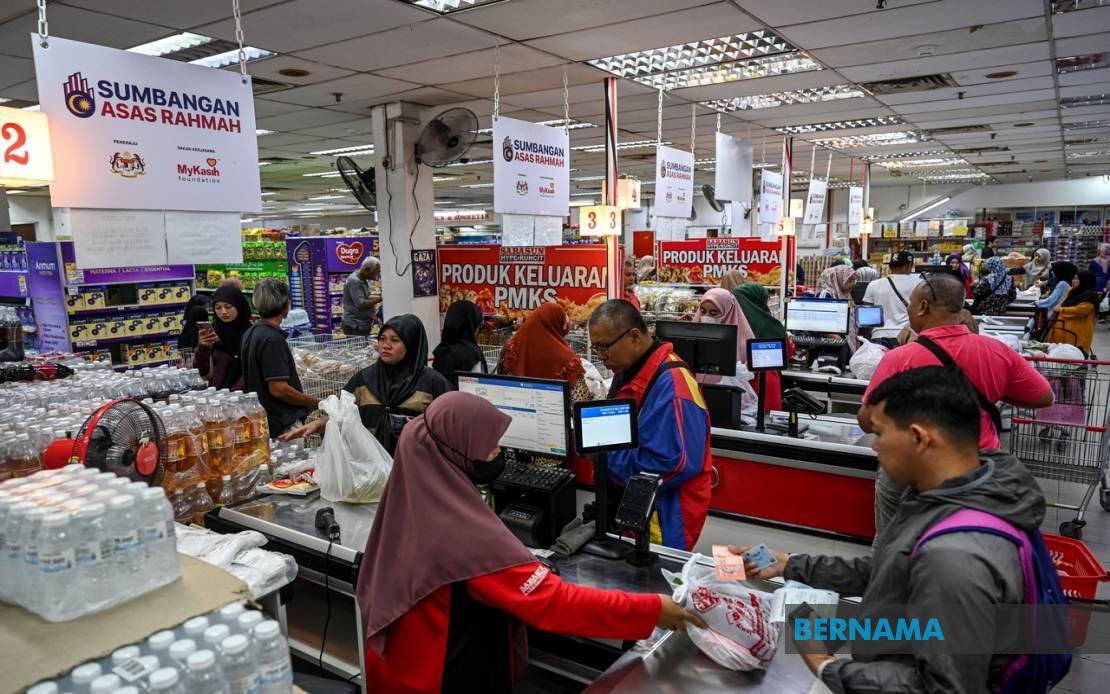
The government is exploring ways to expand its cash assistance programmes if Malaysia's economic trajectory continues to improve, Prime Minister Datuk Seri Anwar Ibrahim revealed during a community engagement visit to Ipoh. Speaking at the MADANI KITA programme organised alongside the Malaysian Volunteer Corps Department, Anwar signalled that recipients of the Sumbangan Tunai Rakmah and Sumbangan Asas Rahmah schemes could see enhanced payouts, contingent on fiscal space and budgetary decisions in the months ahead.
Anwar, who holds the dual portfolio of Prime Minister and Finance Minister, disclosed that he had engaged Treasury secretary-general Tan Sri Johan Mahmood Merican on the matter, with deliberations already taking shape for consideration during the upcoming budget presentation. The timing of such an announcement reflects the administration's sensitivity to cost-of-living pressures that continue to weigh on Malaysian households, particularly those in lower income brackets who depend most heavily on government transfers. Both STR and SARA represent targeted direct-cash initiatives that form part of the broader MADANI social protection architecture.
The conditional nature of the announcement—tying any expansion to economic permitting—underscores the government's balancing act between maintaining fiscal discipline and addressing persistent inflation concerns. Malaysia's economic performance, while stable, remains subject to external headwinds including regional trade dynamics and global commodity price volatility. By framing expanded assistance as contingent rather than committed, the administration preserves flexibility should economic projections deteriorate, while simultaneously signalling commitment to household welfare if conditions warrant.
From a Southeast Asian perspective, Malaysia's approach reflects broader regional trends toward expanded social safety nets. Countries across the region have grappled with similar cost-of-living crises, prompting governments to introduce or expand cash transfer programmes. Malaysia's contemplation of deeper support suggests ongoing recognition that wages and formal employment have not kept pace sufficiently with inflation in essential categories such as food and transport. This dynamic particularly affects urban low-income workers and rural populations who feature prominently among STR and SARA recipients.
Beyond direct cash assistance, Anwar emphasised the government's commitment to supporting security personnel, including RELA volunteers who play roles in disaster response and community protection. The administration allocated RM3 million for RELA welfare last year and has committed an equivalent amount for the current year, though Anwar acknowledged that existing levels fall short of requirements. This dual focus—bolstering both civilian welfare transfers and security sector support—reflects the administration's view that social stability depends on both direct assistance and investment in institutional capacity.
The emphasis on RELA's contribution to disaster management and security carries particular resonance given Malaysia's vulnerability to flooding, industrial incidents, and public order challenges that demand rapid volunteer response. By connecting welfare expansion discussions to security personnel support, Anwar framed social protection as integral to national resilience rather than simply a cost item. This rhetorical positioning matters for public discourse around fiscal priorities, especially amid ongoing debates about government spending efficiency.
The timing of this announcement during a community programme in Tambun, a Perak constituency with significant electoral importance, suggests the government remains attentive to grassroots messaging around welfare and economic support. Such community engagement formats allow direct communication with beneficiary populations while simultaneously generating local media coverage and demonstrating government accessibility. For Malaysian voters experiencing economic strain, such public commitments—even when conditional—signal ongoing policy attention to their concerns.
Market observers and analysts will likely scrutinise upcoming budget documents for concrete indications of whether economic conditions have indeed improved sufficiently to warrant STR and SARA expansion. The government's track record in delivering on conditional fiscal commitments will influence public confidence in such signals. Given that both schemes represent significant budget items affecting millions of households, any increase would carry measurable economic stimulus implications, potentially supporting domestic consumption during periods of slower external demand.
The broader policy direction also hints at the government's confidence regarding fiscal consolidation progress. If administration officials feel sufficiently assured about medium-term debt trajectories and revenue growth, expanded social spending becomes more feasible without triggering deficit concerns. Conversely, if economic projections weaken, such expansion might recede from priority. This contingency reflects the perpetual tension between social policy ambitions and macroeconomic constraints that developing and middle-income countries navigate continuously.
For beneficiary populations, the announcement represents a modest but meaningful signal of policy continuity around direct assistance. Unlike structural wage improvements or employment expansion, which remain elusive across much of the region, direct cash transfers offer immediate household purchasing power enhancement. Malaysian policymakers appear committed to maintaining this support avenue even as the administration pursues longer-term productivity and competitiveness improvements through other policy channels.
Moving forward, the actual quantum and timing of any STR and SARA increases will depend on Treasury assessments of economic performance, revenue trajectory, and competing fiscal priorities. These administrative deliberations typically occur within technical budget-planning processes before political leaders announce outcomes. The fact that such conversations have already commenced at the highest levels suggests the government is actively considering enhancement possibilities rather than merely entertaining abstract scenarios.
The announcement also signals that despite broader fiscal pressures and long-term debt considerations, the MADANI administration remains focused on maintaining safety-net support for vulnerable populations. This positioning contrasts with austerity-focused approaches some governments adopt and reflects political calculation regarding both electoral considerations and equity concerns. As Malaysia navigates slower global growth prospects and regional economic uncertainty, such targeted support mechanisms may retain importance as policy tools for maintaining social cohesion and household welfare.

