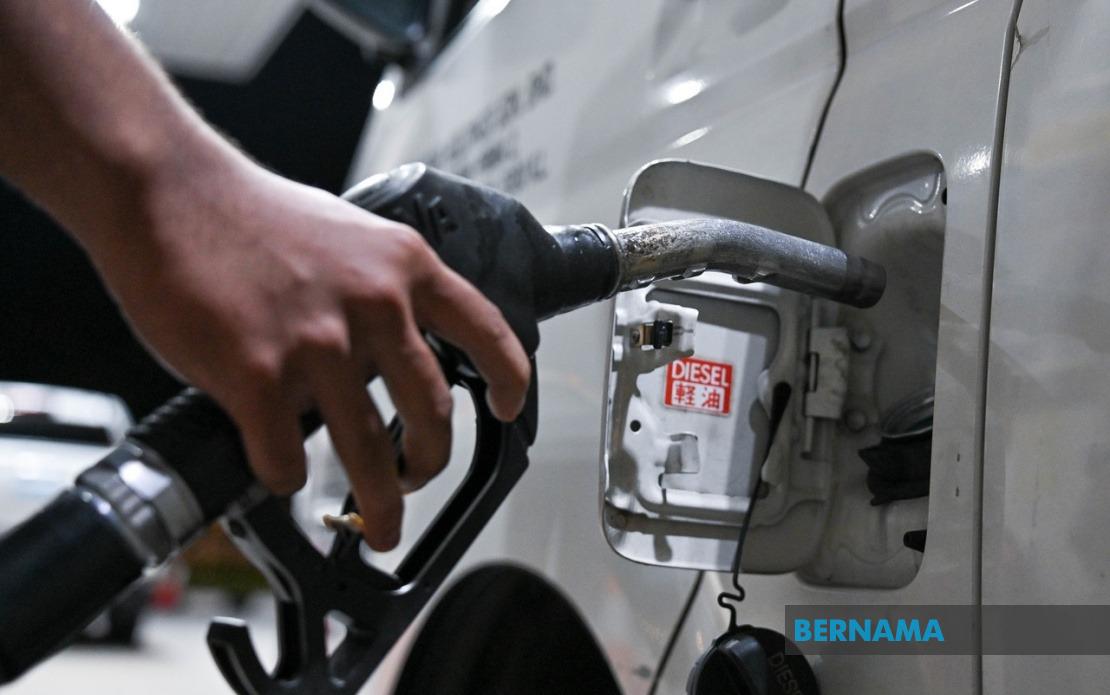
The Federal Government will take a flexible, data-driven approach to monitoring the BUDI Diesel subsidy programme, adjusting quotas and implementation strategies based on actual usage patterns and feedback from stakeholders on the ground, according to Finance Minister II Datuk Seri Amir Hamzah Azizan. Speaking at a press conference in Kota Kinabalu on July 5, Amir Hamzah emphasised that rather than operating under a rigid review schedule, the government would allow system performance and user behaviour to guide future policy refinements. This marks a departure from time-based assessment cycles, signalling an intent to create responsive policy mechanisms that adapt to emerging evidence during the rollout phase.
The minister's remarks came barely a week after the BUDI Diesel initiative commenced on July 1 in Sabah and Sarawak, a period during which the government has prioritised ensuring system stability and verifying eligibility requirements across the petrol station network. Amir Hamzah noted that all service stations have operated without disruption thus far, allowing eligible users to complete their transactions smoothly. This early success in technical implementation sets a foundation for the more granular assessment work that will follow, with the first five days serving as a baseline for identifying usage trends rather than identifying system failures.
Historical precedent informs the government's current monitoring stance. Under the earlier BUDI95 petrol subsidy initiative, the initial quota of 300 litres per month was subsequently reduced to 200 litres, but this adjustment was not driven by policy tightening. Instead, empirical data revealed that over 94 to 95 per cent of programme users consumed below the original 300-litre ceiling, while fewer than one per cent consistently exceeded 200 litres. By recalibrating quotas to align with documented consumption patterns, the government demonstrated that targeted, evidence-based interventions could maintain programme integrity without unnecessarily restricting benefits for the vast majority of users. This lesson now underpins the monitoring framework for BUDI Diesel.
Amir Hamzah stressed that comprehensive reassessment of the quota structure would require sustained observation and cannot be rushed, even as the government acknowledges the need to address specific concerns emerging from the field. Issues related to vehicle ownership verification and eligibility disputes are already being reviewed by inter-agency teams deployed across Sabah and Sarawak to engage with local stakeholders and understand contextual challenges. This parallel approach allows the government to resolve immediate, individual grievances while simultaneously building the evidence base for broader policy adjustments. The distinction between problem-solving and policy reform enables the government to remain responsive without making hasty, system-wide changes based on anecdotal reports.
One area receiving particular attention is the applicability of different payment mechanisms across diverse user segments. While MyKad authentication serves the needs of individual consumers, the government recognises that alternative arrangements such as fleet cards may be necessary for service providers, particularly those operating in remote or rural regions where conventional identity verification presents logistical challenges. By maintaining flexibility in implementation modalities, the programme can extend subsidies to populations whose livelihoods depend on fuel access without compromising the underlying principle of targeted assistance. This adaptive approach reflects growing understanding that subsidy schemes must accommodate Malaysia's geographic and socioeconomic diversity rather than imposing uniform technical requirements.
Public awareness and understanding represent critical success factors that the government is actively addressing through collaboration with petroleum retailers and fuel station operators. Amir Hamzah highlighted the importance of BUDI Diesel inquiry counters at petrol stations, which serve as first-line information points for users uncertain about their eligibility status. These stations will increasingly deploy QR code technology and online application assistance, lowering barriers to entry and reducing friction in the verification process. By embedding support mechanisms directly into the petrol station environment where transactions occur, the government aims to transform compliance verification from a bureaucratic obstacle into a user-friendly service, thereby improving programme uptake among eligible beneficiaries who might otherwise be deterred by administrative complexity.
The data-driven monitoring philosophy carries significant implications for Malaysia's broader subsidy governance. As petroleum products remain sensitive political commodities and fiscal outlays, governments have historically resisted transparent, evidence-based reviews of subsidy schemes, fearing that objective data might justify unpopular reductions. By explicitly committing to decisions based on usage statistics rather than political convenience, the current administration is attempting to depoliticise subsidy policy and ground it in observable reality. This approach may enhance long-term programme credibility and resilience, as policy changes can be justified by reference to impersonal metrics rather than ministerial discretion. For Southeast Asian readers, this methodology offers a potential template for subsidy reform in other countries facing similar pressures to balance fiscal sustainability with social protection.
The timing and pace of future adjustments remain intentionally undefined, reflecting the government's preference for allowing evidence to accumulate before committing to major revisions. Amir Hamzah's explicit statement that comprehensive reassessment would require extended monitoring periods suggests that quota changes, if warranted, would likely occur months rather than weeks into the programme. This patient approach contrasts with the volatility sometimes characterised by subsidy schemes that shift frequently in response to political pressures or media attention. By establishing an expectation of gradual, evidence-based evolution rather than reactive tinkering, the government may reduce speculation and uncertainty among users, fostering greater confidence in programme stability.
Cross-agency coordination emerges as a linchpin in the monitoring architecture. Multiple ministries and government agencies are working in tandem to collect usage data, process feedback, and identify ground-level implementation challenges. This institutional coordination extends beyond mere data compilation; it encompasses genuine engagement with petrol station operators, vehicle owners, service providers, and other stakeholders whose experiences reveal programme strengths and weaknesses invisible to centralised monitoring systems. By institutionalising stakeholder feedback as a formal input into policy reviews, the government acknowledges that technical data alone cannot capture the full complexity of programme implementation in diverse Malaysian contexts.
Looking forward, the BUDI Diesel monitoring model may influence how other targeted assistance programmes are evaluated and refined across Malaysia's public sector. If the fuel subsidy scheme successfully demonstrates that flexible, evidence-responsive governance can maintain programme integrity while addressing legitimate local concerns, other ministries managing education subsidies, housing assistance, or healthcare benefits may adopt similar frameworks. For Malaysia, this represents a potential step toward more mature, professionalized subsidy governance that prioritises long-term sustainability and targeted impact over short-term political gains. Whether this philosophy endures beyond the current administration and takes root as institutional practice remains an open question, but the initial commitment signals a meaningful commitment to rational, data-informed policymaking in an area historically dominated by political considerations.

