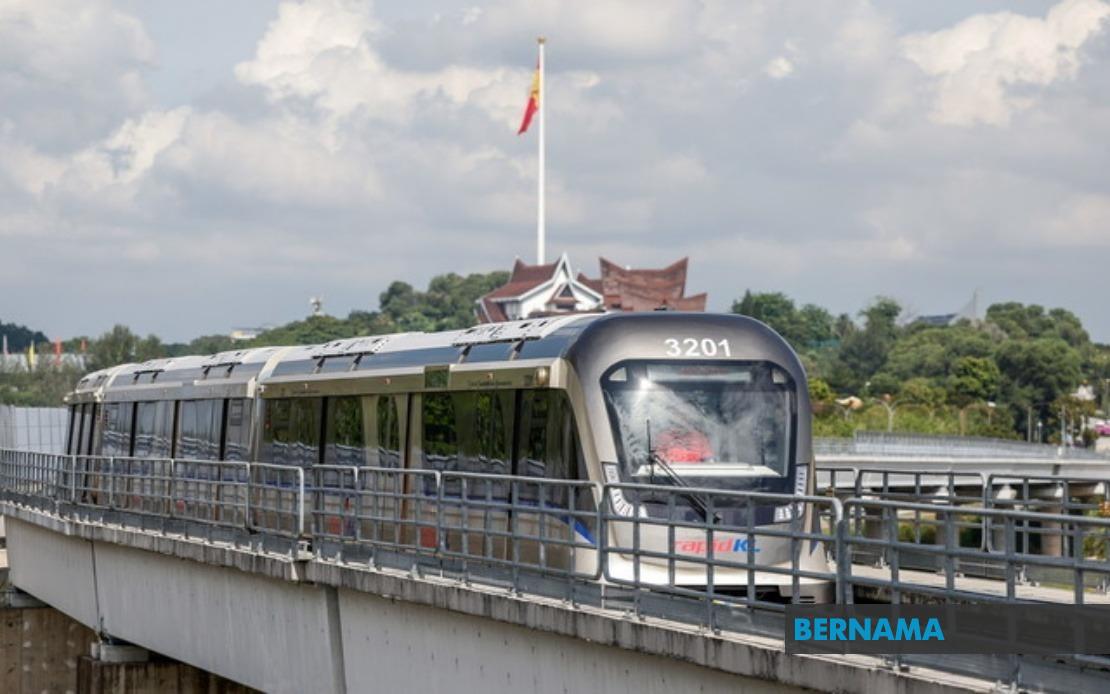
The MADANI Government has indicated its intention to request a formal audience with Sultan Sharafuddin Idris Shah, the Sultan of Selangor, to provide detailed explanations regarding the protracted and troubled LRT3 Shah Alam Line project. Transport Minister Anthony Loke announced the planned engagement following the Ruler's public expression of concern about the infrastructure development's escalating costs and repeated postponements, which have frustrated the implementation timeline considerably.
Loke's commitment to seek the audience reflects the government's recognition of the Ruler's legitimate grievances and the project's critical importance to Selangor residents. Speaking to reporters at a charity dinner in Kuala Lumpur, the Transport Minister acknowledged the weight of Sultan Sharafuddin's observations and committed to presenting a comprehensive briefing that addresses each of the Ruler's specific critiques. The minister's measured response underscores the delicate balance Malaysian governments must maintain in engaging with state-level monarchs on matters affecting their territories.
During remarks made the previous day, Sultan Sharafuddin outlined a troubling chronology of project disruptions that has severely compromised the original vision for the line. When the Federal Government administration changed in 2018, the LRT3 initiative languished in suspension for more than eighteen months, a period of institutional drift that compounded the challenge of maintaining project momentum and stakeholder confidence. Following this hiatus, the project encountered an additional nineteen-month delay stemming from the COVID-19 pandemic and its cascading operational disruptions through 2021.
These substantial interruptions necessitated fundamental modifications to the project's scope and specifications, reflecting both budgetary constraints and revised implementation strategies. The Ruler noted that stations along the proposed alignment were substantially downsized to reduce expenditure, while the planned complement of train carriages was trimmed back from original specifications. Most significantly, five proposed stations that would have served communities along the route were entirely cancelled from the final design.
Sultan Sharafuddin's characterization of the LRT3 project emphasized that it was conceived fundamentally as a public service initiative rather than a prestige-driven infrastructure showpiece. The Ruler's framing is particularly significant given Malaysia's historical tendency toward large infrastructure projects designed partially for political visibility. By positioning the LRT3 as a people-centric development aimed at genuine community welfare and improved accessibility, Sultan Sharafuddin redirected the conversation toward measuring project success through tangible benefits to Selangor residents rather than through symbolic achievement.
Beyond the LRT3 engagement, Loke outlined a separate initiative demonstrating the Transport Ministry's responsiveness to citizen participation in the electoral process. Recognizing that the forthcoming 16th Johor State Election on July 11 would necessitate voter mobility across state boundaries, the ministry proactively coordinated with Keretapi Tanah Melayu Berhad (KTMB) to substantially increase the frequency of Electric Train Service (ETS) operations between Kuala Lumpur and Johor Bahru.
This enhancement to rail capacity addresses a practical challenge that Malaysian voters increasingly encounter, particularly those from rural constituencies who have migrated to urban employment centers. By expanding ETS services, the government has made it materially easier for outstation voters to return home and fulfill their voting obligations without incurring substantial transportation costs or sacrificing days from work. The extended service routes, encompassing intermediate stops at Segamat, Labis, and other centers, recognize that voters are dispersed throughout the broader Southern Corridor beyond the immediate Kuala Lumpur-Johor Bahru corridor.
The timing of these transport enhancements is particularly crucial for the July 11 polling day, with early voting opportunities provided on July 7 to accommodate voter schedules. The 16th Johor State Election represents a substantial electoral undertaking, with 172 candidates competing across 56 state seats, making the infrastructure supporting voter participation a governance priority. Minister Loke's statement reflects an understanding that electoral integrity depends not merely on the voting mechanism itself but on the practical removal of barriers that might otherwise discourage participation.
From a regional perspective, the government's dual focus on infrastructure accountability and electoral facilitation illustrates the interconnection between developmental governance and democratic legitimacy. By engaging seriously with Sultan Sharafuddin's criticisms of the LRT3 project, the MADANI Government acknowledges that major public works must satisfy not only technical criteria but also the concerns of the communities they serve and the constitutional authorities who represent those communities' interests. Similarly, the investment in enhanced transport connectivity for voters reflects recognition that democratic systems function optimally when participation is materially accessible.
The LRT3 issue carries implications beyond Selangor's boundaries, as the project represents one of several major infrastructure initiatives that have encountered implementation difficulties during recent years of political transition. Malaysian observers have noted that governmental continuity challenges, whether stemming from electoral transitions or pandemic disruptions, can systematically compromise the delivery timelines and specifications of long-term projects. The gap between original conceptions and eventual delivery—in this case involving reduced station capacity, fewer train units, and eliminated stations—raises questions about planning methodologies and contingency frameworks for future initiatives.
For Selangor residents and the broader Southeast Asian region monitoring infrastructure development patterns, the LRT3 trajectory offers instructive lessons about the cumulative costs of project interruptions and the need for robust mechanisms protecting continuity across political transitions. The Ruler's intervention in this matter, while respectful of executive authority, signals the important role that constitutional monarchies can play in maintaining public accountability and ensuring that development initiatives genuinely serve community interests rather than becoming casualties of bureaucratic dysfunction or political distraction.

