The Malaysian government has committed to refining how targeted fuel subsidies operate in Sabah and Sarawak, with policymakers pledging to incorporate grassroots viewpoints into the programme's evolution. Minister in the Prime Minister's Department (Sabah and Sarawak) Datuk Mustapha Sakmud articulated this position following consultations across both states, signalling a more consultative approach to the subsidy framework that commenced on July 1 nationwide.
The refinement process reflects broader engagement between federal authorities and communities, particularly those inhabiting remote areas where fuel accessibility and pricing carry outsized economic consequences. Rather than imposing predetermined adjustments, the government has established an ongoing dialogue mechanism involving multiple tiers of stakeholders—state administrations, federal agencies, and representatives from affected populations—to identify friction points and devise workable solutions.
At the heart of this initiative lies the BUDI Diesel scheme, which extended subsidised fuel access to eligible private diesel vehicle owners at RM2.10 per litre with a monthly baseline quota of 200 litres. Vehicle categories including certain sports utility vehicles and pickup trucks can access an additional 100 litres monthly, contingent upon satisfying specified eligibility requirements. The scheme represents a departure from Malaysia's previous universal subsidy model, instead targeting support toward specific consumer segments identified as requiring assistance.
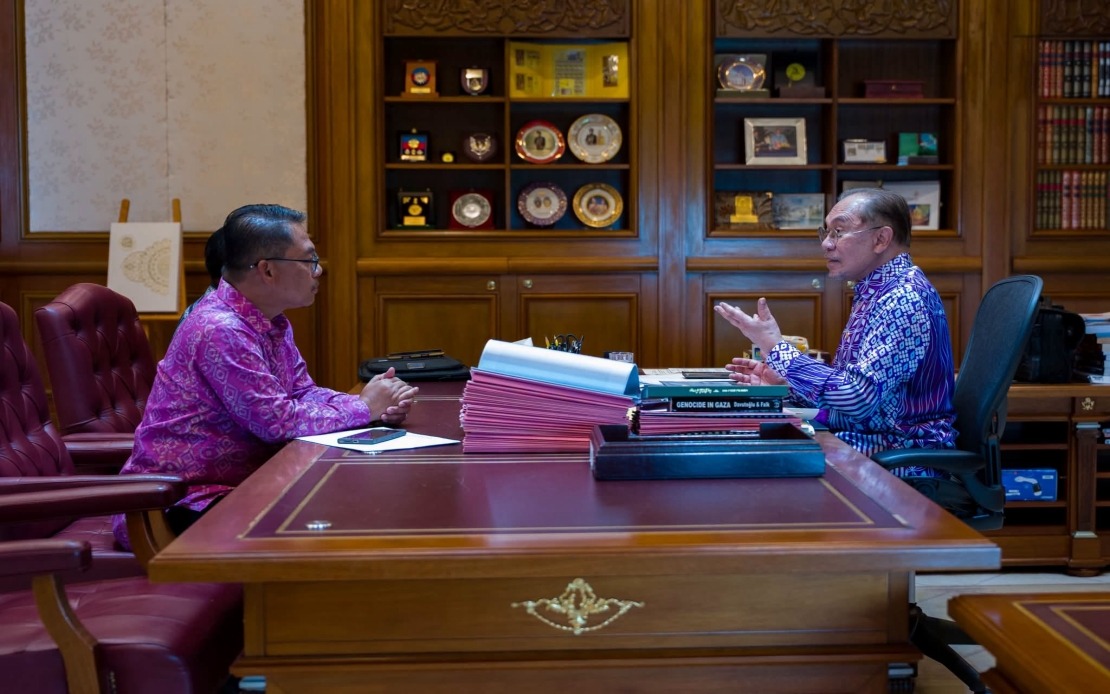
Prime Minister Datuk Seri Anwar Ibrahim's personal involvement in listening to public concerns underscores the administration's assessment that implementation challenges warrant high-level attention. Mustapha characterised the Premier's willingness to engage directly with communities as consistent with MADANI government principles, despite the demanding nature of his official responsibilities. This direct engagement signals recognition that fuel subsidy policies, whilst economically motivated, carry profound social dimensions affecting daily life, particularly in regions where transport costs represent substantial household expenditures.
The emphasis on incorporating rural perspectives holds particular significance for Sabah and Sarawak, where geographical dispersal, limited infrastructure, and dependence on road transport create distinct circumstances compared to peninsular Malaysia. Rural communities in these states often face higher baseline fuel costs due to transportation expenses, making subsidy adjustments proportionally more consequential for household budgets and agricultural productivity. The government's acknowledgement of these differential impacts suggests recognition that one-size-fits-all approaches may prove inadequate for states with divergent economic structures.
Stakeholder consultations encompass state governments, which possess direct administrative experience implementing subsidies and understanding local market dynamics, alongside federal agencies responsible for programme oversight and fiscal management. This multilevel coordination apparatus reflects understanding that successful subsidy implementation requires alignment between central policy objectives and regional execution realities. Where disconnects emerge between policy intent and implementation outcomes, the structured feedback mechanism enables course correction.
The refinement process carries implications beyond immediate fuel pricing. How the government manages subsidy adjustments establishes precedent for future targeted welfare initiatives, particularly given Malaysia's fiscal constraints and competing budgetary priorities. Successfully demonstrating that subsidies can be reformed whilst maintaining public confidence requires transparent communication about modifications and tangible evidence that community input influences outcomes rather than serving perfunctory purposes.
For Malaysian consumers, particularly those dependent on diesel for livelihood pursuits, the subsidy scheme's architecture fundamentally affects cost structures. Farmers, fishermen, transportation operators, and small businesses relying on qualifying vehicles benefit from the subsidised rate, though eligibility criteria create administrative burdens and potential access barriers. The refinement dialogue may address whether current quota levels and application procedures adequately serve intended beneficiaries or require recalibration.
Regional dynamics also merit consideration. The subsidy scheme's scope limited to Sabah and Sarawak introduces geographic differentiation in fuel costs, potentially creating cross-border pricing disparities with neighbouring jurisdictions. Understanding how communities perceive fairness in receiving targeted support versus other Malaysian populations forms part of the broader implementation assessment. Public perception regarding subsidy equity influences political sustainability of the programme.
The government's commitment to continuous refinement, whilst politically astute, acknowledges that complex policies rarely achieve optimal performance upon launch. Establishing mechanisms for regular feedback and iterative adjustment represents pragmatic policymaking that prioritises operational learning over rigid adherence to initial designs. Whether this approach ultimately enhances programme effectiveness depends substantially on whether feedback mechanisms translate genuine community concerns into substantive policy modifications.
Looking forward, the success of this refined subsidies framework could establish a template for future targeted support initiatives across Malaysia. If the government demonstrates capacity to absorb criticism, modify policies responsively, and communicate adjustments transparently, public confidence in targeted welfare programmes may strengthen. Conversely, should consultative processes prove merely performative with limited real-world policy impacts, cynicism regarding government responsiveness risks deepening.

