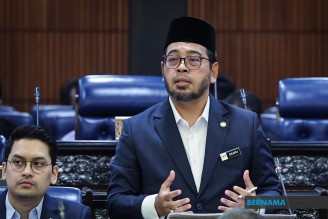
The Malaysian government has pledged comprehensive reforms to Tabung Haji following a damning Royal Commission of Inquiry that exposed massive institutional failures over a six-year period. During an extended special parliamentary sitting in August, officials outlined sweeping changes designed to prevent a recurrence of the financial catastrophe that nearly bankrupted the pilgrimage fund and exposed it to the 1Malaysia Development Bhd scandal. The reforms represent the most significant overhaul of the institution since its establishment, reflecting the severity of vulnerabilities uncovered in its management and investment practices.
The proposed amendments to the Tabung Haji Act 1955 form the centrepiece of the government's remedial strategy. A high-level task force, chaired by Tabung Haji chairman Tan Sri Abdul Rashid Hussain and including Bank Negara Governor Datuk Seri Abdul Rasheed Ghaffour and Securities Commission chairman Datuk Mohammad Faiz Azmi, has recommended a novel regulatory split. Under this arrangement, the Securities Commission will assume direct oversight of all fund management and investment activities, while the Minister in the Prime Minister's Department (Religious Affairs) will retain responsibility for pilgrimage operations. This division of authority seeks to insulate religious and social functions from financial decision-making, addressing a central weakness identified in the inquiry.
The scale of the financial damage became starkly apparent during parliamentary proceedings. Tabung Haji's accumulated losses approached RM13 billion, a figure that shook the institution to its core and required government intervention to prevent systemic collapse. More alarming still were the counterfactual implications: had panic withdrawals by depositors accelerated beyond what actually occurred, the government faced potential exposure to liabilities exceeding RM74.5 billion in 2018 alone. These figures underscore how catastrophically mismanagement of Malaysia's largest Islamic financial institution could have propagated through the broader economy, affecting millions of pilgrims and their families who depend on the fund.
Finance Minister II Datuk Seri Amir Hamzah Azizan disclosed that seven of fourteen troubled investments had been completely wiped out, representing total loss of invested capital. Among the most damaging was Tabung Haji's indirect entanglement with 1MDB through its investment in Putrajaya Perdana Bhd, an association that tarnished the institution's reputation and raised questions about investment due diligence. The Royal Commission's examination of events between 2014 and 2020 revealed systemic governance lapses, inadequate risk management frameworks, and concerning episodes of decision-making that prioritised poorly-vetted opportunities over fiduciary responsibility to depositors. The government's commitment to transparency in acknowledging these painful figures signals a departure from earlier reluctance to publicly confront the scale of institutional failure.
The reform package introduces several structural safeguards intended to eliminate conflicts of interest that characterised the crisis period. A critical prohibition will legally prevent active politicians from serving on Tabung Haji's board of directors, addressing a key vulnerability where political influence may have compromised investment judgement. Future profit distributions, or hibah, will be anchored to audited accounts rather than discretionary projections, restoring rigour to payouts. Additionally, every material decision affecting the institution will be evaluated against a single criterion: the interests of the Muslim community. This recalibration fundamentally reorients institutional priorities away from the capital growth imperatives that led to reckless speculation.
Parliamentary debate revealed broader structural anxieties about Malaysia's non-bank financial sector. Aminolhuda Hassan, the PH MP for Sri Gading, proposed establishing a unified regulatory authority overseeing all major non-bank financial institutions, including the Employees Provident Fund, Permodalan Nasional Bhd, the Retirement Fund Incorporated, the Armed Forces Fund Board, and Tabung Haji. His intervention highlighted a critical regulatory gap: Malaysia currently lacks a single entity responsible for prudential supervision and systemic risk assessment across this vital sector. The fragmentation of oversight has historically enabled individual institutions to operate within regulatory blind spots, as the Tabung Haji experience demonstrates. Consolidating supervision under one authority would strengthen coordinated monitoring and enable holistic assessment of systemic vulnerabilities.
Young Syefura Othman, representing Bentong, raised concerns about Tabung Haji's structural dependence on income generated from UJSB sukuk, which the Royal Commission Report identified as contributing nearly 26 per cent of annual revenue. This concentration of income from a single asset class creates vulnerability to market disruptions and reduces institutional resilience. The MP's questioning implicitly challenged whether current reform proposals adequately address revenue diversification, a fundamental issue underlying the original crisis. Reducing this dependency would require building alternative income streams and broadening the investment portfolio in ways that prioritise stability over yield-chasing.
The 211-page Royal Commission Report, made public on July 29, documented comprehensive institutional weaknesses spanning management, governance, and operational protocols. The inquiry, established in 2021 with members appointed in January 2022, delivered its findings to the Yang di-Pertuan Agong in August 2022, but public disclosure occurred only after months of deliberation. The report advanced 25 recommendations for improvement, with three-quarters already implemented by Tabung Haji as of late July. This implementation rate, while seemingly positive, masks the reality that many reforms represent damage control rather than systemic transformation. The question of how recommendations were prioritised and executed without comprehensive parliamentary scrutiny until the special sitting underscores ongoing governance questions.
For Malaysian depositors and pilgrims who entrust their savings to Tabung Haji, these reforms carry profound significance. The institution manages funds belonging to millions of Muslims across Southeast Asia, making its stability a matter of regional importance. The Securities Commission's assumption of investment oversight should introduce institutional rigour comparable to that exercised in the mainstream banking sector, where prudential standards and stress-testing protocols are more mature. However, the effectiveness of these reforms hinges on sustained political commitment to implementation and the Securities Commission's willingness to exercise its authority with sufficient independence from political pressures.
Beyond Tabung Haji specifically, the crisis and reform trajectory carry implications for governance of Malaysia's broader Islamic financial sector. The parallel scandals involving government-linked companies and quasi-governmental institutions have eroded public confidence in institutional management. The government's explicit acknowledgement of losses, accountability commitments, and structural reforms demonstrates learning from earlier episodes where transparency was withheld. Whether these pledges translate into sustained institutional change, particularly the prohibition on political board representation, will determine whether this represents genuine systemic remediation or another cycle of reform followed by organisational drift. Regional observers of Malaysian governance will closely monitor implementation, as Tabung Haji's trajectory may presage approaches to restructuring other troubled institutions within Southeast Asia's Islamic financial ecosystem.

