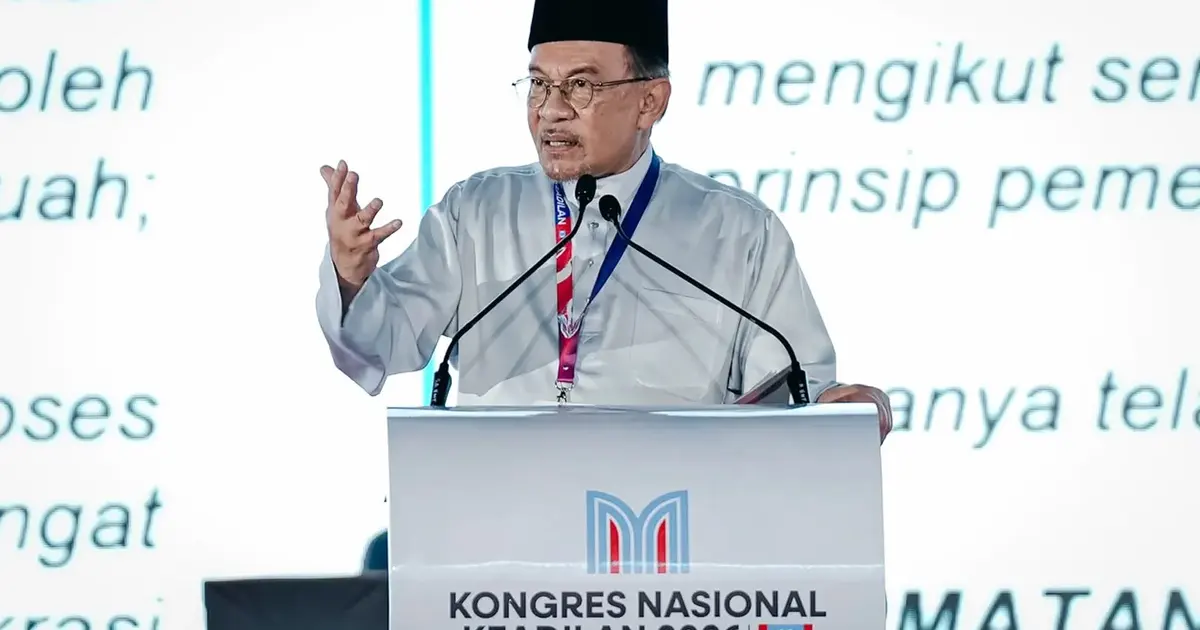
Prime Minister Anwar Ibrahim has signalled that a comprehensive review of Malaysia's troubled statutory bodies will not conclude with the pilgrims' fund, revealing that the Yang di-Pertuan Agong has expressed concerns about the governance challenges affecting these institutions. The Federal Land Development Authority (Felda) now appears to be the next major agency facing governmental scrutiny, following recent examinations of Tabung Haji's operational and financial deficiencies.
The indication from Anwar that the royal institution itself supports widening investigations beyond Tabung Haji underscores the severity with which the government and palace view systemic problems within state-owned enterprises. This royal backing provides significant political and institutional weight to any future reforms, suggesting that comprehensive restructuring efforts will proceed with the highest levels of Malaysian governance committed to accountability. The shift in focus toward Felda signals recognition that governance issues are not isolated incidents but rather symptomatic of broader institutional challenges requiring systematic intervention.
Felda, established to develop land for small-scale farmers and manage rural development across peninsular Malaysia, has long been a politically sensitive institution given its historic importance to rural Malay-Muslim communities and its substantial land holdings. The organisation manages hundreds of thousands of hectares and represents a significant component of Malaysia's agricultural sector, making its operational efficiency directly relevant to rural livelihoods and food security. Issues within Felda's administration potentially affect hundreds of thousands of scheme participants and their families, amplifying the consequences of any institutional mismanagement.
The government's willingness to extend investigative and reform efforts across multiple statutory bodies reflects a broader commitment to institutional transparency that has characterised Anwar's administration. This approach recognises that Malaysia's development depends not merely on sound macroeconomic policy but on the integrity and efficiency of government-linked institutions that touch millions of citizens directly. By framing investigations as a comprehensive institutional audit rather than selective witch-hunts, the administration seeks to establish precedent for ongoing governance improvement across the entire public sector.
Tabung Haji itself has faced considerable scrutiny in recent years, with various reports highlighting management concerns, investment performance issues, and organisational restructuring needs. The pilgrims' fund's importance to Malaysia's Muslim population—it serves as a dedicated savings mechanism for Hajj pilgrims—made its governance failures particularly resonant across the electorate. Investigations have typically revealed systemic weaknesses in financial management, investment oversight, and operational transparency that required substantial corrective action. Using Tabung Haji's examination as a template for reviewing other agencies suggests the government is establishing a coherent methodology for institutional assessment.
Felda's track record demonstrates similar patterns requiring investigation. The organisation has experienced various challenges including land management issues, delayed disbursements to settlers, administrative inefficiencies, and questions about the effectiveness of agricultural support services. Scheme participants have periodically raised concerns about their incomes relative to land productivity and broader agricultural market conditions. An institutional review examining Felda's governance structures, financial management, and service delivery mechanisms would provide systematic assessment of these longstanding issues and identify reform priorities.
The explicit involvement of the Yang di-Pertuan Agong in endorsing broader scrutiny carries particular significance in Malaysia's constitutional framework, where the monarch's support lends legitimacy and urgency to reform initiatives. This royal backing suggests that investigations will proceed with institutional authority resistant to political obfuscation or defensive institutional resistance. The palace's concern with governance standards across statutory bodies reflects recognition that Malaysia's development trajectory depends on efficient, accountable institutions rather than merely on political cycles or sectoral policies.
Expanding investigations across multiple statutory bodies also addresses a fundamental challenge in Malaysia's development architecture: the complexity of managing large state-owned enterprises and government-linked institutions. Many of these organisations operate with substantial autonomy, managing billions in assets and significant operational scope, yet sometimes lacking transparent governance structures, adequate parliamentary oversight, or systematic performance accountability. The government's willingness to initiate comprehensive reviews suggests recognition that institutional reform requires sustained attention and structural change rather than ad hoc corrections.
For Malaysian citizens, particularly rural communities dependent on Felda services and scheme participants relying on the organisation for agricultural support and income security, government attention to institutional governance carries direct implications. Improved management, transparent financial practices, and efficient service delivery could enhance scheme participants' economic outcomes and agricultural productivity. Conversely, institutional reform undertaken inadequately risks disrupting existing arrangements without delivering substantive improvement, underscoring the importance of thoroughness in any assessment process.
Regionally, Malaysia's approach to statutory body governance carries relevance for other Southeast Asian economies wrestling with similar institutional challenges. Many countries in the region maintain extensive networks of state-owned enterprises and development authorities with comparable governance complexities. Malaysia's commitment to systematic institutional review and reform, backed by constitutional authorities, provides potential models for governance improvement across the region's development institutions.
The government's timeline for Felda investigations remains unclear, though the explicit royal endorsement suggests processes will advance with political priority. Any findings will likely require coordination across multiple government ministries given Felda's connections to agriculture, rural development, and land administration. The organisation's sheer size and complexity mean that comprehensive review will require substantial analytical capacity and institutional expertise.
Moving forward, the government faces the challenge of conducting thorough investigations while maintaining institutional legitimacy and participants' confidence in governance reform outcomes. Balancing accountability with constructive institutional improvement requires clear communication about investigation processes, anticipated reforms, and protections for scheme participants' interests. The success of Felda investigations will likely shape both rural constituents' confidence in government reform efforts and the feasibility of extending similar reviews across other statutory bodies.

