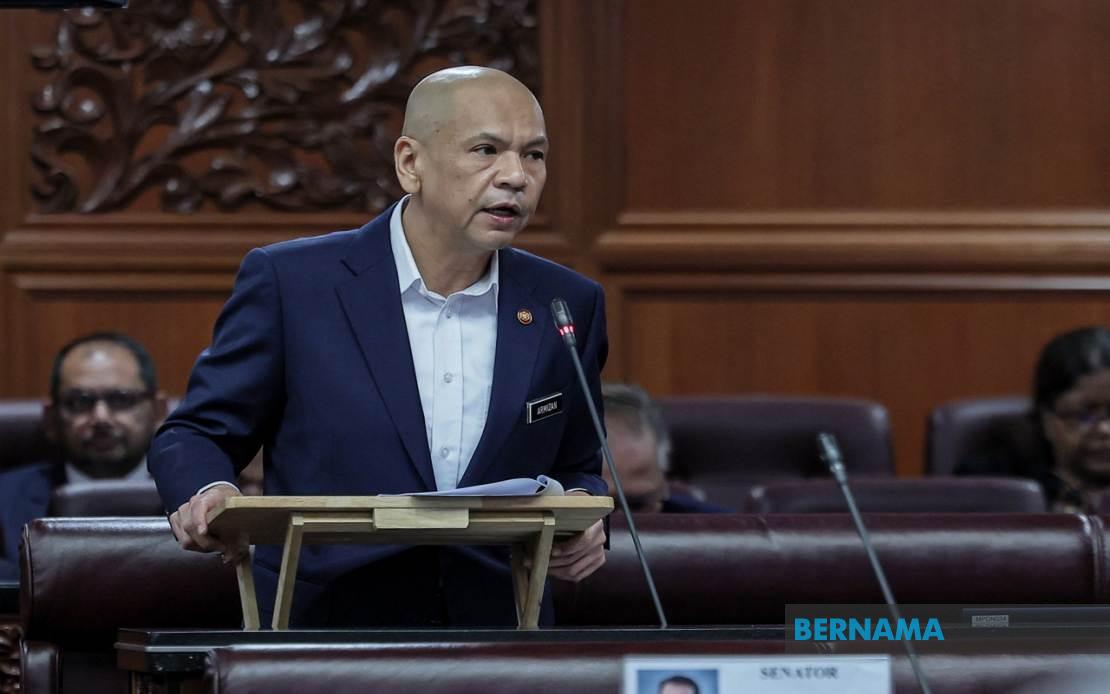
The Malaysian government has intensified its cost-of-living relief efforts by significantly expanding the Rahmah MADANI Sales Programme, with over 15,800 events conducted nationwide during the first six months of the year. Domestic Trade and Cost of Living Minister Datuk Armizan Mohd Ali revealed in Parliament that the initiative has now reached every state constituency and Federal Territory zone across Putrajaya, Kuala Lumpur, and Labuan, demonstrating the comprehensive nature of the roll-out.
The scale of the programme's expansion reflects a dramatic acceleration in government intervention. Just two years ago, in 2023, only 6,870 sessions were held nationwide. By 2024, this figure more than doubled to 12,419 events. The government has now revised its 2025 target upward from an initial 23,040 sessions to 30,000, signalling an aggressive approach to managing inflationary pressures that have weighed on Malaysian households. This escalation follows Prime Minister Datuk Seri Anwar Ibrahim's announcement in May, which explicitly positioned the expanded sales programme as a response to supply and energy crises triggered by broader geopolitical tensions in West Asia.
Understanding the structural transformation behind these numbers reveals how the government has fundamentally reimagined the initiative. Under previous administrations, such sales events were sporadic and reactive, scheduled without consistent planning or public notice. The current approach has institutionalised the Rahmah MADANI Sales Programme as a permanent feature of the national budget beginning in 2024, with dedicated funding and its own activity code. This administrative shift signals a long-term commitment rather than a temporary relief measure, acknowledging that cost-of-living pressures are unlikely to dissipate quickly.
The second pillar of the government's strategy involves establishing annual targets and scheduling frequencies specific to each constituency and zone. By moving away from ad hoc bargain sales toward structured implementation, the programme now guarantees regular, predictable events that residents can anticipate and plan for. This consistency provides tangible benefits to lower-income households who can budget around discounted shopping opportunities, converting uncertainty into manageable household economics.
A third strategic element focuses on deepening private-sector participation. By June, the government had secured 2,695 retail partners spanning major retailers, businesses, and cooperatives across the sub-sector. This embedded partnership model transforms the programme from a government-only initiative into a collaborative effort, leveraging private logistics, distribution, and inventory management capabilities. For retailers, participation represents an opportunity to build customer loyalty and demonstrate corporate responsibility, while the government benefits from expanded reach without bearing full operational costs.
Delivery mechanism diversity constitutes the fourth approach, recognising that Malaysia's population is geographically dispersed across urban centres, rural towns, and remote communities. The programme now operates through three primary channels: in-store sales at established retail locations, open-air markets in public spaces, and mobile units that travel to underserved areas. Additionally, themed events aligned with festive seasons, paydays, and back-to-school periods ensure that timing maximises participation across different socioeconomic groups with varying consumption patterns and cash-flow cycles.
The introduction of a nationwide Rahmah MADANI Sales Calendar beginning in 2025 represents the fifth strategic innovation and carries significant practical implications. By publishing dates, times, and locations in advance for all state constituencies and zones, the government has transformed the programme from a surprise benefit into a transparent, predictable service. This accessibility allows residents to plan purchases strategically, potentially stretching household budgets further by enabling them to consolidate shopping during discounted periods rather than shopping reactively at regular prices.
For Malaysian policymakers and households alike, this expansion signals a fundamental shift in how the government addresses cost-of-living challenges. Rather than relying solely on monetary policy adjustments or subsidy programmes administered through bureaucratic channels, the Rahmah MADANI approach emphasises direct, visible interventions that distribute benefits broadly and immediately. The programme's emphasis on reaching all 600 state constituencies ensures political visibility across the country, demonstrating government presence in both urban and peripheral areas.
The initiative also reflects regional economic realities beyond Malaysia's borders. As Southeast Asian economies grapple with inflation, supply chain disruptions, and the fallout from geopolitical tensions, Malaysia's approach offers a model of direct consumer relief that complements conventional monetary tools. The programme's success in reaching 15,881 events in just six months suggests operational capacity that, if maintained, could make the revised 30,000-session target achievable by year-end.
However, the programme's effectiveness ultimately depends on consistent execution and product availability at meaningful discounts. Questions remain regarding the depth of price reductions, the range of essential goods covered, and whether the proliferation of events genuinely expands consumer choice or merely redistributes purchasing timing. As inflation continues to challenge household budgets across Malaysia, the Rahmah MADANI Sales Programme stands as the government's primary visible tool for demonstrating responsiveness to public economic anxiety, even as structural pressures require longer-term policy solutions beyond any single promotional initiative.

