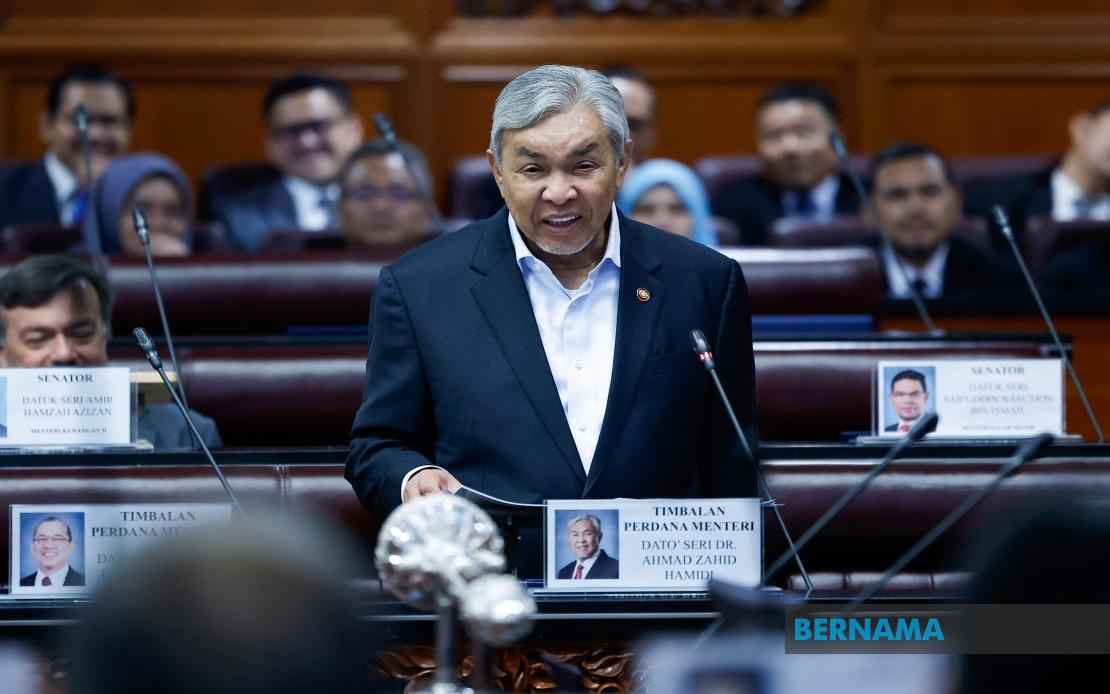
The government is undertaking a comprehensive review of land administration mechanisms affecting Federal Land Development Authority (FELDA) settlers, with Deputy Prime Minister Datuk Seri Dr Ahmad Zahid Hamidi confirming that multiple proposals are under consideration to modernise the Land (Group Settlement Areas) Act 1960. The initiative reflects growing recognition that the statutory framework governing settlement lands requires updating to accommodate contemporary realities, particularly the housing aspirations of younger generations and evolving family structures in rural Malaysia.
Among the substantive changes being evaluated is a proposal to restrict the registration of heirs to a maximum of two nominees, a measure intended to streamline administrative processes and reduce complexity in land succession matters. Simultaneously, authorities are examining mechanisms to appoint a single representative responsible for coordinating administrative affairs related to settlement properties. These procedural refinements aim to simplify governance structures that have become unwieldy under the original 1960 legislation, which predates many modern complications in family law and property management.
The government has also signalled openness to permitting multiple residential structures on individual lots, subject to strict conditions and approval from relevant state and local authorities. This proposal directly addresses what Ahmad Zahid characterised as the escalating housing requirements of FELDA's second and third generations. Rather than forcing younger residents to seek properties outside settlement schemes, the framework would theoretically enable families to maintain intergenerational connections to ancestral land whilst accommodating modern housing demands. However, any such liberalisation remains contingent upon compliance with land-use planning policies and municipal regulations.
Ahmad Zahid, who concurrently serves as Rural and Regional Development Minister, emphasised that the government is committed to achieving equilibrium among competing interests. These include the preferences of current settlers, the rights and succession claims of heirs, the housing aspirations of younger-generation FELDA members, the fiscal and administrative capacities of state governments, and Malaysia's broader development objectives. This multifaceted balancing act underscores the inherent tensions within settlement policy: modernising property frameworks whilst preserving the social contract underpinning FELDA schemes established decades ago.
The land titling situation reveals substantial progress in formalising settler ownership rights. According to official data, approximately 96.86 per cent of FELDA settlers—specifically 109,104 out of 112,638 nationwide—have already received their land titles. This achievement represents the culmination of sustained collaborative efforts between FELDA, state governments, State Land and Mines Offices, and District Land Offices. The government has committed to completing the titling process in tranches, ensuring that remaining settlers obtain legal documentation confirming their proprietary interests and establishing clear inheritance pathways.
The titling programme carries significant implications for settler security and intergenerational equity. Without formal title deeds, residents lack legal recourse in disputes, cannot easily leverage property for credit, and face uncertainty regarding succession arrangements. The completion of this administrative undertaking therefore constitutes a foundational step toward consolidating settlers' economic positions and enabling participation in broader property markets.
Progress within the Federal Land Consolidation and Rehabilitation Authority (FELCRA) system, though less advanced than FELDA, also demonstrates movement toward formalisation. As of June 2026, FELCRA had issued titles covering 4,274 of 6,025 house-site lots across 43 projects nationwide, representing approximately 71 per cent completion. The remaining 1,751 lots continue processing through State Land and Mines Offices, reflecting the administrative burden involved in converting informal or provisional tenure into registered ownership. FELCRA has characterised this effort as fundamental to securing legal ownership recognition for participants.
The constitutional and statutory framework governing land administration in Malaysia vests titling authority with state governments, necessitating coordination between federal agencies and state land administration bodies. This vertical intergovernmental dimension complicates the pace of reform, as changes to settlement regulations must navigate both federal legislative processes and state-level implementation mechanisms. The staggered approach to title issuance reflects this reality, distributing administrative load across multiple institutions and time periods.
For Malaysian policymakers, the FELDA land amendment process exemplifies broader challenges confronting rural development policy in Southeast Asia. Settlement schemes established during the post-independence era operated within different demographic, economic, and legal contexts than contemporary Malaysia. Retrofitting these institutions to serve multiple generations whilst maintaining social cohesion and economic viability requires careful recalibration rather than wholesale dismantling. The government's stated commitment to balance reflects awareness that poorly calibrated reforms could either disadvantage settlers through excessive liberalisation or frustrate younger residents through excessive conservatism.
The proposal to allow multiple residential structures on settlement lots potentially addresses a persistent tension within the FELDA model. Original schemes typically allocated individual farm-house blocks to settler families, creating discrete residential and agricultural units. As agricultural viability declined and urban employment opportunities expanded, settlement lands increasingly served primarily residential functions. Permitting secondary structures could formalise a de facto reality whilst generating additional income opportunities for settlers through rental arrangements, though safeguards would be necessary to prevent speculative conversion of settlement properties into rental investment vehicles divorced from their intended purposes.
The amendments also intersect with Malaysia's broader housing affordability challenges. Whilst primary attention focuses on urban housing shortages, rural housing adequacy and accessibility for younger-generation settlement residents constitutes an underappreciated dimension of national shelter policy. By enabling settlers to develop additional housing on existing allocations, the framework could preserve affordability for settlement-connected families whilst reducing pressure on limited urban housing stock.
Implementation timelines for these amendments remain unclear, though Ahmad Zahid's parliamentary response suggests the review process is substantive rather than perfunctory. Given the complexity of coordinating federal and state authorities, revising inheritance provisions, and establishing new regulatory frameworks for multi-unit development, actual legislative amendments may require several additional months or quarters. Stakeholder consultation with settlers, state governments, and development authorities will likely precede formal legislative proposals.
The government's careful articulation of balance and commitment to multiple stakeholder interests reflects the political sensitivity surrounding settlement policy. FELDA settlers constitute a politically significant constituency in rural constituencies across Peninsular Malaysia and Sarawak, and any perception that amendments disadvantage existing residents could generate backlash. Simultaneously, younger residents and aspiring participants represent the future viability of the settlement model. Successfully navigating these competing pressures will determine whether the amended framework genuinely addresses contemporary needs or merely perpetuates a creaking institutional structure unsuited to twenty-first-century realities.

