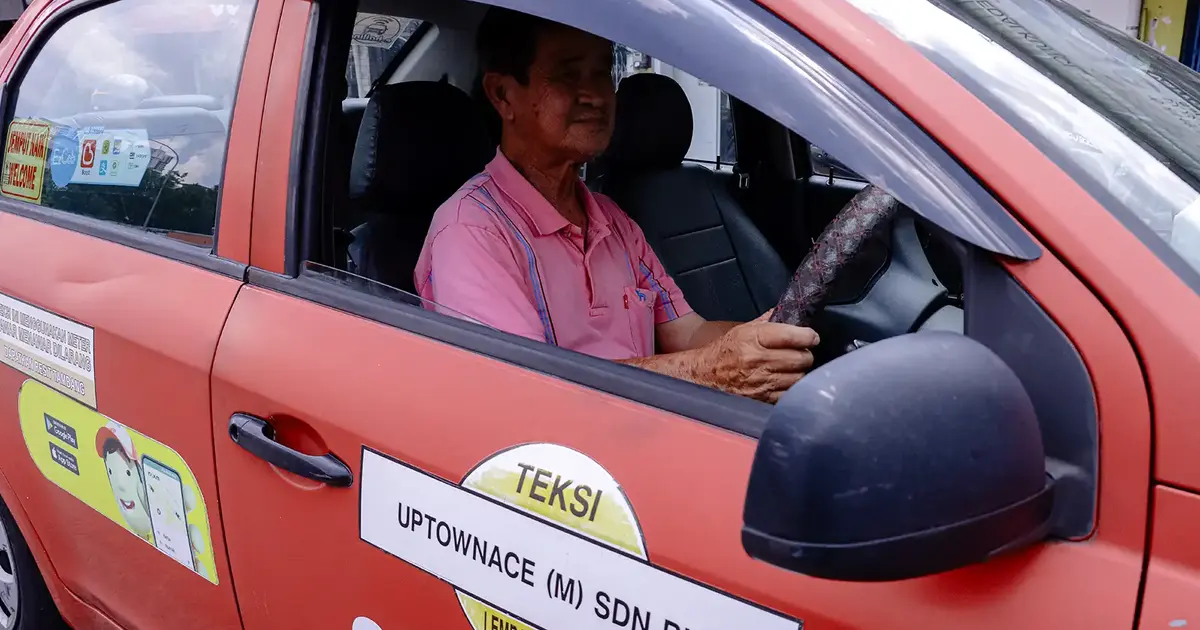
Malaysia's government has unveiled an additional RM10 million funding package directed specifically at supporting taxi drivers nationwide, marking a renewed commitment to improving conditions for workers in the transportation sector. The initiative underscores the administration's recognition of this crucial workforce, which operates at the intersection of commerce, tourism, and public service delivery across the country.
Prime Minister Anwar Ibrahim characterised taxi drivers as essential frontline workers whose daily interactions with travellers and residents fundamentally influence perceptions of Malaysia on the global stage. This framing positions the taxi industry not merely as a commercial venture but as a cultural ambassador, with drivers serving as informal representatives who shape how visitors experience Malaysian hospitality, efficiency, and character. The designation carries significant weight in policy circles, elevating the profession's status beyond conventional service-sector categorisation.
The RM10 million allocation responds to persistent economic pressures faced by taxi operators, who have navigated declining ridership patterns, rising operational costs, and increasing competition from ride-hailing platforms over the past decade. This funding injection represents government intervention aimed at stabilising the sector and protecting livelihoods at a time when traditional taxi services face structural headwinds. The support comes at a critical juncture when many drivers report income decline and operational challenges that threaten their economic sustainability.
For Malaysian readers and policymakers, this allocation signals broader government thinking about protecting traditional employment sectors during technological disruption. Rather than allowing market forces to eliminate conventional taxi services entirely, the government has chosen targeted intervention, suggesting a policy preference for preserving job categories that employ thousands nationwide and serve communities beyond tourist precincts. This reflects ongoing tensions between embracing technological change and maintaining social stability through employment protection.
The timing of the announcement coincides with Malaysia's intensified focus on tourism recovery and expansion, particularly as regional travel patterns normalise following pandemic disruptions. Taxi drivers, as primary points of contact for arriving international visitors at airports and major destinations, directly influence visitor satisfaction and repeat visitation rates. By supporting this workforce, government investment simultaneously addresses labour concerns and tourism competitiveness, creating alignment between social policy and economic development objectives.
Regionally, Malaysia's approach contrasts with neighbouring countries' varying strategies toward taxi industry challenges. While some Southeast Asian governments have largely deregulated transportation services favouring ride-hailing platforms, Malaysia's subsidy approach reflects a more interventionist posture prioritising workforce protection. This positioning may appeal to constituencies dependent on taxi work while potentially slowing broader transportation-sector modernisation.
The specifics of fund distribution remain crucial to implementation effectiveness. Whether allocations reach individual drivers through direct payments, support cooperative structures, or fund training and vehicle upgrades will substantially determine impact on actual working conditions. Previous government assistance programmes for transportation workers have yielded mixed results depending on administrative design, so programme mechanics warrant close attention from observers assessing genuinely helpful intervention versus symbolic gestures.
Taxi drivers themselves represent economically vulnerable populations often excluded from formal employee protections and benefits. Many operate as independent contractors bearing all operational costs including vehicle maintenance, fuel, and insurance while competing with digitally-optimised alternatives. Government financial support provides temporary relief but does not address structural factors generating downward pressure on taxi-driver incomes, suggesting this allocation functions as crisis mitigation rather than sector transformation.
The announcement also reflects political calculus around labour relations and working-class support. Taxi drivers constitute visible constituencies with established industry associations and organised representation, making them accessible for targeted policy initiatives. Support becomes demonstrable to voters and can be communicated through straightforward messaging about government responsiveness to workers' needs, particularly important in maintaining political coalition stability.
Looking forward, the sustainability of Malaysia's taxi sector likely depends on services finding distinctive market niches where they compete effectively against ride-hailing. This might include traditional black-cab services for corporate clients, airport transfers, or reliable services in regions where digital infrastructure remains underdeveloped. Government support through this transition period enables workforce adjustment while new business models potentially emerge, though no guarantee exists that traditional taxi models will thrive long-term against entrenched competitors with superior technology and capital advantages.
The RM10 million investment ultimately reflects government acknowledgment that market transitions impose real costs on workers and communities, justifying targeted intervention even as broader technological change continues. How effectively this funding prevents livelihoods from collapsing while industries adapt will offer lessons for managing similar employment disruptions across Malaysia's economy as digital transformation accelerates.

