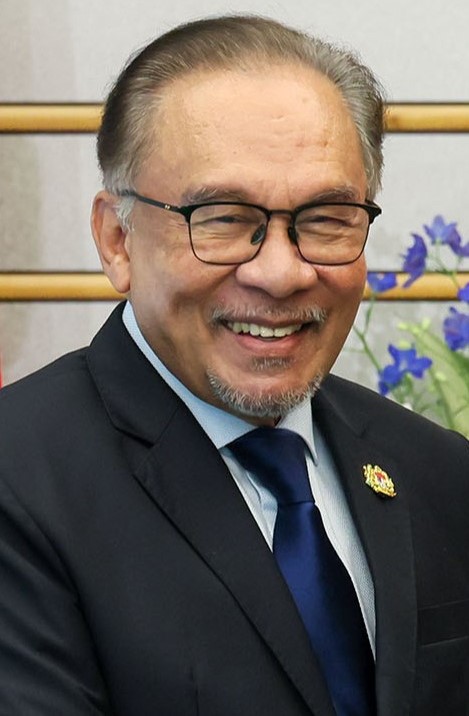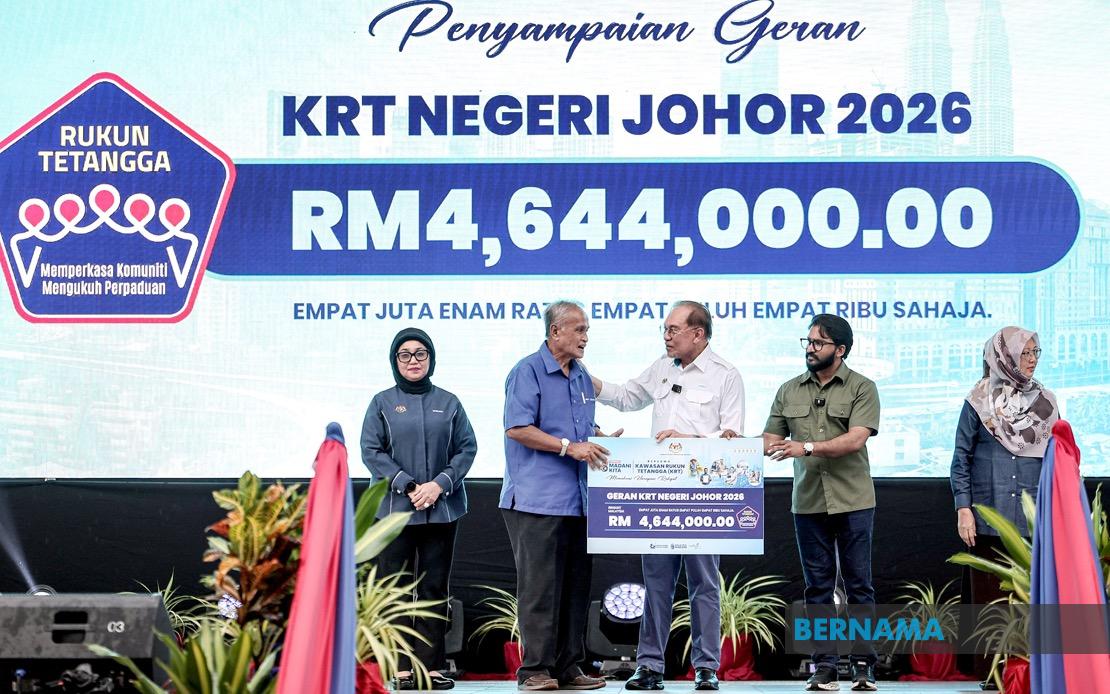
Prime Minister Datuk Seri Anwar Ibrahim has approved a significant increase in funding for Neighbourhood Watch Areas (KRT) nationwide, raising the annual grant to RM10,000 from the current RM6,000. The enhanced allocation will commence on January 1, 2027, and represents the first substantial boost to community safety funding in over a decade. The announcement came during the MADANI KITA Programme with KRTs held at Dataran Segamat on June 24, with Deputy Minister of National Unity R. Yuneswaran and Deputy Minister of Domestic Trade and Cost of Living Datuk Dr Fuziah Salleh also in attendance.
The prolonged stagnation in KRT funding had become increasingly untenable as these grassroots organisations grappled with rising operational costs and expanded community responsibilities. For ten consecutive years, the allocation remained frozen at RM6,000 annually, a reality that prompted the Prime Minister's decision to address what he characterised as an overdue correction. The 67 percent increase to RM10,000 reflects recognition of KRT's evolving role in addressing contemporary security and social challenges at the community level. This funding adjustment applies universally to all KRTs that maintain proper reporting of their development initiatives and community activities, establishing a transparent mechanism for resource distribution.
Anwar emphasised that the grant increase acknowledges KRT's instrumental contribution to fostering societal cohesion and democratic participation at the grassroots. Beyond their traditional security functions, these neighbourhood associations have become crucial conduits through which government departments and law enforcement agencies understand and respond to localised concerns. The Prime Minister articulated that strengthening KRT financial capacity directly strengthens Malaysia's capacity to maintain social harmony, particularly given the nation's diverse demographic composition. He underscored that the government views these community bodies as essential partners in nurturing the consensus-building spirit that has underpinned national stability since independence.
The broader context for this funding decision reflects the MADANI Government's strategic pivot toward decentralising certain governance functions and empowering community-level institutions. Rather than relying exclusively on top-down administrative structures, the administration recognises that sustainable solutions to security and welfare challenges emerge when neighbourhood associations possess adequate resources to mobilise residents effectively. The ten-year funding freeze had effectively diminished KRT operational capacity in real terms, particularly when accounting for inflation and increased activity costs across the past decade. The new allocation targets this erosion and positions these organisations to undertake more comprehensive community initiatives.
During the same Segamat event, the Prime Minister announced complementary investments in related grassroots infrastructure. An immediate allocation of RM3.205 million was approved for upgrading and repairing basic facilities at sixteen Islamic educational institutions across Johor, encompassing religious schools, madrasahs, study centres, and tahfiz institutions in districts including Batu Pahat, Muar, and Segamat. This parallel investment reflects the government's holistic approach to strengthening community institutions beyond security-focused organisations. Educational facilities represent another critical component of social cohesion, and their condition directly affects student outcomes and community confidence in public institutions. The allocations demonstrate coordination between national unity objectives and education ministry priorities.
Additionally, the Prime Minister approved RM1.0 million in immediate funding for critical repairs at Royal Malaysian Police (PDRM) quarters in Johor. This welfare-focused allocation recognises that maintaining personnel facilities directly impacts security forces' operational effectiveness and morale. The interconnection between police welfare, community safety, and social stability informed this concurrent investment decision. By simultaneously addressing KRT funding, educational infrastructure, and police facilities, the government signalled a comprehensive commitment to strengthening the institutional ecosystem that underpins public order and community wellbeing across Johor and, by extension, nationally.
The Prime Minister reiterated that Malaysia's fundamental strength derives from its demonstrated capacity to maintain harmony among its multi-racial and multi-religious population since independence. Rather than permitting racial, cultural, and religious differences to serve as divisive forces, the administration positions these characteristics as national assets that, when properly managed through inclusive institutions and adequate resourcing, strengthen societal resilience. This framing positions KRT funding increases not merely as budgetary adjustments but as strategic investments in the institutional infrastructure required to sustain the delicate multi-communal equilibrium that Malaysian democracy depends upon.
For Malaysian community leaders and KRT coordinators, the approval signals renewed governmental commitment to neighbourhood-level organising after years of stagnation. The 67 percent increase, while substantial in percentage terms, translates to an additional RM4,000 annually per KRT—resources that could expand community programmes, improve meeting facilities, enhance communication capabilities, or support local initiatives addressing specific neighbourhood needs. The January 2027 implementation date provides several months for government agencies to prepare disbursement mechanisms and for KRTs to plan allocation of enhanced resources.
Regionally, this funding approach reflects broader Southeast Asian trends toward decentralising governance and empowering community-level institutions as counterweights to centralised bureaucracy. Similar neighbourhood watch and community policing models operate across Thailand, Indonesia, and the Philippines, though funding levels and institutional maturity vary considerably. Malaysia's decision to substantially increase KRT allocation positions these bodies more competitively within a regional context where grassroots security and social cohesion increasingly demand dedicated financial resources. The move also signals confidence in community-based approaches during a period when some nations have shifted toward more centralised security models.
The announcement carries implications for Malaysia's approach to social stability as demographic and economic pressures reshape community dynamics. Rising urbanisation, generational shifts in civic participation, and evolving security challenges—from petty crime to cyber-enabled scams targeting elderly residents—require neighbourhood associations equipped with contemporary resources and training. Enhanced funding enables KRTs to invest in communication technologies, organise capacity-building programmes, and conduct more frequent community engagement activities that might otherwise remain aspirational due to budget constraints. This positioning of KRT as adequately resourced community partners rather than underfunded volunteer networks represents a consequential recalibration of governmental priorities.
Stakeholders in other states and at the federal level will likely scrutinise implementation of the increased KRT allocations, particularly regarding equity of distribution and mechanisms for preventing misallocation. The requirement that KRTs maintain transparent reporting of activities and development initiatives provides oversight frameworks, though effectiveness depends on consistent monitoring by relevant district and state-level administrators. The success of this funding increase will ultimately be measured through observable improvements in community safety outcomes, resident engagement levels, and the capacity of neighbourhood associations to address emergent challenges within their respective localities. For a government emphasising MADANI principles of inclusive prosperity and institutional strengthening, adequate resourcing of these grassroots entities represents a tangible commitment beyond rhetorical flourishes.